





Saltgrass
Distichlis spicata
Saltgrass is a special plant that grows in salty places like marshes and along the coast. It has long, thin leaves that can be green or a bit brown, and it helps keep the soil healthy.
Habitat: Coastal areas
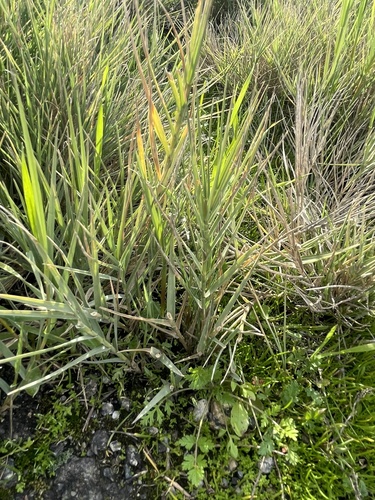
The Saltgrass has stiff, pointed blades that are often bluish-green, forming dense, low-growing mats. Its small, inconspicuous flowers appear in slender, yellowish-green to purplish spikes, making it look like a typical tough grass.
Category
PlantsRarity
Common
Danger
1/5 · Very low
Snaps
5
Ancient peoples once wove its tough, flexible leaves into durable mats and useful baskets.
Its scientific name, Distichlis, means 'two rows,' referring to its unique flower arrangement!
Saltgrass often thrives where other plants can't, like muddy flats and desert salt pans!
This amazing grass can help clean polluted soil by absorbing certain heavy metals!
Saltgrass can filter out excess salt from salty soil and excrete it through special glands on its leaves, helping it survive.
Saltgrass has tough, underground stems called rhizomes that spread widely, anchoring soil and preventing erosion in harsh environments.
Saltgrass can survive periods of drought or even complete submersion in tidal areas thanks to its waxy leaves and resilient roots.
Anas platyrhynchos
Ducks consume its seeds and blades.
Oryzomys palustris
A key food source for these coastal rodents.
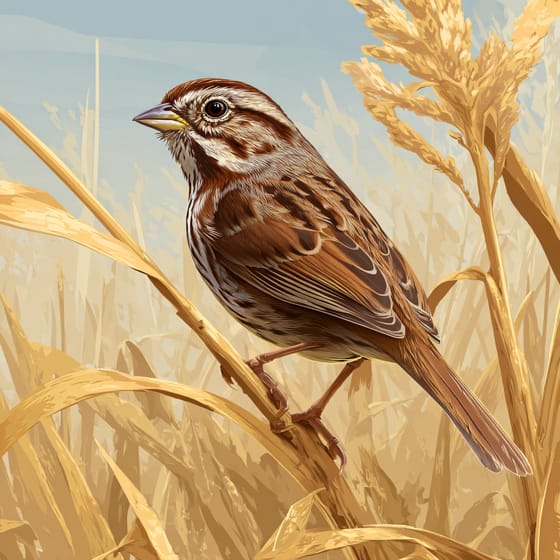
Melospiza melodia
Provides nesting sites and protective cover for small birds.
Agrotis ipsilon
Larvae feed on its leaves and stems.
Ornamental plants are cultivated primarily for their aesthetic appeal, enhancing landscapes and gardens with their attractive foliage, flowers, or form.
Grass-like plants are herbaceous plants that visually resemble true grasses, typically having long, narrow leaves.
Salt tolerant plants can withstand and grow in conditions with elevated salinity levels in the soil or water.
Drought-tolerant plants can survive and flourish in conditions with limited water availability.

Edible plants are those parts of a plant that are considered safe for human consumption.

Coastal habitats are dynamic environments located along the interface between land and sea, influenced by tides, waves, and saltwater.

Describes a species whose presence and role have a disproportionately large effect on its environment.
No aliases listed yet.
Danger
1/5 · Very low
Always explore nature carefully and don't eat any plants unless an adult says it's safe.
The easiest way to identify Saltgrass is to use the Snappit nature identifier app.
10-50 cm
30-200 cm
0.2-0.5 cm
Summer to fall
No
None
Perennial
Zoom in to split clusters and explore where this object has been snapped.
Jan 4, 2025
Colonel Allensworth State Historic ParkPhoto attribution
(c) Katie McCoy, some rights reserved (CC BY)
License: CC BY 4.0 ↗
Image may be shown cropped inside the card frame.

California, US
You might spot Snowy Egret, Great Blue Heron, and Willet.
View guide →

California, US
You might spot Iodinebush, Yerba Mansa, and Golden Gilmania.
View guide →

California, US
You might spot Common Raven and Red-Tailed Hawk.
View guide →
Take the discovery with you
Snap it with Snappit to identify it, learn what makes it special, and add the discovery to your collection.









.jpg&width=800)



_001.jpg&width=800)



