_-_Pollen%C3%A7a%2C_Spain_2022-04-15.jpg&width=800)





scarlet pimpernel
Lysimachia arvensis
The scarlet pimpernel is a bright red flower that blooms in fields and gardens. It has small, star-shaped petals and is loved by butterflies and bees.
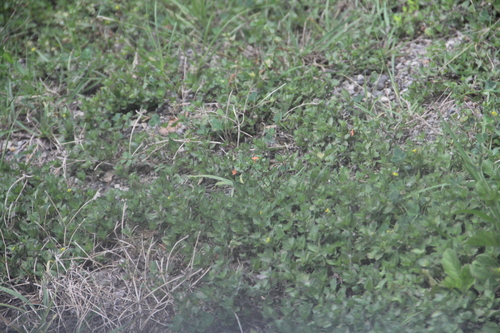
Habitat: Grasslands
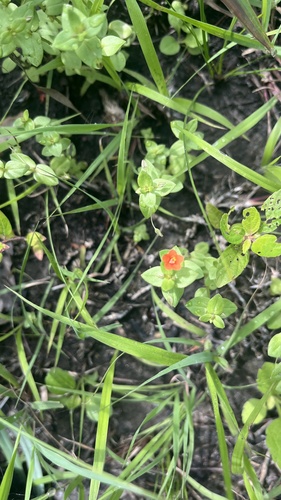
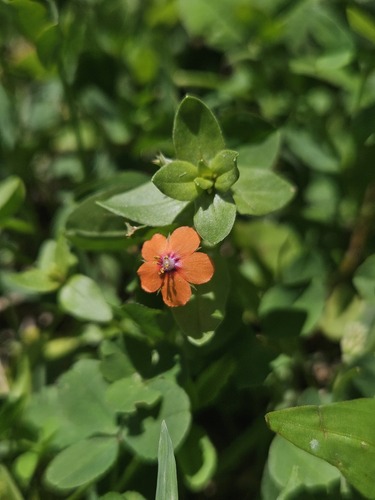
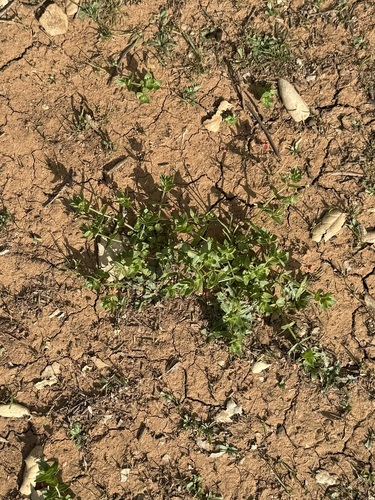
The scarlet pimpernel is a small, low-growing plant with delicate, square stems. It has tiny, five-petaled, star-shaped flowers that are typically bright orange-red, sometimes salmon or blue, with a darker purple eye. Its oval leaves are opposite and unstalked.
Category
PlantsRarity
Common
Danger
1/5 · Very low
Snaps
68
Ancient Romans believed carrying scarlet pimpernel could protect them from evil spirits.
Its scientific name, *Lysimachia arvensis*, actually means 'loose strife of the fields.'
The tiny seeds can stay hidden and alive in the soil for over 20 years, waiting for perfect conditions!
This flower is often called the 'poor man's weather-glass' for its ability to predict rain!
Scarlet pimpernel can close its flowers rapidly when rain is coming, helping protect its pollen and seeds.
Scarlet pimpernel has explosive seed pods that can fling seeds several feet away, helping it spread quickly.
Scarlet pimpernel can grow and produce seeds very quickly, allowing it to complete its life cycle in a single season.
Apis mellifera
Transfers pollen between flowers.
Deroceras reticulatum
Feeds on the leaves and young shoots.
Aphis fabae
Sucks sap from the plant's stems.
Flowering plants are any plants that produce flowers as part of their reproductive cycle.
Spring blooming plants produce their flowers during the spring season, often signifying the end of winter and the start of new growth.
Summer blooming plants produce their flowers during the summer season, often providing vibrant color when many other plants have finished.
Drought-tolerant plants can survive and flourish in conditions with limited water availability.

Colorful describes organisms or objects displaying a wide range of bright and distinct colors.

Grassland habitats are terrestrial biomes dominated by grasses and herbaceous plants, supporting a variety of grazing animals.

Describes plants that are particularly attractive and beneficial to a wide range of pollinating organisms.
No aliases listed yet.
Danger
1/5 · Very low
Always look but don't touch flowers without asking an adult first.
The easiest way to identify scarlet pimpernel is to use the Snappit nature identifier app.
5-30 cm
10-50 cm
0.5-1.5 cm
Late spring to fall
No
Mild
Annual
Zoom in to split clusters and explore where this object has been snapped.
Jun 1, 2026
Shaw Nature ReservePhoto attribution
(c) diana schwartz, some rights reserved (CC BY)
License: CC BY 4.0 ↗
Image may be shown cropped inside the card frame.
May 31, 2026
Bear Creek Pioneers ParkPhoto attribution
(c) Texas Bird Family, some rights reserved (CC BY)
License: CC BY 4.0 ↗
Image may be shown cropped inside the card frame.
May 28, 2026
Harpers Ferry Historic DistrictPhoto attribution
(c) Alex Abair, some rights reserved (CC BY)
License: CC BY 4.0 ↗
Image may be shown cropped inside the card frame.
May 3, 2026
El Sereno Open SpacePhoto attribution
(c) lazarus, some rights reserved (CC BY)
License: CC BY 4.0 ↗
Image may be shown cropped inside the card frame.

California, US
You might spot Redwood Sorrel, Redwood, and Button's Banana Slug.
View guide →

Rhode Island, US
You might spot Rugosa Rose and American Herring Gull.
View guide →

California, US
You might spot Monarch, Bee, and Anise Swallowtail.
View guide →

District of Columbia, US
You might spot Eastern Gray Squirrel, Duck, and House Sparrow.
View guide →

Michigan, US
You might spot Monarch, Canada Goose, and Eastern Gray Squirrel.
View guide →

California, US
You might spot Peridot Sweat Bee and Western Fence Lizard.
View guide →
Take the discovery with you
Snap it with Snappit to identify it, learn what makes it special, and add the discovery to your collection.








.jpg&width=800)



_001.jpg&width=800)




