_(7028865977).jpg&width=800)





sea ox-eye
Borrichia frutescens
The sea ox-eye is a small, bushy plant that grows in sandy coastal areas. It has bright yellow flowers that look like little suns and can help keep the beach healthy.
Habitat: Coastal areas
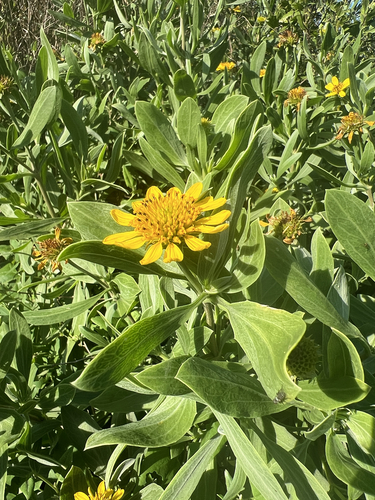
The sea ox-eye is a bushy shrub with silvery-green, fleshy leaves. It has bright yellow, daisy-like flowers with a prominent, dark gold central disk. Its unique silvery foliage makes it stand out on coastal landscapes.
Category
PlantsRarity
Common
Danger
1/5 · Very low
Snaps
14
Ancient people sometimes burned this plant to get salty ash for soap!
Believe it or not, this coastal plant is related to giant garden sunflowers!
It's a tough survivor, growing happily in sandy spots battered by ocean winds!
Some tiny insects build homes called galls right on its stems!
It has thick, fleshy leaves that can store water, allowing it to survive dry periods near the ocean.
Its strong root system grows deep into the sand, preventing erosion and stabilizing beaches.
The sea ox-eye has vibrant yellow flowers that act as a visual signal, attracting many insects for pollination.
Apis mellifera
Buzzing bees visit its bright yellow flowers for nectar.
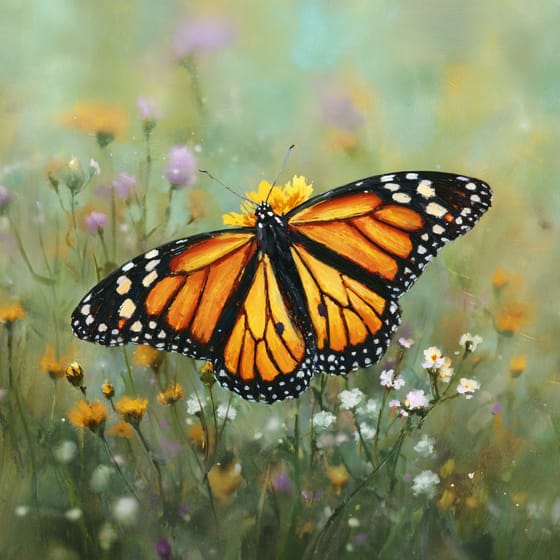
Danaus plexippus
Monarch butterflies stop to refuel on its sugary nectar.

Chlosyne lacinia
Its caterpillars nibble the leaves of this coastal plant.
Geukensia demissa
Its roots help stabilize mudflats, providing mussel habitat.
Flowering plants are any plants that produce flowers as part of their reproductive cycle.
A shrub is a woody plant smaller than a tree, typically with multiple stems branching from or near the ground.
Summer blooming plants produce their flowers during the summer season, often providing vibrant color when many other plants have finished.
Evergreen plants retain their foliage throughout the year, never shedding all their leaves at once.

Salt tolerant plants can withstand and grow in conditions with elevated salinity levels in the soil or water.

Drought-tolerant plants can survive and flourish in conditions with limited water availability.

Describes plants that are particularly attractive and beneficial to a wide range of pollinating organisms.

Coastal habitats are dynamic environments located along the interface between land and sea, influenced by tides, waves, and saltwater.

Describes a species whose presence and role have a disproportionately large effect on its environment.
No aliases listed yet.
Danger
1/5 · Very low
Always stay on paths and don't pick plants without asking an adult.
The easiest way to identify sea ox-eye is to use the Snappit nature identifier app.
50-100 cm
50-150 cm
2-4 cm
Summer to fall
No
None
Perennial
Zoom in to split clusters and explore where this object has been snapped.
Jun 6, 2026
Pawleys Island Historic DistrictPhoto attribution
no rights reserved
License: CC0 1.0 ↗
Image may be shown cropped inside the card frame.

Georgia, US
You might spot Brown Anole, Anole, and Gulf Fritillary.
View guide →

US
You might spot Firewheel, Domestic Horse, and Atlantic Horseshoe Crab.
View guide →

South Carolina, US
You might spot Brown Pelican, Boat-Tailed Grackle, and Great Egret.
View guide →

Florida, US
You might spot American Beautyberry and Brown Anole.
View guide →

US
You might spot Brown Pelican, Boat-Tailed Grackle, and Great Egret.
View guide →

South Carolina, US
You might spot Gulf Fritillary, Poey's Furrow Bee, and Anole.
View guide →
Take the discovery with you
Snap it with Snappit to identify it, learn what makes it special, and add the discovery to your collection.








.jpg&width=800)



_001.jpg&width=800)



