





Silver Bush Lupine
Lupinus albifrons
The Silver Bush Lupine is a lovely plant with silvery leaves and beautiful purple flowers. It grows in sunny places and helps make the environment better for other plants and animals.
Habitat: Grasslands
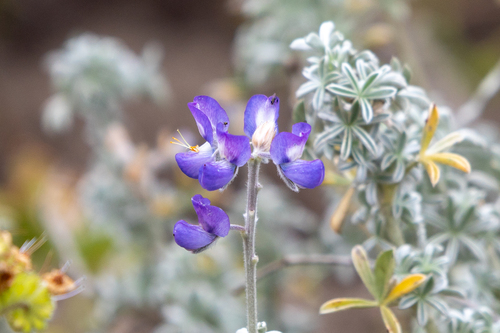
The Silver Bush Lupine is a sturdy, shrub-like plant covered in dense, silvery-white hairs. It has distinctive palm-shaped leaves and produces tall, striking spikes of tightly packed, pea-like flowers, which range in color from purplish-blue to white.
Category
PlantsRarity
Common
Danger
1/5 · Very low
Snaps
5
Ancient Romans used lupines as a medicinal plant and even a type of food!
Indigenous peoples once used tough lupine fibers to weave strong ropes and baskets!
Lupine seeds burst from their pods, sometimes flinging them far away!
Some people call it 'Old Man Lupine' because of its silvery, wise appearance!
Silver Bush Lupine can turn nitrogen from the air into plant food, thanks to tiny helper bacteria in its roots, which helps it grow in poor soil.
Silver Bush Lupine has fuzzy, silvery leaves that reflect sunlight and trap moisture, helping it survive long, dry periods without much water.
Silver Bush Lupine has special chemicals called alkaloids in its leaves and seeds that make it taste bad or be mildly toxic to hungry animals.
Bombus vosnesenskii
Buzzes between flowers, collecting nectar
Bradyrhizobium lupini
Lives in roots, helps plant get nitrogen
Callophrys dumetorum
Larvae feed on leaves and flowers
Flowering plants are any plants that produce flowers as part of their reproductive cycle.
Describes organisms capable of converting atmospheric nitrogen into compounds usable by plants.
Ornamental plants are cultivated primarily for their aesthetic appeal, enhancing landscapes and gardens with their attractive foliage, flowers, or form.
A shrub is a woody plant smaller than a tree, typically with multiple stems branching from or near the ground.

Drought-tolerant plants can survive and flourish in conditions with limited water availability.

Grassland habitats are terrestrial biomes dominated by grasses and herbaceous plants, supporting a variety of grazing animals.

Describes plants that are particularly attractive and beneficial to a wide range of pollinating organisms.
No aliases listed yet.
Danger
1/5 · Very low
Always look but don't touch plants without asking an adult first.
The easiest way to identify Silver Bush Lupine is to use the Snappit nature identifier app.
50-150 cm
50-100 cm
1-2 cm
Spring to early summer
No
Moderate
Perennial
Zoom in to split clusters and explore where this object has been snapped.
Jun 6, 2026
Venice Canal Historic DistrictPhoto attribution
(c) Roberto Daniel Avila, some rights reserved (CC BY)
License: CC BY 4.0 ↗
Image may be shown cropped inside the card frame.

California, US
You might spot Toyon, Mule Deer, and White Globe Lily.
View guide →

California, US
You might spot Vulture, Acorn Woodpecker, and Stanislaus Monkeyflower.
View guide →

California, US
You might spot Western Fence Lizard and Pacific Hound's Tongue.
View guide →

California, US
You might spot Western Gull, Snowy Egret, and Willet.
View guide →

California, US
You might spot African Lion, Tiger, and Leopard.
View guide →
.jpg)
California, US
You might spot California Phacelia and Twinberry Honeysuckle.
View guide →
Take the discovery with you
Snap it with Snappit to identify it, learn what makes it special, and add the discovery to your collection.








.jpg&width=800)



_001.jpg&width=800)




