.jpg&width=800)



slash pine
Pinus elliottii
The slash pine is a tall tree with long, slender needles. It grows in warm areas and is known for its straight trunk and sweet-smelling pine cones.
Habitat: Forests
The slash pine is a tall, straight evergreen tree with an open crown. It has dark green, flexible needles grouped in bundles of two or three. Its shiny, reddish-brown cones are 7-15 cm long with small prickles on each scale.
Category
PlantsRarity
Common
Danger
1/5 · Very low
Snaps
1
Its sticky sap was once vital for sealing ships, helping sailors explore the world!
Its wood helps make strong paper, furniture, and even telephone poles!
Some slash pines can live for over 200 years, growing through many storms!
This tough tree is a "pioneer," often growing first in disturbed or cleared lands!
Slash pine has thick, protective bark that helps it survive quick-moving ground fires in its natural habitat.
Slash pine can grow in soggy, wet soils where many other trees would struggle to survive.
Slash pine grows quickly, allowing it to reach sunlight faster and outcompete other plants.
Slash pine produces sticky resin that seals wounds and traps invading insects, protecting the tree.
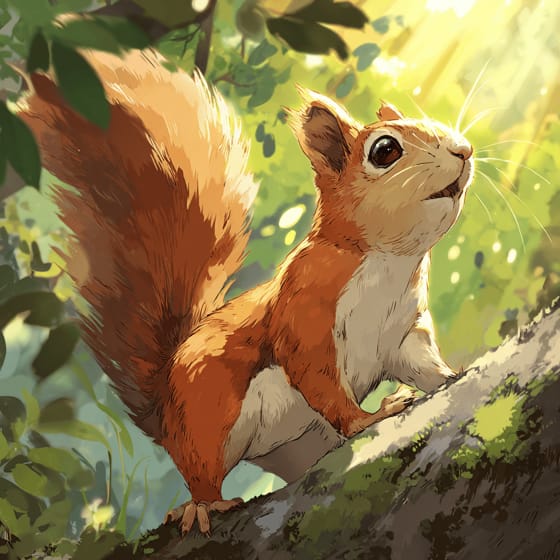
Sciurus carolinensis
Eats seeds from the pine's cones.
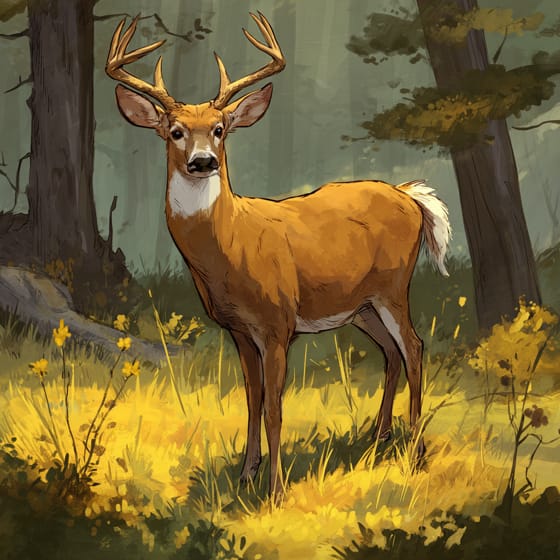
Odocoileus virginianus
Browses on young needles and seedlings.
Dryobates borealis
Nests in cavities of older pine trees.

Gopherus polyphemus
Relies on open pine forests for habitat.
Aromatic plants produce and emit fragrant volatile organic compounds, often for defense or to attract pollinators.
Coniferous plants are typically evergreen, bearing needles or scales and reproductive cones.
Evergreen plants retain their foliage throughout the year, never shedding all their leaves at once.
Nut bearing plants produce hard-shelled fruits, commonly known as nuts, which contain a single seed and are a valuable food source.

Rapid growing plants exhibit accelerated growth rates, quickly increasing in size and biomass within a short period.
Timber refers to wood that has been prepared for use in building and carpentry.

Forest habitats are terrestrial environments dominated by dense tree cover, supporting a high diversity of plant and animal life.

Describes a species whose presence and role have a disproportionately large effect on its environment.
No aliases listed yet.
Danger
1/5 · Very low
Stay away from sharp pine cones and branches when exploring.
The easiest way to identify slash pine is to use the Snappit nature identifier app.
1800-3000 cm
900-1500 cm
Winter-Spring
No
None
Perennial
Wind
Zoom in to split clusters and explore where this object has been snapped.

Florida, US
You might spot Common Yellowthroat and Brown Anole.
View guide →

Florida, US
You might spot False Rosemary, Florida Rosemary, and Sanderling.
View guide →

Florida, US
You might spot False Rosemary, Willet, and Florida Rosemary.
View guide →
Take the discovery with you
Snap it with Snappit to identify it, learn what makes it special, and add the discovery to your collection.








.jpg&width=800)



_001.jpg&width=800)



