





Southeastern Pricklypear
Opuntia mesacantha
The Southeastern Pricklypear is a fun cactus that grows in warm places. It has bright yellow flowers and tasty fruits called prickly pears that many animals love to eat!
Habitat: Desert
The Southeastern Pricklypear has flat, paddle-shaped green pads, which are actually modified stems, covered in sharp, prominent spines and tiny, barbed bristles called glochids. Its large, showy flowers are typically bright yellow with a reddish center, blooming at the top edges of the pads, followed by reddish-purple, pear-shaped fruits.
Category
PlantsRarity
Common
Danger
2/5 · Low
Snaps
1
Beware the tiny, nearly invisible glochids, which are worse than its big spines!
Fallen pads can sprout roots, growing into an entirely new plant!
Its 'pads' are actually flattened stems designed to store water!
The sweet, juicy fruits, called 'tunas,' are a desert delicacy for many animals.
Southeastern Pricklypear can store vast amounts of water in its thick, fleshy pads, helping it survive long periods of drought.
Southeastern Pricklypear uses a special nighttime photosynthesis process (CAM) to conserve water in hot, dry environments.
Southeastern Pricklypear has two types of spines – long, sharp ones and tiny, barbed glochids – to deter hungry animals.
Apis mellifera
Collects nectar and pollen from its flowers.
.JPG&width=800)
Sylvilagus floridanus
Munch on pads, especially young ones.
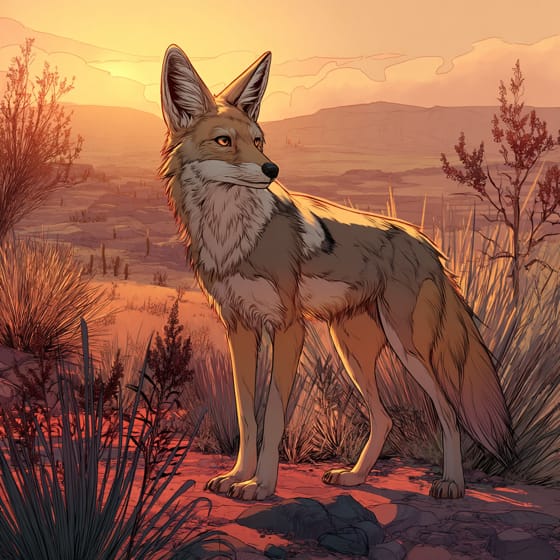
Canis latrans
Eats fruits and disperses seeds in droppings.

Colinus virginianus
Feeds on seeds and fruit, seeks cover.
Flowering plants are any plants that produce flowers as part of their reproductive cycle.
Spring blooming plants produce their flowers during the spring season, often signifying the end of winter and the start of new growth.
Fruit-bearing plants produce fruits, which are the mature ovaries of flowering plants containing seeds.
Drought-tolerant plants can survive and flourish in conditions with limited water availability.

A fruit tree is a perennial tree that produces fruit, which is edible to humans or animals.

Succulent plants have thickened, fleshy parts, usually leaves or stems, adapted to store water in arid climates.

Edible plants are those parts of a plant that are considered safe for human consumption.

Describes plants that are particularly attractive and beneficial to a wide range of pollinating organisms.

Desert habitats are arid regions characterized by extremely low precipitation and often extreme temperatures, supporting specialized flora and fauna.

Possessing sharp, pointed projections or spines on the body or surface.
No aliases listed yet.
Danger
2/5 · Low
Be careful not to touch the spines on the cactus, as they can poke you!
The easiest way to identify Southeastern Pricklypear is to use the Snappit nature identifier app.
30-100 cm
100-300 cm
5-8 cm
Late spring to early summer
Yes
None
Perennial
Zoom in to split clusters and explore where this object has been snapped.

Alabama, US
You might spot Elf Orpine, Canada Goose, and Leatherleaf Mahonia.
View guide →

Virginia, US
You might spot Eastern Gray Squirrel, Duck, and Northern Mockingbird.
View guide →

Alabama, US
You might spot Elf Orpine, Canada Goose, and Great Blue Heron.
View guide →

Georgia, US
You might spot Elf Orpine, Dimpled Trout Lily, and Porter's Sunflower.
View guide →
Take the discovery with you
Snap it with Snappit to identify it, learn what makes it special, and add the discovery to your collection.








.jpg&width=800)



_001.jpg&width=800)



