





Spicebush Swallowtail
Papilio troilus
The Spicebush Swallowtail is a beautiful butterfly with black wings and bright blue spots. They love to flutter around gardens and forests, making them a delight to see!
Habitat: Forests
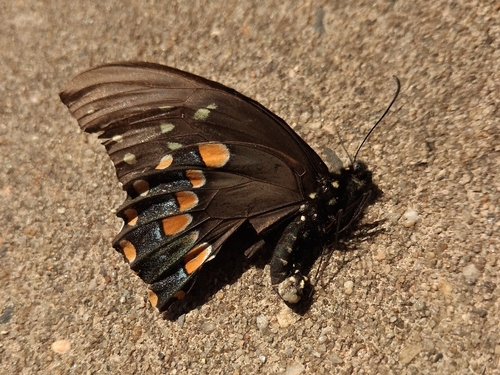
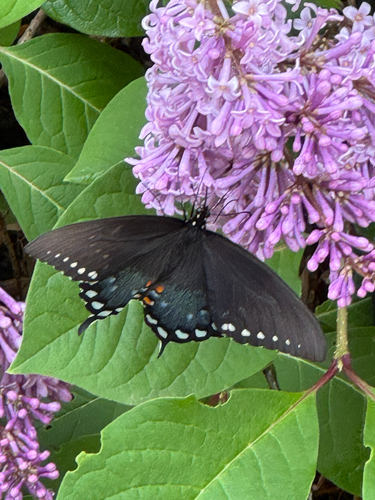
The Spicebush Swallowtail has large, black wings with iridescent blue-green patches, especially on the hindwings. A distinctive row of orange spots lines the lower edges of its wings, which also feature prominent 'tails'. Its caterpillars are bright green with large, convincing false eyespots.
Category
InsectsRarity
Common
Danger
1/5 · Very low
Snaps
77
Adult Spicebush Swallowtails 'puddle' for minerals, often in groups on damp ground!
The pupa of this butterfly can change color to perfectly match its surroundings!
Their caterpillars build cozy leaf shelters by folding and silking leaves together to rest inside!
Young caterpillars have fake 'eyes' that make them look like a tiny snake!
Spicebush Swallowtail can look like the toxic Pipevine Swallowtail that helps them scare away predators who avoid foul-tasting prey.
Spicebush Swallowtail has caterpillars that resemble bird droppings, which helps them hide from hungry birds while young.
Spicebush Swallowtail can scare predators by extending an orange, foul-smelling osmeterium from its head when threatened.
Caterpillars munch on leaves, while adult butterflies sip sweet flower nectar from many plants.
Age differences: Larvae eat leaves of host plants, but adults drink nectar from various flowers.
Lindera benzoin
Main host plant for its caterpillars.

Sassafras albidum
An alternative host plant for its caterpillars.

Asclepias syriaca
Adults feed on its nectar, aiding pollination.
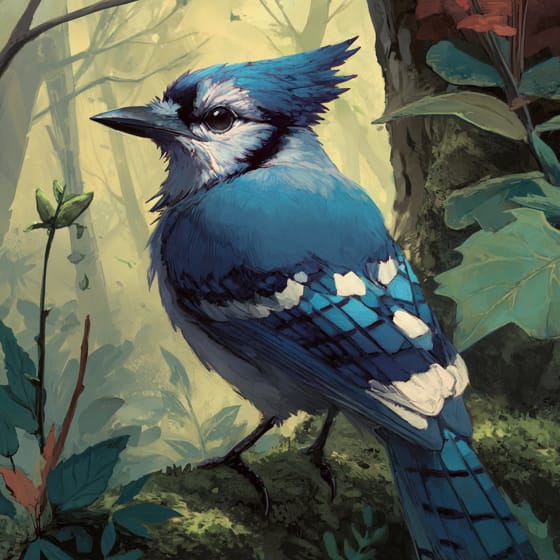
Cyanocitta cristata
Birds, like jays, are common predators of this butterfly.
Marked with spots or patches of a different color.
Solitary animals live alone for most of their lives, only interacting with others for mating or parental care.
Colorful describes organisms or objects displaying a wide range of bright and distinct colors.
This trait characterizes organisms whose diet consists entirely or primarily of plant material.

Describes plants that are particularly attractive and beneficial to a wide range of pollinating organisms.

Forest habitats are terrestrial environments dominated by dense tree cover, supporting a high diversity of plant and animal life.

Diurnal animals are primarily active during daylight hours, typically resting or sleeping at night.

Describes organisms that transfer pollen, enabling the fertilization and reproduction of plants.
Danger
1/5 · Very low
Always watch butterflies from a distance and don't try to catch them.
The easiest way to identify Spicebush Swallowtail is to use the Snappit nature identifier app.
90-130 mm
30-40 mm
6-14 days
15 km/h
Caterpillars munch on leaves, while adult butterflies sip sweet flower nectar from many plants.
Forests
Foraging
Zoom in to split clusters and explore where this object has been snapped.
Jun 3, 2026
PrallsvillePhoto attribution
(c) Susan Mott, some rights reserved (CC BY-SA)
License: CC BY-SA 4.0 ↗
Image may be shown cropped inside the card frame.
May 25, 2026
Kingston Stockade DistrictPhoto attribution
(c) Dustin, some rights reserved (CC BY)
License: CC BY 4.0 ↗
Image may be shown cropped inside the card frame.

Virginia, US
You might spot Eastern Box Turtle and White-Tailed Deer.
View guide →

Florida, US
You might spot Anole, Eastern Box Turtle, and Golden Silk Spider.
View guide →

Tennessee, US
You might spot Black Bear, Yellow Wakerobin, and Pipevine Swallowtail.
View guide →

Massachusetts, US
You might spot Common Eastern Bumble Bee and Eastern Skunk Cabbage.
View guide →

Florida, US
You might spot Atala, Monarch, and Brown Anole.
View guide →

Louisiana, US
You might spot Brown Anole, White Ibis, and Duck.
View guide →
Take the discovery with you
Snap it with Snappit to identify it, learn what makes it special, and add the discovery to your collection.







.jpg&width=800)


