





Spruce Grouse
Canachites canadensis
The Spruce Grouse is a fluffy bird that loves to hide among the trees. With its brown feathers, it blends in perfectly with the forest, making it a master of camouflage!
Habitat: Forests
The Spruce Grouse has mottled brown and black plumage, providing excellent camouflage in coniferous forests. Males feature a distinct black chest, white flank markings, and a bright red comb above their eyes, setting them apart.
Category
BirdsRarity
Common
Danger
1/5 · Very low
Snaps
9
Male Spruce Grouse make a unique wing-rattling sound to attract mates.
Their feet are naturally feathered to act like snowshoes!
They sometimes swallow grit to help grind up tough conifer needles in their gizzard.
When scared, they often 'freeze' instead of flying, trusting their camouflage.
Spruce Grouse can digest tough conifer needles all winter because of specialized gut bacteria that break down cellulose.
Spruce Grouse has mottled feather patterns that help them blend perfectly into the forest floor, making them incredibly hard to spot.
Spruce Grouse can find food in deep snow because they eat the abundant needles and buds of spruce and fir trees.
They mainly munch on tough needles and twigs from evergreen trees, especially in winter.
Age differences: Young chicks primarily eat insects; adults mostly consume conifer needles and buds.
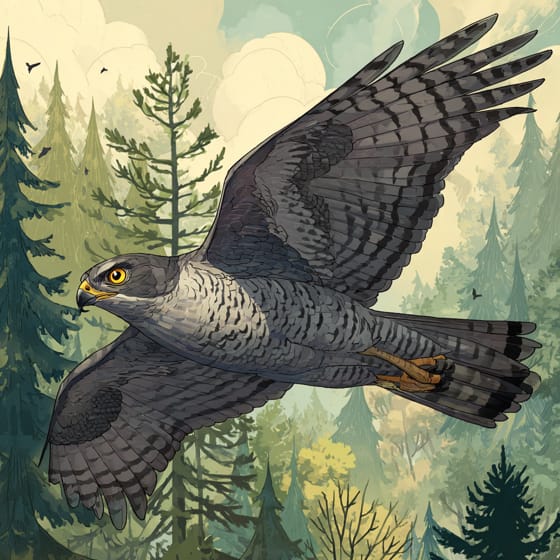
Accipiter gentilis
Northern Goshawks prey on Spruce Grouse in dense forest habitats.
.jpg&width=800)
Martes americana
Martens hunt ground-nesting birds like the Spruce Grouse and their eggs.
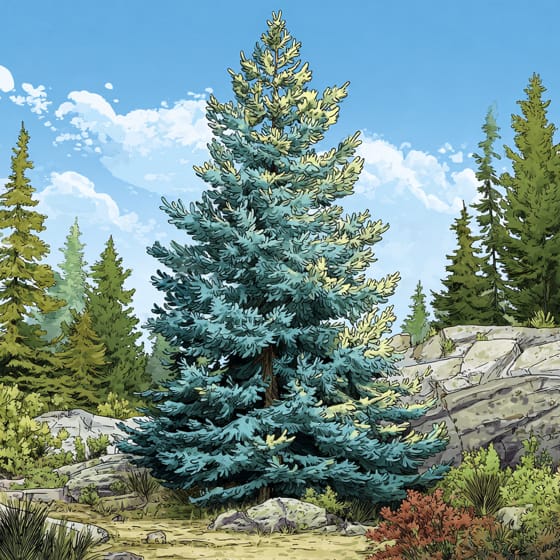
Picea glauca
Provides essential needles for food and dense cover for nesting.
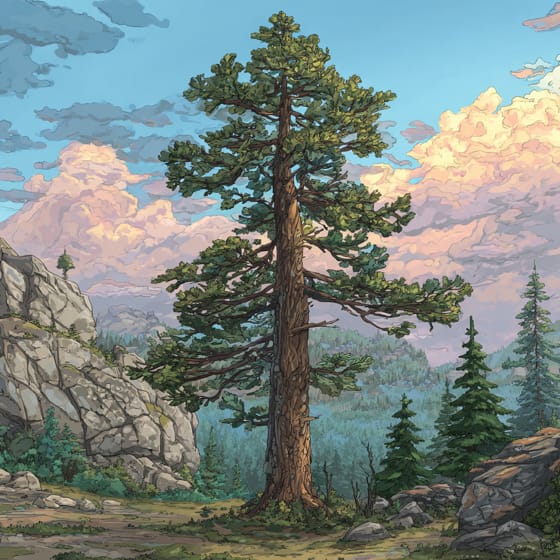
Pinus contorta
Spruce Grouse eat the needles and buds of this abundant pine.

Vaccinium vitis-idaea
Spruce Grouse consume these nutritious berries in summer.
Feathered describes animals, primarily birds, possessing a covering of feathers.
Solitary animals live alone for most of their lives, only interacting with others for mating or parental care.
Camouflaged describes organisms that possess coloring or patterns that allow them to blend into their environment.
This trait characterizes organisms whose diet consists entirely or primarily of plant material.

Forest habitats are terrestrial environments dominated by dense tree cover, supporting a high diversity of plant and animal life.

Diurnal animals are primarily active during daylight hours, typically resting or sleeping at night.
No aliases listed yet.
Danger
1/5 · Very low
If you see a bird, watch quietly from a distance and don't try to touch it.
The easiest way to identify Spruce Grouse is to use the Snappit nature identifier app.
38-48 cm
53-64 cm
0.45-0.65 kg
3-5 years
50 km/h
They mainly munch on tough needles and twigs from evergreen trees, especially in winter.
Forests
Zoom in to split clusters and explore where this object has been snapped.
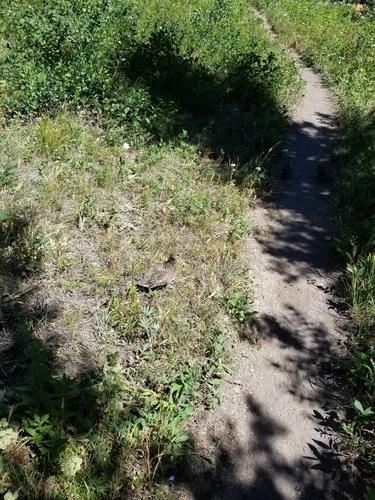
Aug 15, 2022
Sherburne Ranger Station Historic DistrictPhoto attribution
(c) Shane Guenin, some rights reserved (CC BY)
License: CC BY 4.0 ↗
Image may be shown cropped inside the card frame.

Alaska, US
You might spot Moose, Devil's Club, and Red-Berried Elder.
View guide →

Washington, US
You might spot Whitebark Pine, Subalpine Larch, and White Pasqueflower.
View guide →

Montana, US
You might spot Black Bear, Brown Bear, and Moose.
View guide →

Alaska, US
You might spot Canadian Bunchberry, Saskatoon, and Canadian Buffalo-Berry.
View guide →

Alaska, US
You might spot Moose, Fly Agaric, and Bald Eagle.
View guide →

Montana, US
You might spot Field Crescent, Thimbleberry, and Baker's Mariposa Lily.
View guide →
Take the discovery with you
Snap it with Snappit to identify it, learn what makes it special, and add the discovery to your collection.




.jpg&width=800)







