_low_res.jpg&width=800)





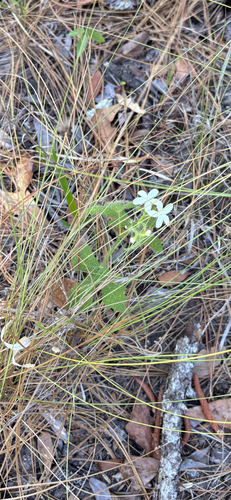
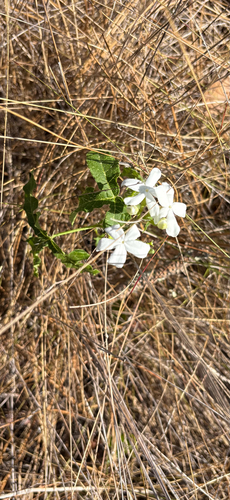
spurge nettle
Cnidoscolus stimulosus
Spurge nettle is a prickly plant that can be found in warm, sunny places. It has big, green leaves and tiny flowers that are not very noticeable. Be careful, as it can sting if you touch it!
Habitat: Grasslands
The spurge nettle has deeply lobed, palmate leaves covered in stiff, hollow stinging hairs, making it look spiky. Its small, inconspicuous greenish-white flowers grow in clusters at the stem tips, and it can reach up to three feet tall. It stands out with its broad, hand-shaped leaves compared to true nettles.
Category
PlantsRarity
Common
Danger
3/5 · Moderate
Snaps
18
Despite its name, it's not a 'true' nettle like other stinging plants!
Even a gentle brush can trigger its super-sharp stinging hairs.
Some tiny insects can walk right over its stingers without harm!
The sting from this plant can feel like a tiny electric shock!
Spurge nettle has hollow, barbed hairs that inject irritating chemicals to protect it from hungry animals.
Spurge nettle can grow a very long taproot, helping it find water deep underground in dry, sandy soils.
This plant can forcefully eject its seeds far away, spreading its offspring to new locations.
Apis mellifera
gathers nectar and pollen
Bombus impatiens
collects pollen and nectar

Aphis nerii
sucks sap from stems and leaves
Deciduous plants periodically shed all their leaves, typically during autumn or dry seasons.
Flowering plants are any plants that produce flowers as part of their reproductive cycle.
Medicinal plants possess chemical compounds that can be used for therapeutic purposes to treat illnesses or maintain health.
Edible plants are those parts of a plant that are considered safe for human consumption.

Grassland habitats are terrestrial biomes dominated by grasses and herbaceous plants, supporting a variety of grazing animals.

Describes plants that are particularly attractive and beneficial to a wide range of pollinating organisms.

Possessing sharp, pointed projections or spines on the body or surface.
No aliases listed yet.
Danger
3/5 · Moderate
Don't touch the leaves without asking an adult, as they can sting!
The easiest way to identify spurge nettle is to use the Snappit nature identifier app.
30-90 cm
30-60 cm
0.5-1 cm
Spring to fall
No
Moderate
Perennial
Zoom in to split clusters and explore where this object has been snapped.
Apr 21, 2026
Morningside Nature CenterPhoto attribution
(c) Emily Geest, some rights reserved (CC BY)
License: CC BY 4.0 ↗
Image may be shown cropped inside the card frame.
Apr 21, 2026
Morningside Nature CenterPhoto attribution
(c) Emily Geest, some rights reserved (CC BY)
License: CC BY 4.0 ↗
Image may be shown cropped inside the card frame.

Florida, US
You might spot Anhinga, American Alligator, and Wood Duck.
View guide →

Georgia, US
You might spot American Beautyberry, Muscadine, and Virginia Creeper.
View guide →

Florida, US
You might spot Gorilla and Reticulated Giraffe.
View guide →
Georgia, US
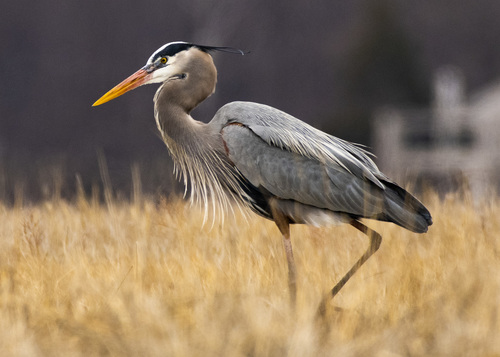
You might spot Great Blue Heron and Double-Crested Cormorant.
View guide →
North Carolina, US
You might spot Sanderling, Laughing Gull, and Brown Pelican.
View guide →

South Carolina, US
You might spot Eastern Pondhawk and Four-Spotted Pennant.
View guide →
Take the discovery with you
Snap it with Snappit to identify it, learn what makes it special, and add the discovery to your collection.







.jpg&width=800)



_001.jpg&width=800)



