





Mealy Blue Sage
Salvia farinacea
Mealy Blue Sage is a beautiful flower with lovely blue-purple blooms. It attracts butterflies and bees, making gardens colorful and lively!
Habitat: Grasslands
The Mealy Blue Sage has tall, slender spikes of densely packed, vibrant blue-violet flowers, often appearing fuzzy due to its distinctive white or grey 'mealy' coating on stems and calyxes. Its lance-shaped leaves are typically a muted green, contrasting beautifully with the bright blooms.
Category
PlantsRarity
Common
Danger
1/5 · Very low
Snaps
2
After flowers fade, its fuzzy, colorful stems still look cool in the garden!
Gently rub its leaves to discover a faint, fresh, secret scent!
It's like a garden magnet, pulling in busy bees, bright butterflies, and even hummingbirds!
Its scientific name 'farinacea' means 'flour-like' for its powdery stems!
Mealy Blue Sage has roots that can reach deep into the soil, helping it find water and stay vibrant even during dry spells.
Mealy Blue Sage can wave its bright blue flowers like flags, inviting bees and butterflies to feast on its sweet nectar.
Mealy Blue Sage has a powdery coating on its stems and flowers that protects it from sun and might deter munching pests.
Apis mellifera
collects nectar and pollen
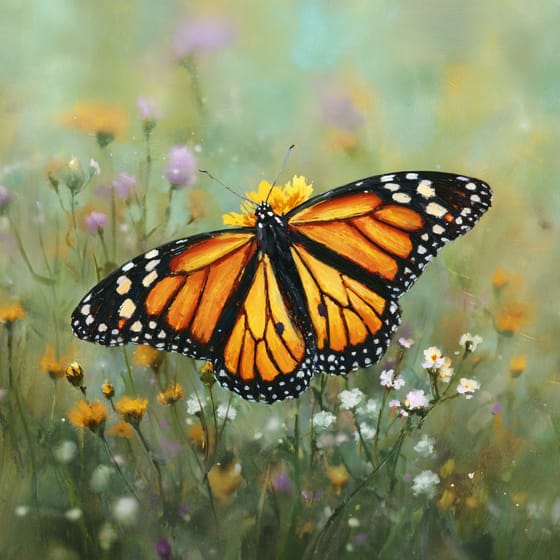
Danaus plexippus
feeds on nectar from the blooms

Archilochus colubris
sips nectar with its long beak
Myzus persicae
sucks sap from leaves and stems
Hippodamia convergens
preys on aphids that feed on the sage
Flowering plants are any plants that produce flowers as part of their reproductive cycle.
Ornamental plants are cultivated primarily for their aesthetic appeal, enhancing landscapes and gardens with their attractive foliage, flowers, or form.
A shrub is a woody plant smaller than a tree, typically with multiple stems branching from or near the ground.
Summer blooming plants produce their flowers during the summer season, often providing vibrant color when many other plants have finished.

Fragrant flowers emit a pleasant aroma, often to attract pollinators or for defense.

Drought-tolerant plants can survive and flourish in conditions with limited water availability.

Grassland habitats are terrestrial biomes dominated by grasses and herbaceous plants, supporting a variety of grazing animals.

Describes plants that are particularly attractive and beneficial to a wide range of pollinating organisms.
No aliases listed yet.
Danger
1/5 · Very low
Always look but don't touch flowers without asking an adult.
The easiest way to identify Mealy Blue Sage is to use the Snappit nature identifier app.
60-90 cm
30-45 cm
1-2 cm
Summer to fall
No
None
Perennial
Zoom in to split clusters and explore where this object has been snapped.

Texas, US
You might spot Anole, Monarch, and Pinkladies.
View guide →

Texas, US
You might spot African Lion, Giraffes, and Hippopotamus.
View guide →

Texas, US
You might spot Eastern Fox Squirrel, Duck, and American Robin.
View guide →

Texas, US
You might spot Pond Slider, Anole, and Monarch.
View guide →

Texas, US
You might spot Yellow-Crowned Night Heron, Duck, and Wood Duck.
View guide →
Texas, US
You might spot Duck, Great-Tailed Grackle, and Egyptian Goose.
View guide →
Take the discovery with you
Snap it with Snappit to identify it, learn what makes it special, and add the discovery to your collection.








.jpg&width=800)


_001.jpg&width=800)




