





threeleaf goldthread
Coptis trifolia
Threeleaf goldthread is a small plant with shiny, green leaves that grow in groups of three. It often grows in cool, shady forests and has pretty yellow flowers that bloom in spring.
Habitat: Forests
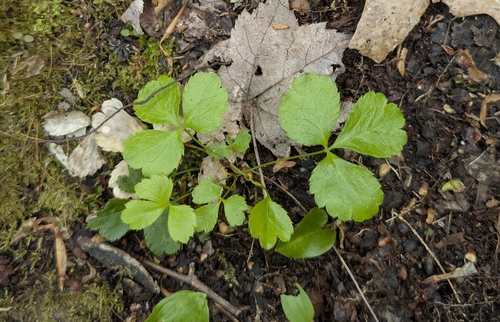
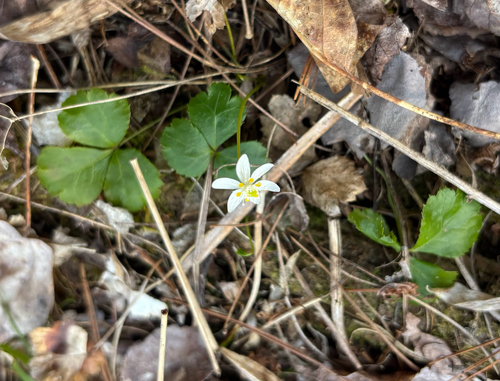
The threeleaf goldthread has glossy, dark green evergreen leaves, each divided into three distinct, toothed leaflets. From these low-growing leaves emerges a delicate stalk topped by a single, small white flower with five to seven slender petals, appearing star-like against the forest floor.
Category
PlantsRarity
Common
Danger
2/5 · Low
Snaps
15
If you look closely, each leaf looks like three tiny hearts joined together!
Its bright yellow roots are where it gets the 'goldthread' part of its name!
The shiny leaves can stay green all winter, peeking out from under the snow!
Tiny star-shaped white flowers are among the very first to bloom in the spring!
threeleaf goldthread has evergreen leaves that help it photosynthesize even under winter snow, giving it a head start in spring.
threeleaf goldthread has bright yellow, thread-like rhizomes that store energy and spread the plant, helping it thrive in the forest.
threeleaf goldthread has a low-growing form that helps it stay protected from harsh winds and heavy snow on the forest floor.
Lasioglossum vierecki
Drinks nectar and collects pollen from its small white flowers.
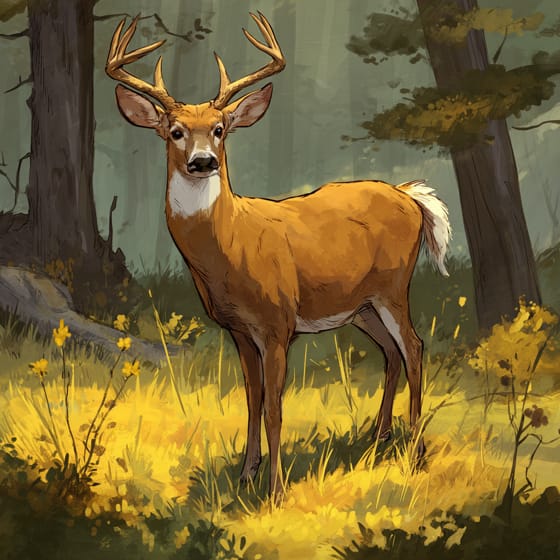
Odocoileus virginianus
Occasionally browses its leaves, especially when other food is scarce.
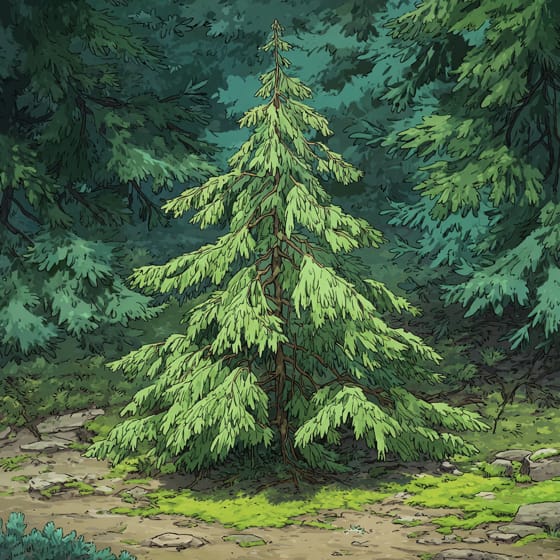
Tsuga canadensis
Thrives in the cool, moist, acidic understory created by hemlock forests.
Flowering plants are any plants that produce flowers as part of their reproductive cycle.
Shade tolerant plants are adapted to grow and thrive in areas with low light levels, requiring less direct sunlight.
Spring blooming plants produce their flowers during the spring season, often signifying the end of winter and the start of new growth.
Evergreen plants retain their foliage throughout the year, never shedding all their leaves at once.

Medicinal plants possess chemical compounds that can be used for therapeutic purposes to treat illnesses or maintain health.

Edible plants are those parts of a plant that are considered safe for human consumption.

Forest habitats are terrestrial environments dominated by dense tree cover, supporting a high diversity of plant and animal life.

Threatened status denotes a species likely to become endangered in the foreseeable future without effective conservation interventions.
No aliases listed yet.
Danger
2/5 · Low
Don't touch or eat plants unless you know they are safe!
The easiest way to identify threeleaf goldthread is to use the Snappit nature identifier app.
5-15 cm
10-25 cm
0.5-1 cm
Late spring to early summer
No
Mild
Perennial
Zoom in to split clusters and explore where this object has been snapped.
May 27, 2026
Lyme Common Historic DistrictPhoto attribution
(c) Nick Kleinschmidt, some rights reserved (CC BY)
License: CC BY 4.0 ↗
Image may be shown cropped inside the card frame.
May 5, 2026
Norway Historic DistrictPhoto attribution
(c) JSReiff, some rights reserved (CC BY)
License: CC BY 4.0 ↗
Image may be shown cropped inside the card frame.

Pennsylvania, US
You might spot Pinesap, Great Rhododendron, and Mountain Laurel.
View guide →

New Hampshire, US
You might spot Eastern Red-Backed Salamander and Eastern Newt.
View guide →

US
You might spot Pink Lady's Slipper and Canada Mayflower.
View guide →

Massachusetts, US
You might spot Eastern Newt, Ghost Pipe, and Partridgeberry.
View guide →

Massachusetts, US
You might spot Pink Lady's Slipper, Mountain Laurel, and Ghost Pipe.
View guide →

US
You might spot Salal, Ochre Sea Star, and Leather Star.
View guide →
Take the discovery with you
Snap it with Snappit to identify it, learn what makes it special, and add the discovery to your collection.







.jpg&width=800)



_001.jpg&width=800)

