





Swamp Sawgrass
Cladium mariscus
Swamp Sawgrass is a tall, grassy plant that grows in wet areas like swamps and marshes. Its long, sharp leaves can be very pointy, making it look like a green sword!
Habitat: Wetlands
The Swamp Sawgrass has tall, stiff, lime-green leaves with extremely sharp, saw-toothed edges. It forms dense, upright clumps, creating a distinctive spiky texture in wet environments, often appearing as vast, uniform stands.
Category
PlantsRarity
Common
Danger
2/5 · Low
Snaps
Be the first to snap!
Despite its name, sawgrass is actually a sedge, not a true grass!
It grows so dense it forms walls, hiding animals like alligators and wading birds!
Its extra-sharp leaves were once used by Native Americans for cutting tools!
Its tiny seeds are a tasty and important food source for many water birds!
Swamp Sawgrass has incredibly sharp, silica-laced leaf edges that help it defend against most plant-eating animals.
Swamp Sawgrass can grow extensive rhizomes in waterlogged soil, anchoring it firmly and allowing it to spread widely.
Swamp Sawgrass can tolerate fluctuating water levels, allowing it to thrive in wetlands that other plants avoid.

Odocoileus virginianus
graze on the young, tender shoots and leaves.
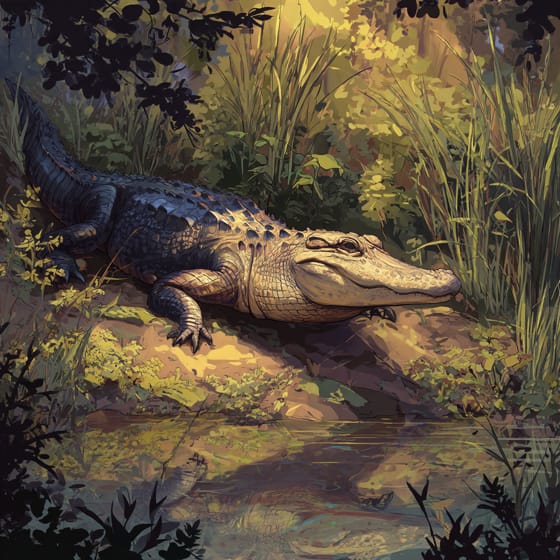
Alligator mississippiensis
hides among dense sawgrass to ambush prey or bask.
Porphyrio martinicus
consumes sawgrass seeds and uses it for nesting.

Sylvilagus palustris
feeds on the stems and leaves, seeking refuge.
Grass-like plants are herbaceous plants that visually resemble true grasses, typically having long, narrow leaves.
Describes plants that are particularly attractive and beneficial to a wide range of pollinating organisms.
Rapid growing plants exhibit accelerated growth rates, quickly increasing in size and biomass within a short period.
This habitat trait identifies species found in wetlands, which are areas of land saturated with water, either permanently or seasonally, including marshes, swamps, and bogs.

Describes a species whose presence and role have a disproportionately large effect on its environment.
No aliases listed yet.
Danger
2/5 · Low
Always be careful around sharp plants and ask an adult before touching.
The easiest way to identify Swamp Sawgrass is to use the Snappit nature identifier app.
150-300 cm
50-100 cm
0.2-0.5 cm
Summer
No
None
Perennial
Zoom in to split clusters and explore where this object has been snapped.
Recent snaps will appear here as new observations are added.
Take the discovery with you
Snap it with Snappit to identify it, learn what makes it special, and add the discovery to your collection.









.jpg&width=800)



_001.jpg&width=800)




