





Twin-Flagged Jumping Spider
anasaitis canosus
The Twin-Flagged Jumping Spider is a tiny acrobat of the spider world! With its vibrant colors and amazing jumping skills, it can leap many times its own length to catch its prey.
Habitat: You can find them in gardens, forests, and on plants where they hunt for insects.
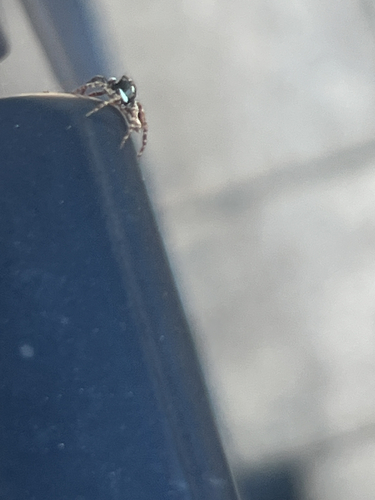
The Twin-Flagged Jumping Spider is small and often has an orange-red cephalothorax. Its abdomen is dark, sometimes iridescent, with two pale, flag-like markings near the rear, which give it its name and help it stand out.
Category
InsectsRarity
Common
Danger
1/5 · Very low
Snaps
23
Jumping spiders are known to 'wave' their front legs, possibly communicating with others.
Some scientists believe these clever spiders can solve simple mazes to find their food.
They build small, silken 'sleeping bags' under leaves or bark to rest safely at night.
They inflate tiny blood vessels in their legs to power their amazing, long-distance jumps!
Twin-Flagged Jumping Spider has excellent 360-degree vision that helps them spot tiny prey and predators from a distance.
Twin-Flagged Jumping Spider can spin a silk safety line as it jumps, preventing falls and offering a quick escape route.
Twin-Flagged Jumping Spider can stalk prey with slow, deliberate movements before a sudden, precise pounce.
A tiny hunter that preys on various small insects using its impressive jumping skills.
Musca domestica
eats tiny flies and other small insects
Culex pipiens
helps control mosquito populations
Anolis carolinensis
a common meal for small lizards
.jpg&width=800)
Sitta carolinensis
a food source for insect-eating birds
Solitary animals live alone for most of their lives, only interacting with others for mating or parental care.
Arboreal animals live primarily in trees, utilizing them for shelter, food, and protection from predators.
Colorful describes organisms or objects displaying a wide range of bright and distinct colors.
This trait identifies organisms whose diet consists entirely or primarily of animal tissue.

Diurnal animals are primarily active during daylight hours, typically resting or sleeping at night.
Danger
1/5 · Very low
No special safety notes yet.
The easiest way to identify Twin-Flagged Jumping Spider is to use the Snappit nature identifier app.
3-5 mm
365-1095 days
A tiny hunter that preys on various small insects using its impressive jumping skills.
You can find them in gardens, forests, and on plants where they hunt for insects.
Ambush
8
Zoom in to split clusters and explore where this object has been snapped.
Jun 6, 2026
Pawleys Island Historic DistrictPhoto attribution
no rights reserved
License: CC0 1.0 ↗
Image may be shown cropped inside the card frame.

South Carolina, US
You might spot Anole, Green Treefrog, and Eastern Gray Squirrel.
View guide →

Georgia, US
You might spot Brown Anole, Anole, and Gulf Fritillary.
View guide →

South Carolina, US
You might spot Brown Pelican, Boat-Tailed Grackle, and Great Egret.
View guide →

Alabama, US
You might spot Anole, Eastern Box Turtle, and Resurrection Fern.
View guide →

Louisiana, US
You might spot Heavenly Bamboo, Rio Grande Copper Lily, and Ballmoss.
View guide →

US
You might spot Brown Pelican, Boat-Tailed Grackle, and Great Egret.
View guide →
Take the discovery with you
Snap it with Snappit to identify it, learn what makes it special, and add the discovery to your collection.








.jpg&width=800)



