





Variegated Fritillary
Euptoieta claudia
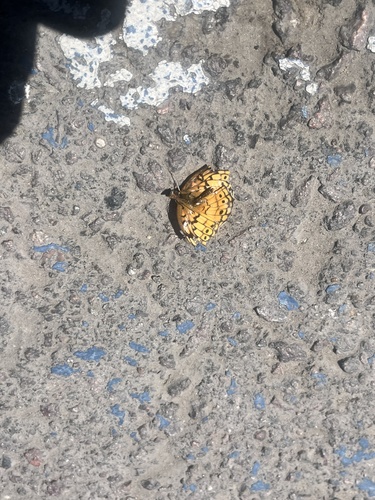
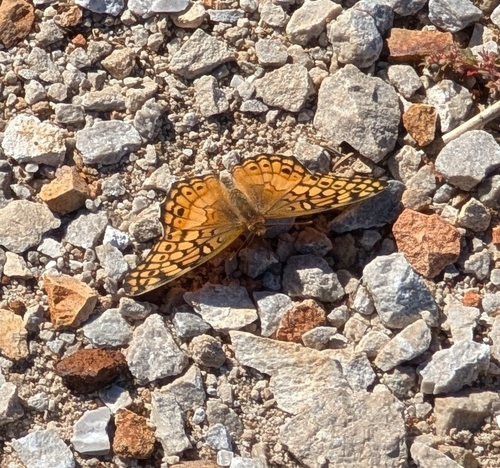
The Variegated Fritillary is a beautiful butterfly with orange and black spots. It flutters around gardens and fields, bringing joy to everyone who sees it!
Habitat: Grasslands
The Variegated Fritillary has a striking tawny orange upper side with bold black markings and a distinctive series of silvery-brown patches on its hindwing underside. Its intricate wing patterns create a camouflaged appearance when resting.
Category
InsectsRarity
Common
Danger
1/5 · Very low
Snaps
28
Did you know some Variegated Fritillaries fly as far as Mexico for winter?
The "fritillary" name comes from the Latin for "chessboard," reflecting their checkered wings!
Their spiky caterpillars have a secret: they are harmless despite their scary look!
These butterflies flutter on sunny days, but hide from rain by clinging to stems.
Variegated Fritillary has intricate patterns on its underside that help it blend perfectly into its surroundings, making it hard for predators to spot.
Variegated Fritillary can migrate hundreds of miles, flying south for winter to find warmer climates.
Variegated Fritillary has a long, tube-like proboscis that helps it sip sweet nectar from deep inside flowers with ease.
Variegated Fritillary caterpillars can eat tough passion-vine leaves that many other insects avoid, giving them a special food source.
Adults drink flower nectar, while caterpillars munch on the leaves of specific host plants.
Age differences: Yes, larvae eat plant leaves, but adults only drink flower nectar.
Passiflora incarnata
Caterpillars eat its leaves for food.
Cirsium horridulum
Adults visit flowers for nectar, spreading pollen.
.jpg&width=800)
Polioptila caerulea
These small birds sometimes catch and eat butterflies.
Marked with spots or patches of a different color.
Solitary animals live alone for most of their lives, only interacting with others for mating or parental care.
Colorful describes organisms or objects displaying a wide range of bright and distinct colors.
Grassland habitats are terrestrial biomes dominated by grasses and herbaceous plants, supporting a variety of grazing animals.

This trait characterizes organisms whose diet consists entirely or primarily of plant material.

Describes plants that are particularly attractive and beneficial to a wide range of pollinating organisms.

Diurnal animals are primarily active during daylight hours, typically resting or sleeping at night.

Migratory animals undertake seasonal movements from one region to another, typically in response to changes in climate or food availability.

Describes organisms that transfer pollen, enabling the fertilization and reproduction of plants.
Danger
1/5 · Very low
Butterflies are safe to watch, but remember not to touch them; they are delicate!
The easiest way to identify Variegated Fritillary is to use the Snappit nature identifier app.
45-70 mm
20-30 mm
7-30 days
Adults drink flower nectar, while caterpillars munch on the leaves of specific host plants.
Grasslands
Foraging
6
Zoom in to split clusters and explore where this object has been snapped.
May 22, 2026
Gallup Commercial Historic DistrictPhoto attribution
(c) William Harmon, some rights reserved (CC BY)
License: CC BY 4.0 ↗
Image may be shown cropped inside the card frame.
Oct 26, 2024
Nathan and Olive Boone Homestead State Historic SitePhoto attribution
(c) Conway Hawn, some rights reserved (CC BY)
License: CC BY 4.0 ↗
Image may be shown cropped inside the card frame.
Jun 13, 2026

Missouri, US
You might spot Common Eastern Bumble Bee and Brown-Belted Bumble Bee.
View guide →

Alabama, US
You might spot Eastern Box Turtle, Carolina Wren, and Field Sparrow.
View guide →

Colorado, US
You might spot Eastern Fox Squirrel, Bee, and Duck.
View guide →

Kentucky, US
You might spot Bird's-Eye Speedwell and Barn Swallow.
View guide →

Pennsylvania, US
You might spot Harlequin Bug, White-Tailed Deer, and Bee.
View guide →

Oklahoma, US
You might spot Monarch, American Bumble Bee, and Gulf Fritillary.
View guide →
Take the discovery with you
Snap it with Snappit to identify it, learn what makes it special, and add the discovery to your collection.






.jpg&width=800)



