





Virginia Springbeauty
Claytonia virginica
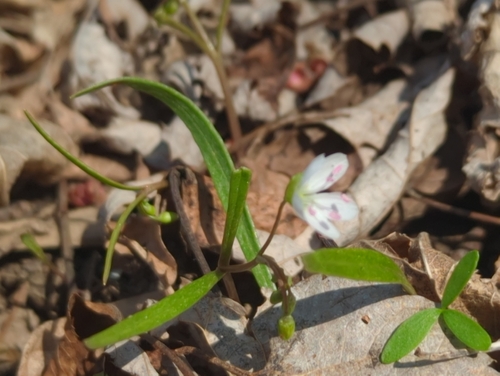
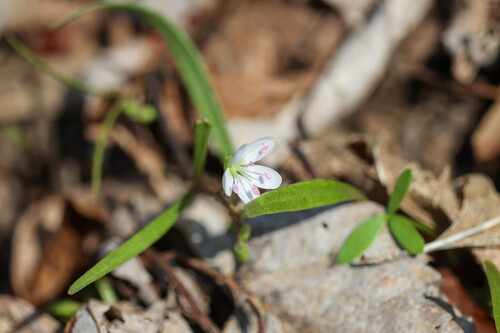
Virginia Springbeauty is a lovely little flower that blooms in spring. It has pink and white petals that look like tiny stars, and it grows in shady places like forests.
Habitat: Forests
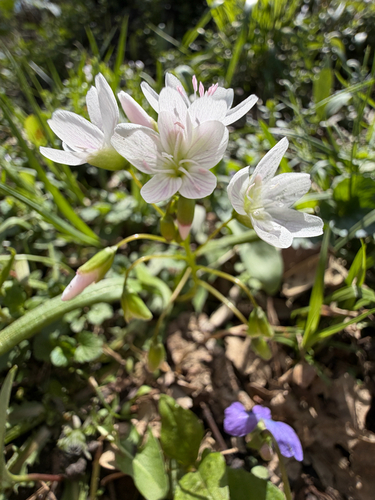
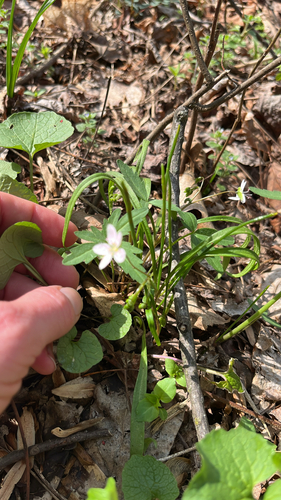
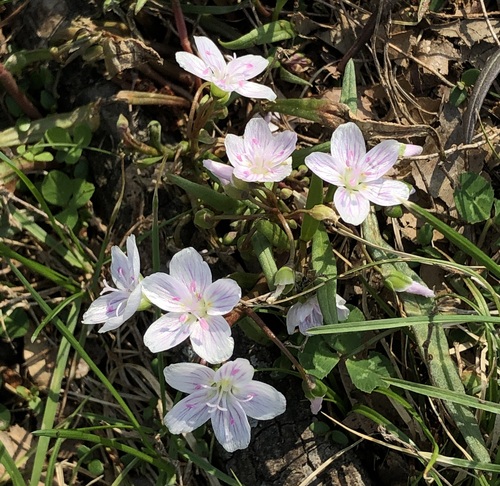
The Virginia Springbeauty has delicate, cup-shaped flowers, usually white or pale pink, with five petals distinctly striped with darker pink veins. Its slender, grass-like leaves grow from a small underground corm.
Category
PlantsRarity
Common
Danger
1/5 · Very low
Snaps
50
Each delicate flower only lasts for one day before it fades away!
Its delicate flowers close at night, reopening with the morning sun.
Its edible root, called a corm, tastes like tiny potatoes or chestnuts!
Some Native American tribes traditionally used its corms as a tasty food source.
Virginia Springbeauty has an underground corm that stores energy, helping it bloom extra early in spring.
It can pop up and bloom before many other plants, grabbing sunshine when the forest canopy is still bare.
Its dried seed capsules can pop open suddenly, flinging tiny seeds away from the parent plant to spread.
Andrena erigeniae
A specialist bee that relies heavily on its nectar.

Bombus impatiens
Gathers pollen and nectar from its early blooms.
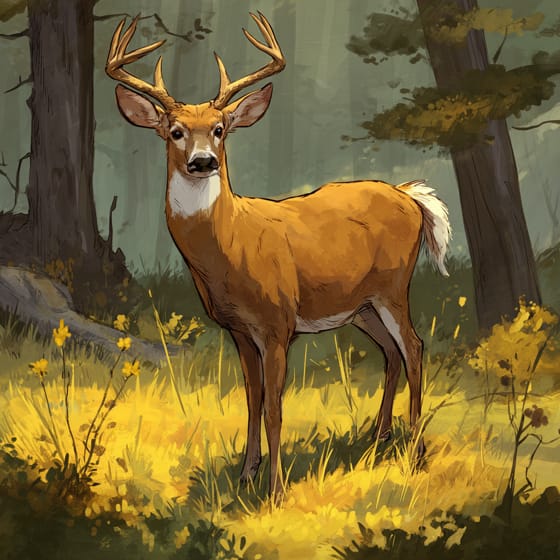
Odocoileus virginianus
Deer may graze on its leaves and flowers.
Microtus pennsylvanicus
Voles may dig up and eat its energy-rich corms.
Flowering plants are any plants that produce flowers as part of their reproductive cycle.
Cluster flowers are inflorescences where individual flowers are arranged closely together on a common stem.
Shade tolerant plants are adapted to grow and thrive in areas with low light levels, requiring less direct sunlight.
Spring blooming plants produce their flowers during the spring season, often signifying the end of winter and the start of new growth.

Edible plants are those parts of a plant that are considered safe for human consumption.

Describes plants that are particularly attractive and beneficial to a wide range of pollinating organisms.

Forest habitats are terrestrial environments dominated by dense tree cover, supporting a high diversity of plant and animal life.
No aliases listed yet.
Danger
1/5 · Very low
Always look but don't pick flowers unless you have permission.
The easiest way to identify Virginia Springbeauty is to use the Snappit nature identifier app.
10-40 cm
5-15 cm
1-2.5 cm
Spring
Yes
None
Perennial
Zoom in to split clusters and explore where this object has been snapped.
Apr 18, 2026
Cedar Valley Arboretum & Botanic GardensPhoto attribution
(c) evangrimes, some rights reserved (CC BY)
License: CC BY 4.0 ↗
Image may be shown cropped inside the card frame.
Apr 4, 2026
Holtwood Environmental PreservePhoto attribution
(c) Joshua Huber, some rights reserved (CC BY-SA)
License: CC BY-SA 4.0 ↗
Image may be shown cropped inside the card frame.
Mar 30, 2026
Central Springfield Historic DistrictPhoto attribution
(c) Y. Liu, some rights reserved (CC BY)
License: CC BY 4.0 ↗
Image may be shown cropped inside the card frame.
Mar 14, 2026
Hedgesville Historic DistrictPhoto attribution
(c) Tom Field, some rights reserved (CC BY)
License: CC BY 4.0 ↗
Image may be shown cropped inside the card frame.
Mar 14, 2026
Baltimore and Ohio and Related Industries Historic DistrictPhoto attribution
(c) Tom Field, some rights reserved (CC BY)
License: CC BY 4.0 ↗
Image may be shown cropped inside the card frame.

Missouri, US
You might spot Common Eastern Bumble Bee and Brown-Belted Bumble Bee.
View guide →

Iowa, US
You might spot Common Eastern Bumble Bee and Eastern Cottontail.
View guide →

Illinois, US
You might spot Eastern Fox Squirrel, Amur Honeysuckle, and Poison Hemlock.
View guide →

Ohio, US
You might spot Duck, Canada Goose, and Muscovy Duck.
View guide →

Louisiana, US
You might spot Heavenly Bamboo, Rio Grande Copper Lily, and Ballmoss.
View guide →

New Jersey, US
You might spot American Beech, Garlic Mustard, and Spotted Lanternfly.
View guide →
Take the discovery with you
Snap it with Snappit to identify it, learn what makes it special, and add the discovery to your collection.






.jpg&width=800)



_001.jpg&width=800)


