





virgin's-bower
Clematis virginiana
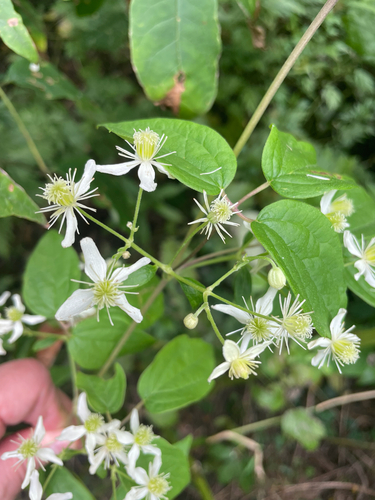
Virgin's-bower is a beautiful climbing flower that can grow on fences and trees. It has lovely white flowers that bloom in the summer and turn into fluffy seed heads in the fall.
Habitat: Woodlands
The virgin's-bower has abundant clusters of small, star-shaped, fragrant white flowers. Its leaves are typically composed of three bright green leaflets. Later, it develops unique, feathery silver-white seed heads that make it visually distinctive.
Category
PlantsRarity
Common
Danger
1/5 · Very low
Snaps
6
After blooming, its seeds grow long, feathery tails that look like an "old man's beard."
Its scientific name, Clematis, comes from an ancient Greek word for "a climbing plant."
Native Americans traditionally used parts of this plant for various medicinal purposes.
This fast-growing vine can completely cover fences or arbors in just one summer!
Virgin's-bower can quickly grasp onto supports with its twisting leaf stalks, helping it climb high for sunlight.
Virgin's-bower has long, feathery tails on its seeds that catch the wind, helping them travel far and wide.
Virgin's-bower contains chemicals in its sap that can deter most hungry herbivores from eating its leaves.
Bombus impatiens
gathers nectar and pollen
Apis mellifera
collects nectar for honey
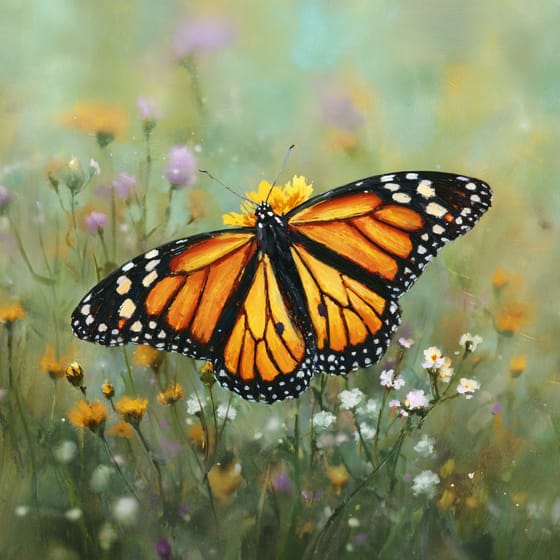
Danaus plexippus
sips nectar from its blooms

Odocoileus virginianus
occasionally browses its foliage
Climbing or vine plants are characterized by a growth habit that allows them to ascend upwards by twining, tendrils, or adhesive roots.
Deciduous plants periodically shed all their leaves, typically during autumn or dry seasons.
Flowering plants are any plants that produce flowers as part of their reproductive cycle.
Summer blooming plants produce their flowers during the summer season, often providing vibrant color when many other plants have finished.

Fragrant flowers emit a pleasant aroma, often to attract pollinators or for defense.

Describes plants that are particularly attractive and beneficial to a wide range of pollinating organisms.

Forest habitats are terrestrial environments dominated by dense tree cover, supporting a high diversity of plant and animal life.
Danger
1/5 · Very low
Always ask an adult before touching plants, just to be safe!
The easiest way to identify virgin's-bower is to use the Snappit nature identifier app.
300-600 cm
1.5-3 cm
Summer_early_fall
No
Mild
Perennial
Insect
Zoom in to split clusters and explore where this object has been snapped.
Aug 16, 2025
South Mountain ReservationPhoto attribution
(c) Tom Pollard, some rights reserved (CC BY)
License: CC BY 4.0 ↗
Image may be shown cropped inside the card frame.

New Jersey, US
You might spot American Wintergreen, Wild Geranium, and Mayapple.
View guide →

Massachusetts, US
You might spot Pink Lady's Slipper, Spring Peeper, and Painted Turtle.
View guide →

Kentucky, US
You might spot Eastern Newt, Monarch, and American Chestnut.
View guide →

Alabama, US
You might spot Horned Passalus Beetle and American Sweetgum.
View guide →

Pennsylvania, US
You might spot Eastern Skunk Cabbage and American Hornbeam.
View guide →
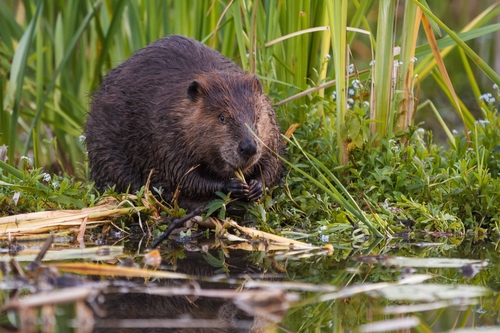
Massachusetts, US
You might spot American Beaver, Mountain Laurel, and Alder Buckthorn.
View guide →
Take the discovery with you
Snap it with Snappit to identify it, learn what makes it special, and add the discovery to your collection.






.jpg&width=800)


_001.jpg&width=800)




