





West Coast Lady
Vanessa annabella
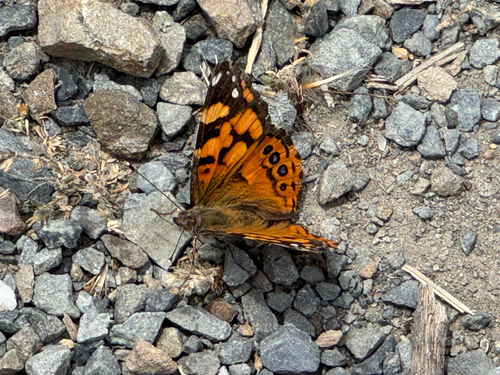
The West Coast Lady is a colorful butterfly that loves to flutter around flowers. With its bright orange and black wings, it can be seen dancing in gardens and fields during warm days.
Habitat: Urban areas
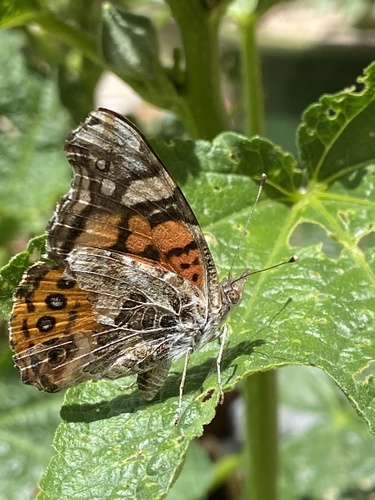
The West Coast Lady has orange-brown wings patterned with black and white spots. Its hindwings feature distinctive blue-ringed eyespots, and its forewings have bold black and white bars, making it stand out from similar butterflies.
Category
InsectsRarity
Common
Danger
1/5 · Very low
Snaps
25
Its antennae help it smell flowers and feel its surroundings, acting like super-sensors!
Its colorful wings are covered in thousands of tiny, overlapping scales!
This butterfly starts as an egg, becomes a caterpillar, then a chrysalis, and finally a beautiful butterfly!
This butterfly tastes with its feet! It 'tastes' plants by landing on them!
West Coast Lady can travel long distances with its strong wings, helping it find new homes and abundant flower patches.
West Coast Lady can unfurl a long, straw-like proboscis, using it to sip sweet nectar deep inside flowers.
West Coast Lady lays eggs on specific host plants, ensuring its caterpillars have the perfect food to grow.
Caterpillars munch on leaves, while adult butterflies drink flower nectar and fruit juices.
Age differences: Caterpillars eat plant leaves, but adults sip liquid nectar from flowers using their long proboscis.

Malva neglecta
provides essential food for its caterpillars to grow.
Solidago canadensis
sips nectar, spreading pollen between its golden flowers.

Cyanocitta stelleri
is a common bird predator, eating adult butterflies.
Colorful describes organisms or objects displaying a wide range of bright and distinct colors.
This trait characterizes organisms whose diet consists entirely or primarily of plant material.
Describes plants that are particularly attractive and beneficial to a wide range of pollinating organisms.
Diurnal animals are primarily active during daylight hours, typically resting or sleeping at night.

Migratory animals undertake seasonal movements from one region to another, typically in response to changes in climate or food availability.

This habitat trait indicates species that can coexist with humans in urban and suburban environments, utilizing man-made structures and green spaces.

Describes organisms that transfer pollen, enabling the fertilization and reproduction of plants.
Danger
1/5 · Very low
Always watch butterflies from a distance so they don't get scared.
The easiest way to identify West Coast Lady is to use the Snappit nature identifier app.
45-60 mm
20-30 mm
10-20 days
10-20 km/h
Caterpillars munch on leaves, while adult butterflies drink flower nectar and fruit juices.
Urban areas
Foraging
Zoom in to split clusters and explore where this object has been snapped.
Jun 6, 2026
Berkeley Rose GardenPhoto attribution
(c) Hydrocycler (Elizabeth Dougherty), some rights reserved (CC BY)
License: CC BY 4.0 ↗
Image may be shown cropped inside the card frame.
Jun 3, 2026
Andree Clark Bird RefugePhoto attribution
(c) Christine Melvin, some rights reserved (CC BY)
License: CC BY 4.0 ↗
Image may be shown cropped inside the card frame.
Jun 3, 2026
Cheyenne Botanic GardensPhoto attribution
(c) Harry Podschwit, some rights reserved (CC BY)
License: CC BY 4.0 ↗
Image may be shown cropped inside the card frame.

California, US
You might spot Monarch, Canada Goose, and Western Gull.
View guide →

California, US
You might spot Monarch, Bee, and Anise Swallowtail.
View guide →

California, US
You might spot Mule Deer, Turkey, and Duck.
View guide →

California, US
You might spot Western Gull, Sea Lion, and Great Blue Heron.
View guide →

California, US
You might spot African Lion, Red Panda, and Giraffes.
View guide →
California, US
You might spot Brown Pelican, Black-Crowned Night Heron, and Western Gull.
View guide →
Take the discovery with you
Snap it with Snappit to identify it, learn what makes it special, and add the discovery to your collection.







.jpg&width=800)



