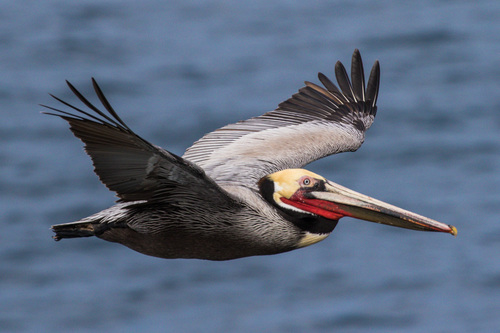
Brown Pelican
Andree Clark Bird Refuge is a serene sanctuary for over 200 bird species in Santa Barbara.
Andree Clark Bird Refuge is a serene sanctuary for over 200 bird species in Santa Barbara. This 42-acre open-space park, managed by the City of Santa Barbara Parks Division, features a significant saltwater marsh and a 29-acre brackish lake. Situated conveniently near East Beach and the Santa Barbara Zoo, it serves as a vital wildlife estuary, providing a protected habitat for both resident and migratory birds.
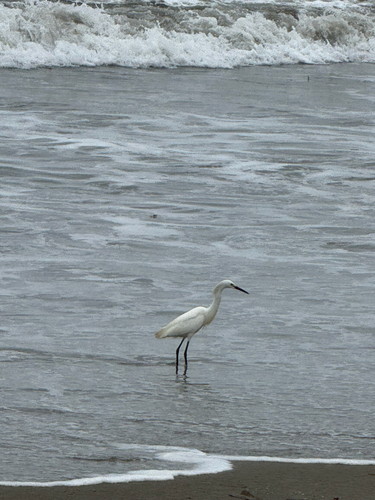
The refuge’s main feature is its expansive brackish lake, dotted with three picturesque islands that provide critical nesting and resting sites for avian residents. Visitors can explore a network of walking paths along the northern shore and utilize three dedicated viewing platforms for unparalleled birdwatching opportunities. Keep an eye out for majestic Great Blue Herons stalking their prey, graceful Snowy Egrets, and a variety of ducks like Ruddy Ducks, American Coots, and Mallards. The area is also home to Black-crowned Night Herons, California Gulls, and Western Gulls, alongside sensitive species such as the Western Pond Turtle and the federally endangered Tidewater Goby.
A visit to Andree Clark Bird Refuge offers a peaceful escape and a chance to reconnect with nature. It’s a perfect spot for passive recreation, whether you're keen on birdwatching, photography, or simply enjoying a leisurely walk or bike ride along its scenic trails. The refuge’s tranquil waters and abundant wildlife make it a memorable destination, seamlessly blending natural beauty with accessible outdoor activity, and providing stunning vistas of the surrounding mountains and coastline. Be ready to snap and learn! Get the Snappit app to identify any nature species you find here.
The area now known as the Andree Clark Bird Refuge has a rich and varied past, originally a low-lying saltwater marsh and "Salt Pond" in the mid-1800s, where locals would harvest salt. In 1873, it hosted John Bradley's Ocean Beach Park Track, a horse race track that operated until 1886. The City of Santa Barbara acquired the land in 1909, naming it Citizen's Park. A significant turning point came in 1917 when a petition from 500 schoolchildren advocated for its transformation into a bird refuge, which eventually materialized a decade later. In 1928, Huguette Clark, daughter of "Copper King" William A. Clark and owner of the nearby Bellosguardo estate, donated $50,000 to the city. This generous contribution funded the excavation of the pond to create an artificial freshwater lake, complete with three man-made islands, and stipulated that the refuge be named in memory of her older sister, Louise Amelia Andrée Clark, who had passed away at a young age. Further donations from Huguette Clark in 1930 and 1989 supported landscaping and cleanup efforts. More recently, a comprehensive restoration project was completed in early 2023, addressing water quality issues and enhancing habitat with native plants and trees.
Engage in birdwatching, walking, jogging, cycling, and nature photography. Observe various bird species, native and non-native turtles basking in the sun, and sometimes even rabbits and dragonflies. Interpretive signs along the paths provide educational insights into the local flora and fauna.
While generally pleasant, historical issues with algal blooms causing odors have been largely addressed by the 2023 restoration project. Bird activity varies seasonally, with migratory birds present during their respective seasons.
The refuge features paved multi-use paths and walking trails along the northern shore. The first two of the three viewing platforms are wheelchair-accessible, though one has a step to the third. Designated accessible parking is available. Dogs are permitted on leash.
The 29-acre brackish lake with its three islands, the numerous walking and biking paths, and the three designated viewing platforms are central to the experience. Visitors can also enjoy views of the refuge from the Santa Barbara Zoo's Condor Exhibit.
Each card links to a full Explore page with photos, traits, and fun facts.
Start with the big picture, then zoom in to explore individual wildlife observations around this place.
Bring binoculars
** Essential for getting the best views of the diverse birdlife.
Wear comfortable footwear or bring a bike: The refuge offers extensive walking and cycling paths.
Visit in the early morning
This is often the best time to observe active birds and enjoy a quieter experience.
Pack water and sun protection
Shade is limited along some parts of the trails.
Plan for no on-site restrooms
Utilize facilities elsewhere before or after your visit.
Park smart
Public parking is available off Los Patos Way but can fill up quickly, especially on weekends.
Jun 6, 2026
Photo attribution
(c) Sergei Maslov, some rights reserved (CC BY-SA)
License: CC BY-SA 4.0 ↗
Image may be shown cropped inside the card frame.
Jun 4, 2026
Photo attribution
(c) Christine Melvin, some rights reserved (CC BY)
License: CC BY 4.0 ↗
Image may be shown cropped inside the card frame.
Jun 4, 2026
Photo attribution
(c) Christine Melvin, some rights reserved (CC BY)
License: CC BY 4.0 ↗
Image may be shown cropped inside the card frame.
Jun 4, 2026
Photo attribution
(c) Christine Melvin, some rights reserved (CC BY)
License: CC BY 4.0 ↗
Image may be shown cropped inside the card frame.
Jun 4, 2026
Photo attribution
(c) Christine Melvin, some rights reserved (CC BY)
License: CC BY 4.0 ↗
Image may be shown cropped inside the card frame.

Maryland, US
You might spot White-Tailed Deer and Eastern Gray Squirrel.
View guide →
.jpg)
District of Columbia, US
You might spot Eastern Gray Squirrel, Duck, and House Sparrow.
View guide →

Illinois, US
You might spot American Robin, Canada Goose, and House Sparrow.
View guide →

Virginia, US
You might spot Spotted Lanternfly and Northern Cardinal.
View guide →
Take the discovery with you
Identify the wildlife you spot, learn as you go, and keep a collection of the adventure.