





Western Labrador Tea
Rhododendron columbianum
Western Labrador Tea is a lovely shrub that grows in cool, wet places. Its leaves can be used to make a special tea that some people enjoy. The flowers are pretty and attract butterflies!
Habitat: Wetlands
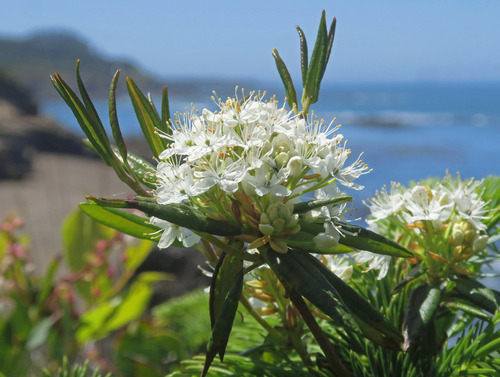
The Western Labrador Tea has leathery, dark green leaves with distinct rusty-brown hairs on their undersides. Its small, star-shaped flowers are clustered at the stem tops, typically appearing white or creamy, making it stand out in damp, cool environments.
Category
PlantsRarity
Common
Danger
1/5 · Very low
Snaps
2
Indigenous peoples brewed its leaves for a special, zingy tea for centuries!
Its leaves feel like soft felt underneath, covered in tiny, fuzzy hairs!
Some people believe its strong, woodsy scent can even help keep mosquitoes away!
This plant stays green all winter long, even when everything else is covered in snow!
Western Labrador Tea has woolly hairs under its leaves that trap warm air, protecting it from cold and preventing water loss.
This plant produces strong-smelling oils that may deter hungry animals from nibbling its leaves, keeping it safe.
Apis mellifera
Feeds on nectar and collects pollen.
Bombus borealis
Important pollinator in its range.
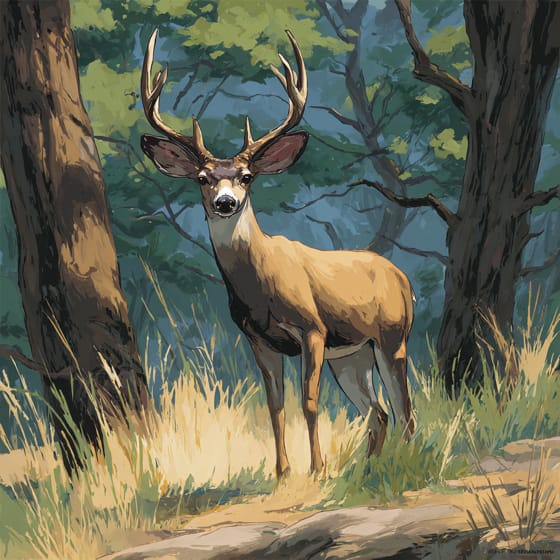
Odocoileus hemionus
Browses on the plant's foliage.
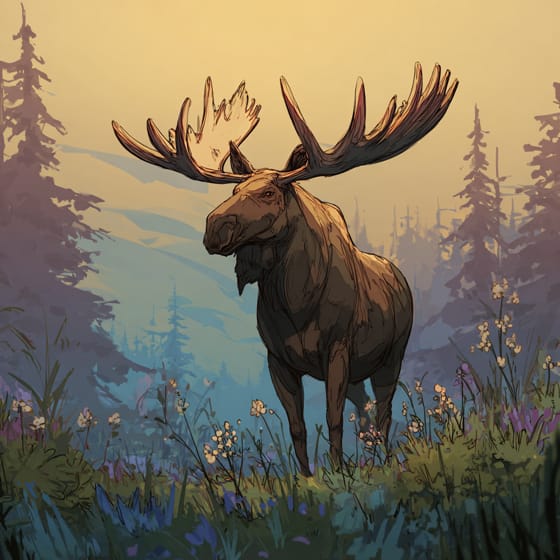
Alces alces
Feeds on the leaves and twigs.
Flowering plants are any plants that produce flowers as part of their reproductive cycle.
A shrub is a woody plant smaller than a tree, typically with multiple stems branching from or near the ground.
Evergreen plants retain their foliage throughout the year, never shedding all their leaves at once.
Fragrant flowers emit a pleasant aroma, often to attract pollinators or for defense.

Medicinal plants possess chemical compounds that can be used for therapeutic purposes to treat illnesses or maintain health.

Edible plants are those parts of a plant that are considered safe for human consumption.

Describes plants that are particularly attractive and beneficial to a wide range of pollinating organisms.

This habitat trait identifies species found in wetlands, which are areas of land saturated with water, either permanently or seasonally, including marshes, swamps, and bogs.
No aliases listed yet.
Danger
1/5 · Very low
Always ask an adult before touching or tasting any plants.
The easiest way to identify Western Labrador Tea is to use the Snappit nature identifier app.
50-200 cm
50-150 cm
1-2 cm
Summer
Yes
Mild
Perennial
Zoom in to split clusters and explore where this object has been snapped.
Take the discovery with you
Snap it with Snappit to identify it, learn what makes it special, and add the discovery to your collection.









.jpg&width=800)


_001.jpg&width=800)


