





western sycamore
Platanus racemosa
The western sycamore is a tall tree with big, broad leaves and unique, peeling bark. It grows near rivers and provides shade for animals and people alike.
Habitat: Wetlands
The western sycamore has striking camouflage bark, a mottled mix of white, green, and brown, that peels away in irregular patches. Its large, maple-like leaves have deep lobes, and its fruits hang in distinctive fuzzy, globe-shaped clusters. It often grows into a massive, spreading tree.
Category
PlantsRarity
Common
Danger
1/5 · Very low
Snaps
1
Even when it's just a stump, a western sycamore can sprout many new trunks!
Its leaves can grow enormous, sometimes wider than your head!
The western sycamore’s bark sheds in big sheets, revealing ghostly white patches underneath!
These trees can live for hundreds of years, becoming giants of the forest!
Western sycamore has tough, deep roots that allow it to firmly anchor itself, helping it survive powerful floods.
Western sycamore's peeling bark creates a striking pattern, which helps it blend in with the dappled light in forests.
Western sycamore can disperse its fuzzy seed balls widely, allowing new trees to sprout easily in various spots.

Sciurus griseus
forages for fallen seeds and nuts.

Sialia mexicana
nests in its natural tree hollows.
Icterus cucullatus
builds hanging nests from its leaves.
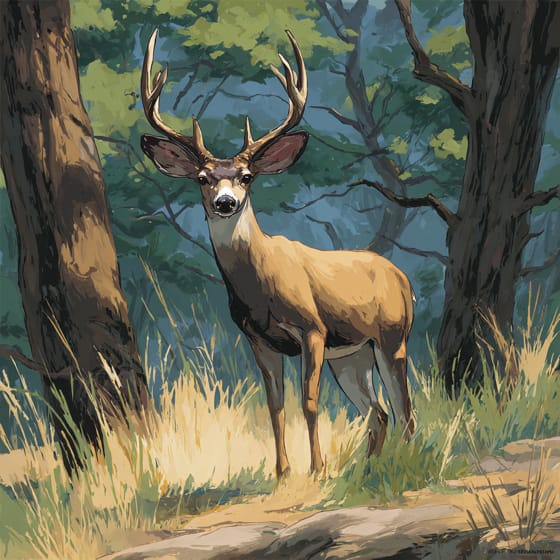
Odocoileus hemionus
browses on its young leaves and twigs.
Deciduous plants periodically shed all their leaves, typically during autumn or dry seasons.
Shade tolerant plants are adapted to grow and thrive in areas with low light levels, requiring less direct sunlight.
Broadleaf trees are angiosperms characterized by flat, wide leaves that are typically shed annually in temperate climates.
Describes plants that are particularly attractive and beneficial to a wide range of pollinating organisms.

Rapid growing plants exhibit accelerated growth rates, quickly increasing in size and biomass within a short period.

Timber refers to wood that has been prepared for use in building and carpentry.

This habitat trait identifies species found in wetlands, which are areas of land saturated with water, either permanently or seasonally, including marshes, swamps, and bogs.
No aliases listed yet.
Danger
1/5 · Very low
Stay on paths and don't climb too high in trees without an adult.
The easiest way to identify western sycamore is to use the Snappit nature identifier app.
1500-3000 cm
1000-2000 cm
Spring
No
None
Perennial
Wind
Zoom in to split clusters and explore where this object has been snapped.

California, US
You might spot Western Fence Lizard, Vulture, and Mule Deer.
View guide →

California, US
You might spot Eastern Fox Squirrel, Bee, and House Sparrow.
View guide →

California, US
You might spot Duck, American Coot, and Canada Goose.
View guide →
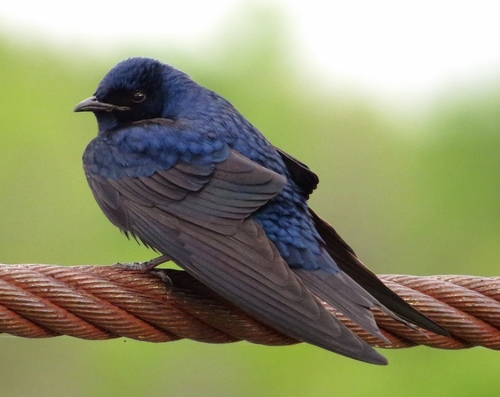
California, US
You might spot Purple Martin, Acorn Woodpecker, and Dark-Eyed Junco.
View guide →

California, US
You might spot California Wild Rose and California Wild Grape.
View guide →

California, US
You might spot Valley Oak, Two-Horned Gall Wasp, and Silk Tree.
View guide →
Take the discovery with you
Snap it with Snappit to identify it, learn what makes it special, and add the discovery to your collection.








.jpg&width=800)


_001.jpg&width=800)



