





Western Wood-Pewee
Contopus sordidulus
The Western Wood-Pewee is a small, friendly bird that loves to sing in the trees. It has a soft, grayish-brown body and a cheerful song that sounds like 'pee-wee!'
Habitat: Forests
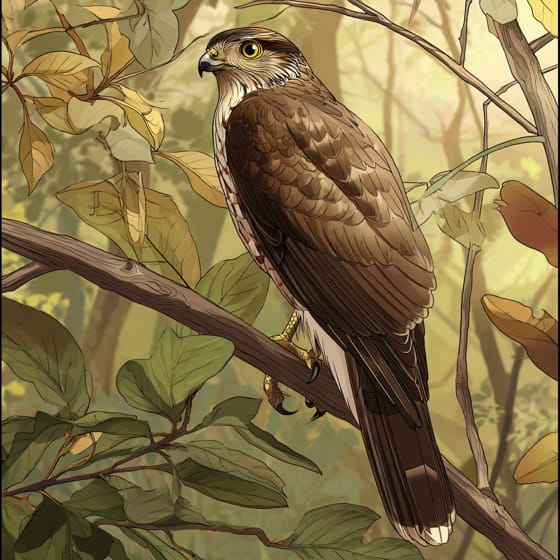
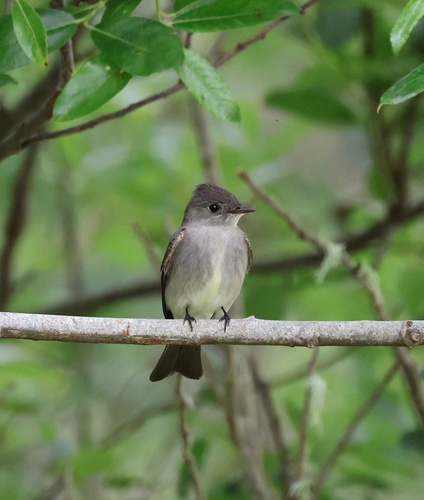
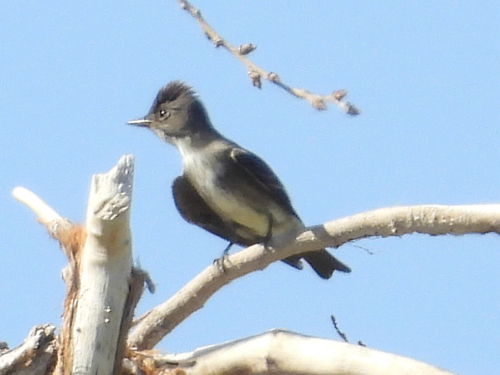
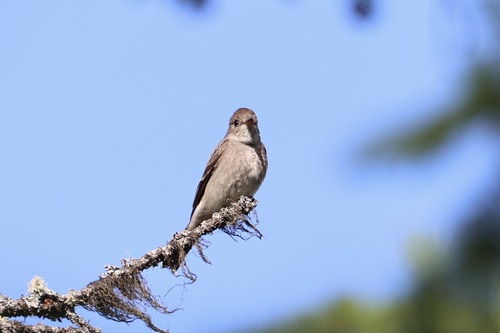
The Western Wood-Pewee has dull grey-brown upperparts and pale underparts, often with faint, dusky vest-like streaks on its sides. It is distinguished by two subtle, pale wing bars and notably long wings that extend past its short tail, giving it a sleek appearance.
Category
BirdsRarity
Common
Danger
1/5 · Very low
Snaps
13
Their signature "pee-wee" call sounds just like they're saying their own name!
This bird builds a tiny cup-shaped nest, often decorated with lichen and spider silk!
Western Wood-Pewees often return to the exact same nesting tree year after year!
Young pewees grow incredibly fast, leaving the nest only 16-18 days after hatching!
Western Wood-Pewees can snatch flying insects because of their agile flight and quick reflexes mid-air.
Western Wood-Pewees have a keen sense of hearing that helps them detect tiny insect movements from afar.
Western Wood-Pewees have drab, earthy plumage that helps them blend perfectly into tree branches.
These acrobatic birds primarily eat flying insects that they catch with impressive aerial maneuvers.
Feathered describes animals, primarily birds, possessing a covering of feathers.
Social animals live in organized groups, cooperating for survival benefits such as foraging, defense, and raising offspring.
Singing animals produce complex vocalizations, often for purposes of attracting mates, defending territory, or communicating within their species.
This trait identifies organisms whose diet primarily consists of insects and other small invertebrates.

Forest habitats are terrestrial environments dominated by dense tree cover, supporting a high diversity of plant and animal life.

Diurnal animals are primarily active during daylight hours, typically resting or sleeping at night.

Migratory animals undertake seasonal movements from one region to another, typically in response to changes in climate or food availability.
No aliases listed yet.
Danger
1/5 · Very low
Enjoy watching birds from a distance and be quiet so you don’t scare them away.
The easiest way to identify Western Wood-Pewee is to use the Snappit nature identifier app.
14-16 cm
23-26 cm
0.011-0.014 kg
3-8 years
35 km/h
These acrobatic birds primarily eat flying insects that they catch with impressive aerial maneuvers.
Forests
Zoom in to split clusters and explore where this object has been snapped.
Jun 3, 2026
Humboldt Botanical GardensPhoto attribution
(c) Eric Austin, some rights reserved (CC BY)
License: CC BY 4.0 ↗
Image may be shown cropped inside the card frame.
Jun 1, 2026
Las Vegas High School Neighborhood Historic DistrictPhoto attribution
(c) Katrina Smith, some rights reserved (CC BY)
License: CC BY 4.0 ↗
Image may be shown cropped inside the card frame.
Jul 17, 2025
Cut Bank Ranger Station Historic DistrictPhoto attribution
no rights reserved
License: CC0 1.0 ↗
Image may be shown cropped inside the card frame.

New Mexico, US
You might spot Tree Cholla, Colorado Pinyon, and House Finch.
View guide →

Montana, US
You might spot Great Blanketflower and Seven-Spotted Lady Beetle.
View guide →

New Mexico, US
You might spot White-Winged Dove and Silverleaf Nightshade.
View guide →

New Mexico, US
You might spot Vermilion Flycatcher, Turkey, and American Rubyspot.
View guide →

Nevada, US
You might spot Engelmann's Hedgehog Cactus.
View guide →

Oregon, US
You might spot Belding's Ground Squirrel and Yellow-Headed Blackbird.
View guide →
Take the discovery with you
Snap it with Snappit to identify it, learn what makes it special, and add the discovery to your collection.





.jpg&width=800)
.jpg&width=800)







