





Whitemargin Sandmat
Euphorbia albomarginata
Whitemargin Sandmat is a small, green plant with pretty white edges on its leaves. It grows close to the ground and loves sunny places, making it a cheerful sight in the wild!
Habitat: Desert
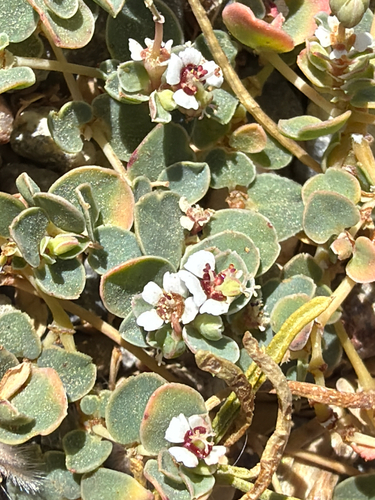
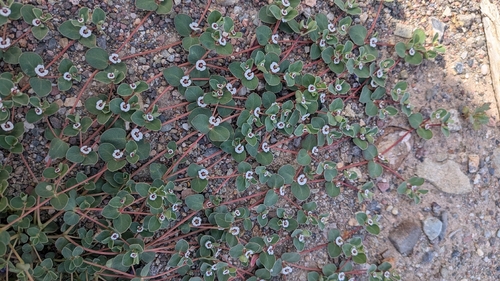
The Whitemargin Sandmat is a low-growing plant forming dense mats close to the ground. It has small, oval-shaped green leaves uniquely edged with a distinct white margin. Its actual flowers are tiny and yellowish-green, surrounded by showy, petal-like white bracts that make them appear like larger white blooms.
Category
PlantsRarity
Common
Danger
2/5 · Low
Snaps
7
Break a stem, and milky white 'blood' oozes out, which helps scare away munchers!
It's a champion survivor, thriving in poor, sandy, dry soils where other plants fail.
Its dazzling white 'petals' are actually special leaves, not true flowers at all!
The seeds can explode from their capsules, spreading themselves far and wide!
Whitemargin Sandmat can thrive in very dry, sandy soils thanks to its deep taproot and ability to store water like a succulent.
Whitemargin Sandmat has a milky white sap that is toxic, helping it defend against hungry animals trying to eat its leaves.
Whitemargin Sandmat has bright white modified leaves (bracts) that cleverly attract tiny insects to its hidden true flowers for pollination.
Apis mellifera
collects nectar and pollen
Lasioglossum vierecki
attracted to small flower structures
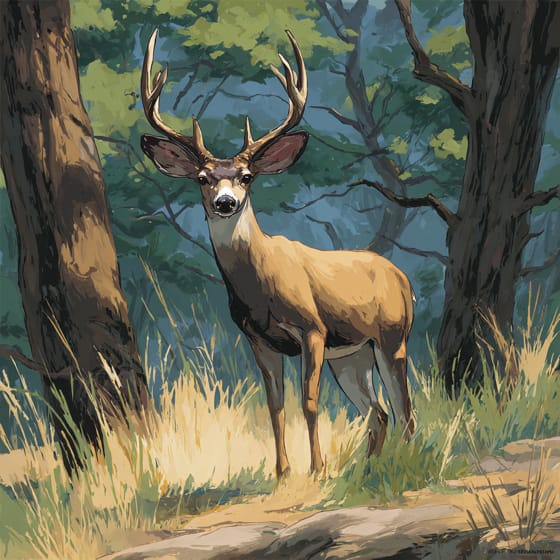
Odocoileus hemionus
browses leaves when forage is scarce
Flowering plants are any plants that produce flowers as part of their reproductive cycle.
Evergreen plants retain their foliage throughout the year, never shedding all their leaves at once.
Drought-tolerant plants can survive and flourish in conditions with limited water availability.
Colorful describes organisms or objects displaying a wide range of bright and distinct colors.

Edible plants are those parts of a plant that are considered safe for human consumption.

Describes plants that are particularly attractive and beneficial to a wide range of pollinating organisms.

Desert habitats are arid regions characterized by extremely low precipitation and often extreme temperatures, supporting specialized flora and fauna.
No aliases listed yet.
Danger
2/5 · Low
Be careful not to touch the sap, as it can irritate your skin.
The easiest way to identify Whitemargin Sandmat is to use the Snappit nature identifier app.
5-20 cm
30-100 cm
0.1-0.3 cm
Summer-fall
No
Moderate
Annual
Zoom in to split clusters and explore where this object has been snapped.
May 25, 2026
SkidooPhoto attribution
(c) Aaron Liston, some rights reserved (CC BY)
License: CC BY 4.0 ↗
Image may be shown cropped inside the card frame.
Mar 27, 2026
SkidooPhoto attribution
(c) dsiripoonsup, some rights reserved (CC BY)
License: CC BY 4.0 ↗
Image may be shown cropped inside the card frame.

California, US
You might spot California Poppy and Common Side-Blotched Lizard.
View guide →

Arizona, US
You might spot Christmas Cholla and California Barrel Cactus.
View guide →

California, US
You might spot Frémont's Phacelia and Devil's Spineflower.
View guide →

California, US
You might spot Western Joshua Tree and Kingcup Cactus.
View guide →

California, US
You might spot Desert Paintbrush and Desert Milkweed.
View guide →
Take the discovery with you
Snap it with Snappit to identify it, learn what makes it special, and add the discovery to your collection.








.jpg&width=800)



_001.jpg&width=800)


