





wild bergamot
Monarda fistulosa
Wild bergamot is a beautiful flower that grows in fields and meadows. It has lovely purple blooms and a sweet, minty smell that attracts butterflies and bees.
Habitat: Grasslands
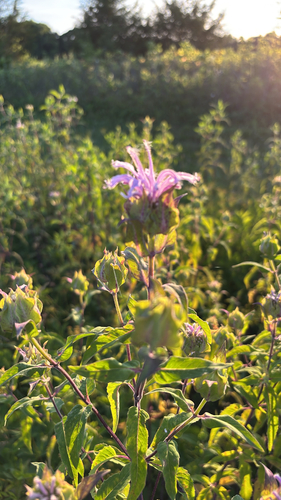
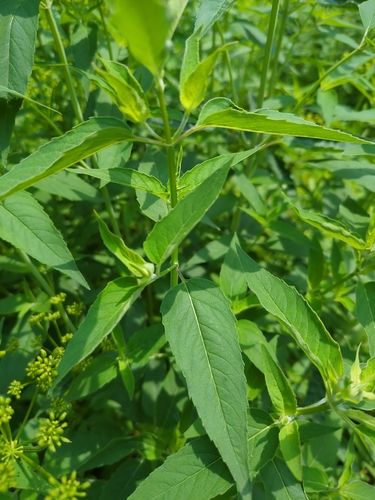
The wild bergamot has unique spherical clusters of tubular, shaggy lavender-pink to purple flowers that stand out in fields. Its stems are distinctly square, and its opposite leaves have a slightly fuzzy texture, making it visually appealing and easy to identify.
Category
PlantsRarity
Common
Danger
1/5 · Very low
Snaps
28
Even though it looks wild, hummingbirds absolutely love sipping nectar from its flowers!
Its 'bergamot' scent isn't from the citrus fruit, but a similar aroma from its leaves!
Native Americans used this plant for teas and remedies, even for bee stings!
This plant is a cousin to mint, which is why its crushed leaves smell so fresh!
Wild bergamot can produce abundant nectar that helps it attract many different pollinators like bees, butterflies, and hummingbirds for reproduction.
Wild bergamot has special oils that give it a minty scent, helping it defend against some hungry animals and insects.
Wild bergamot can spread through underground stems called rhizomes, helping it form colonies and find new growing space.
Apis mellifera
Collects nectar and pollen from flowers.
Bombus impatiens
Buzz pollinates flowers for pollen and nectar.
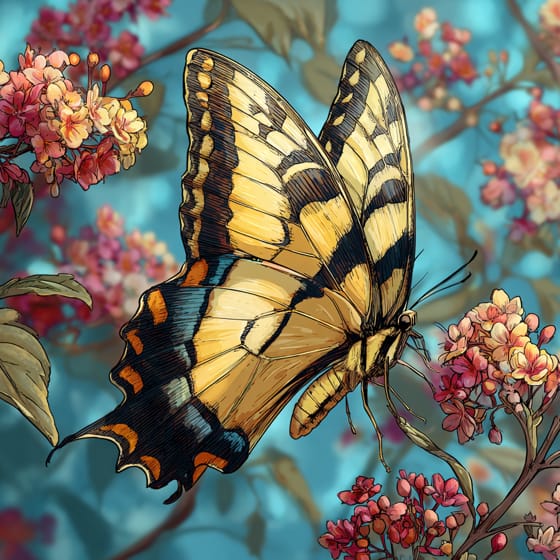
Papilio glaucus
Sips nectar from the tubular flowers.

Archilochus colubris
Feeds on nectar, aiding pollination.
Sphinx eremita
Caterpillars feed on its leaves.
Aromatic plants produce and emit fragrant volatile organic compounds, often for defense or to attract pollinators.
Flowering plants are any plants that produce flowers as part of their reproductive cycle.
Cluster flowers are inflorescences where individual flowers are arranged closely together on a common stem.
Summer blooming plants produce their flowers during the summer season, often providing vibrant color when many other plants have finished.

Fragrant flowers emit a pleasant aroma, often to attract pollinators or for defense.

Medicinal plants possess chemical compounds that can be used for therapeutic purposes to treat illnesses or maintain health.

Edible plants are those parts of a plant that are considered safe for human consumption.

Grassland habitats are terrestrial biomes dominated by grasses and herbaceous plants, supporting a variety of grazing animals.

Describes plants that are particularly attractive and beneficial to a wide range of pollinating organisms.

Rapid growing plants exhibit accelerated growth rates, quickly increasing in size and biomass within a short period.
No aliases listed yet.
Danger
1/5 · Very low
Always look but don't touch flowers without asking an adult.
The easiest way to identify wild bergamot is to use the Snappit nature identifier app.
60-150 cm
30-90 cm
2-3 cm
Summer
Yes
None
Perennial
Zoom in to split clusters and explore where this object has been snapped.
Jun 20, 2026
Miami Whitewater ForestPhoto attribution
(c) familiarjumpingspider, some rights reserved (CC BY)
License: CC BY 4.0 ↗
Image may be shown cropped inside the card frame.
Jun 6, 2026
West Argyle Street Historic DistrictPhoto attribution
(c) Jeremy Atherton, some rights reserved (CC BY)
License: CC BY 4.0 ↗
Image may be shown cropped inside the card frame.
Jun 19, 2026

Michigan, US
You might spot Eastern Gray Squirrel, Tree-Of-Heaven, and House Sparrow.
View guide →

Massachusetts, US
You might spot Maidenhair Spleenwort and Red Trillium.
View guide →

Wisconsin, US
You might spot Turkey, White-Tailed Deer, and Dame's Rocket.
View guide →

Michigan, US
You might spot Monarch, Canada Goose, and Eastern Gray Squirrel.
View guide →

Arkansas, US
You might spot Widow's-Cross, Yucca Giant-Skipper, and Outis Skipper.
View guide →

Colorado, US
You might spot Common Starlily and Wholeleaf Paintbrush.
View guide →
Take the discovery with you
Snap it with Snappit to identify it, learn what makes it special, and add the discovery to your collection.







.jpg&width=800)


_001.jpg&width=800)



