





Wild Four o'Clock
Mirabilis nyctaginea
Wild Four o'Clock is a colorful flower that blooms in the evening. Its bright petals open up at sunset and close in the morning, making it a special sight to see at dusk!
Habitat: Urban areas
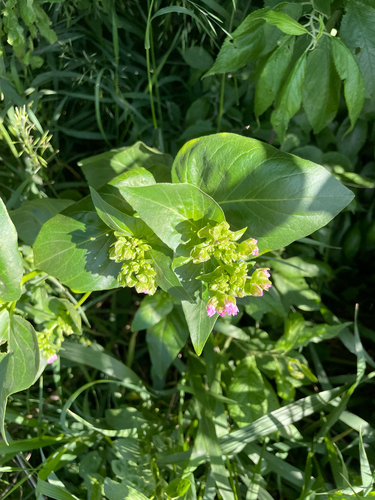
The Wild Four o'Clock has heart-shaped leaves and clusters of small, trumpet-shaped flowers, usually pinkish-purple, but sometimes white. Its flowers are surrounded by prominent green, leaf-like bracts, making the entire bloom cluster look larger.
Category
PlantsRarity
Common
Danger
1/5 · Very low
Snaps
13
Each dark, wrinkled seed looks just like a tiny piece of dried fruit!
Its vibrant "flowers" are actually tiny blooms hugged by special leaf-like bracts!
The Wild Four o'Clock is a very adaptable plant, thriving in many different soils!
This plant's Latin name, Mirabilis, means "wonderful" or "marvelous"!
Wild Four o'Clock can open its flowers when the sun sets, releasing a sweet scent to attract night-flying pollinators.
Wild Four o'Clock has a huge, tuberous taproot that stores water and food, helping it survive long dry spells.
Wild Four o'Clock can quickly establish itself and thrive in disturbed or poor soils, making it very resilient.
Hyles lineata
visits flowers for nectar at dusk
Manduca sexta
adults visit flowers for nectar
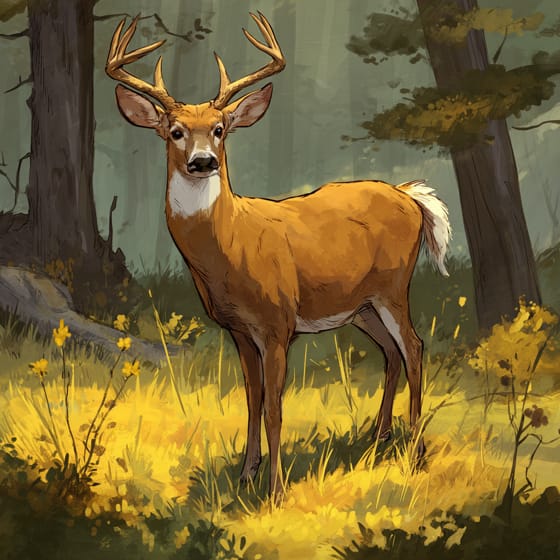
Odocoileus virginianus
browses on the plant's leaves and stems
Apis mellifera
collects pollen during the day
Aromatic plants produce and emit fragrant volatile organic compounds, often for defense or to attract pollinators.
Flowering plants are any plants that produce flowers as part of their reproductive cycle.
Fragrant flowers emit a pleasant aroma, often to attract pollinators or for defense.
Night blooming plants open their flowers after sunset, often to attract nocturnal pollinators with their scent and appearance.

Colorful describes organisms or objects displaying a wide range of bright and distinct colors.

Describes plants that are particularly attractive and beneficial to a wide range of pollinating organisms.

This habitat trait indicates species that can coexist with humans in urban and suburban environments, utilizing man-made structures and green spaces.
No aliases listed yet.
Danger
1/5 · Very low
Always look but don't touch flowers without asking an adult.
The easiest way to identify Wild Four o'Clock is to use the Snappit nature identifier app.
30-150 cm
30-90 cm
1-2 cm
Summer to fall
No
Mild
Perennial
Zoom in to split clusters and explore where this object has been snapped.
May 27, 2026
High Trestle TrailPhoto attribution
no rights reserved
License: CC0 1.0 ↗
Image may be shown cropped inside the card frame.

Rhode Island, US
You might spot Spotted Lanternfly, Duck, and American Robin.
View guide →

Illinois, US
You might spot Carolina Mantis and Goldenrod Soldier Beetle.
View guide →

Rhode Island, US
You might spot Spotted Lanternfly, Duck, and American Robin.
View guide →

Rhode Island, US
You might spot Spotted Lanternfly, American Robin, and Duck.
View guide →

Rhode Island, US
You might spot Spotted Lanternfly, American Robin, and Duck.
View guide →

Connecticut, US
You might spot Garlic Mustard and Common Eastern Bumble Bee.
View guide →
Take the discovery with you
Snap it with Snappit to identify it, learn what makes it special, and add the discovery to your collection.








.jpg&width=800)


_001.jpg&width=800)




