





wild sarsaparilla
Aralia nudicaulis
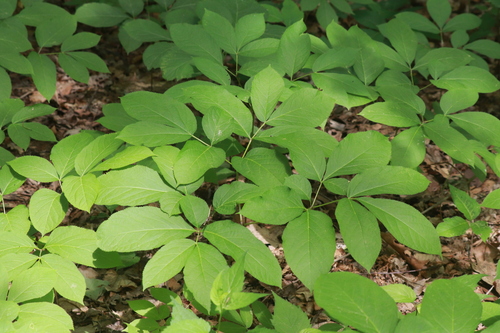
Wild sarsaparilla is a plant with lovely green leaves and small white flowers. It grows in shady forests and is known for its sweet-smelling roots that can be used to make drinks.
Habitat: Forests
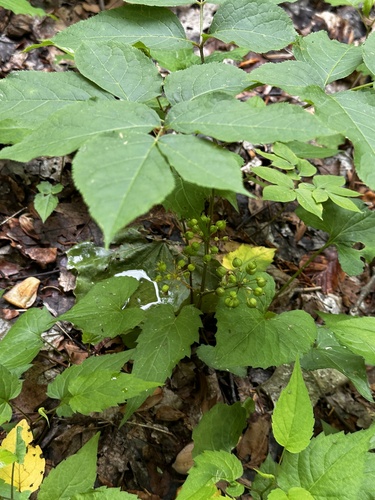
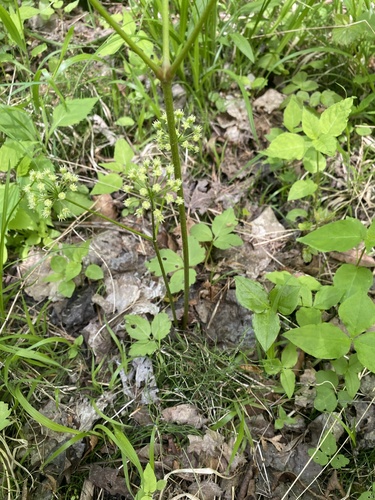
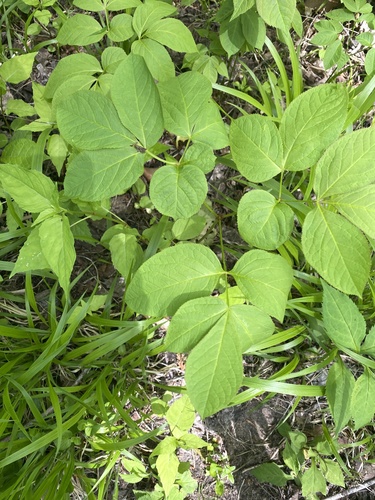
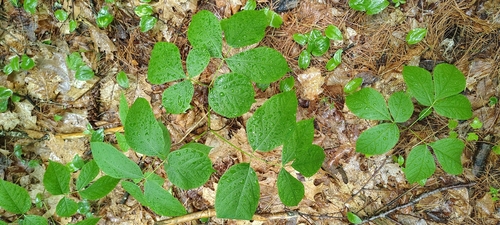
The wild sarsaparilla has a single smooth stem that branches into three large, compound leaves, each with 3-7 oval leaflets. It produces small, greenish-white flower clusters on separate stalks rising from the base, which later develop into dark purple berries.
Category
PlantsRarity
Common
Danger
1/5 · Very low
Snaps
92
Despite its name, it's not a true sarsaparilla, but a type of aralia!
Each plant usually sends up only one large leaf stalk that then splits into three!
Its root extract was once a key ingredient in real root beer!
Native American tribes traditionally used its roots for various medicinal purposes!
Wild sarsaparilla has a long, creeping underground stem (rhizome) that helps it spread widely and find nutrients in shady forest soils.
Wild sarsaparilla has large, broad leaves designed to capture sunlight efficiently, allowing it to thrive in the dim understory of dense forests.
Wild sarsaparilla produces clusters of dark berries that provide food for birds and small mammals, helping spread its seeds.
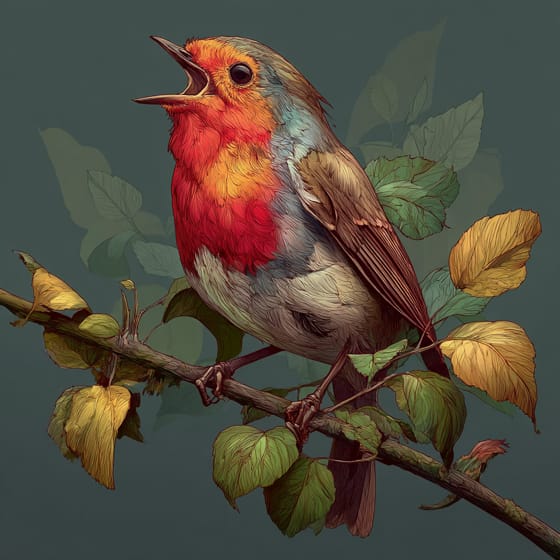
Turdus migratorius
Eats ripe dark purple berries.
Apis mellifera
Visits small greenish-white flowers for nectar.
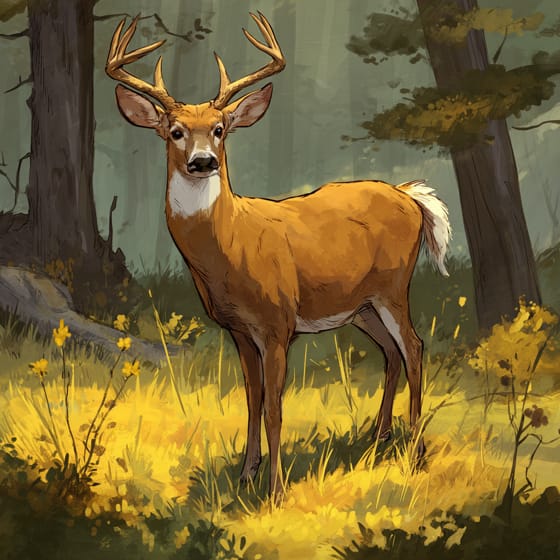
Odocoileus virginianus
Browses on its young leaves and stems.
Flowering plants are any plants that produce flowers as part of their reproductive cycle.
Shade tolerant plants are adapted to grow and thrive in areas with low light levels, requiring less direct sunlight.
Fragrant flowers emit a pleasant aroma, often to attract pollinators or for defense.
Medicinal plants possess chemical compounds that can be used for therapeutic purposes to treat illnesses or maintain health.

Edible plants are those parts of a plant that are considered safe for human consumption.

Describes plants that are particularly attractive and beneficial to a wide range of pollinating organisms.

Forest habitats are terrestrial environments dominated by dense tree cover, supporting a high diversity of plant and animal life.
No aliases listed yet.
Danger
1/5 · Very low
Do not eat any plants unless an adult says it's safe!
The easiest way to identify wild sarsaparilla is to use the Snappit nature identifier app.
30-60 cm
30-60 cm
0.2-0.3 cm
Late_spring_early_summer
Yes
None
Perennial
Zoom in to split clusters and explore where this object has been snapped.
Jun 7, 2026
SkylandsPhoto attribution
(c) gwt2102, some rights reserved (CC BY)
License: CC BY 4.0 ↗
Image may be shown cropped inside the card frame.
Jun 6, 2026
East Windsor Hill Historic DistrictPhoto attribution
(c) Mark Apgar, some rights reserved (CC BY)
License: CC BY 4.0 ↗
Image may be shown cropped inside the card frame.
Jun 3, 2026
Glen HavenPhoto attribution
(c) Sheila Collins Bourgoin, some rights reserved (CC BY)
License: CC BY 4.0 ↗
Image may be shown cropped inside the card frame.
Jun 3, 2026
Glen HavenPhoto attribution
(c) Sheila Collins Bourgoin, some rights reserved (CC BY)
License: CC BY 4.0 ↗
Image may be shown cropped inside the card frame.
May 23, 2026
Canton Center Historic DistrictPhoto attribution
no rights reserved
License: CC0 1.0 ↗
Image may be shown cropped inside the card frame.
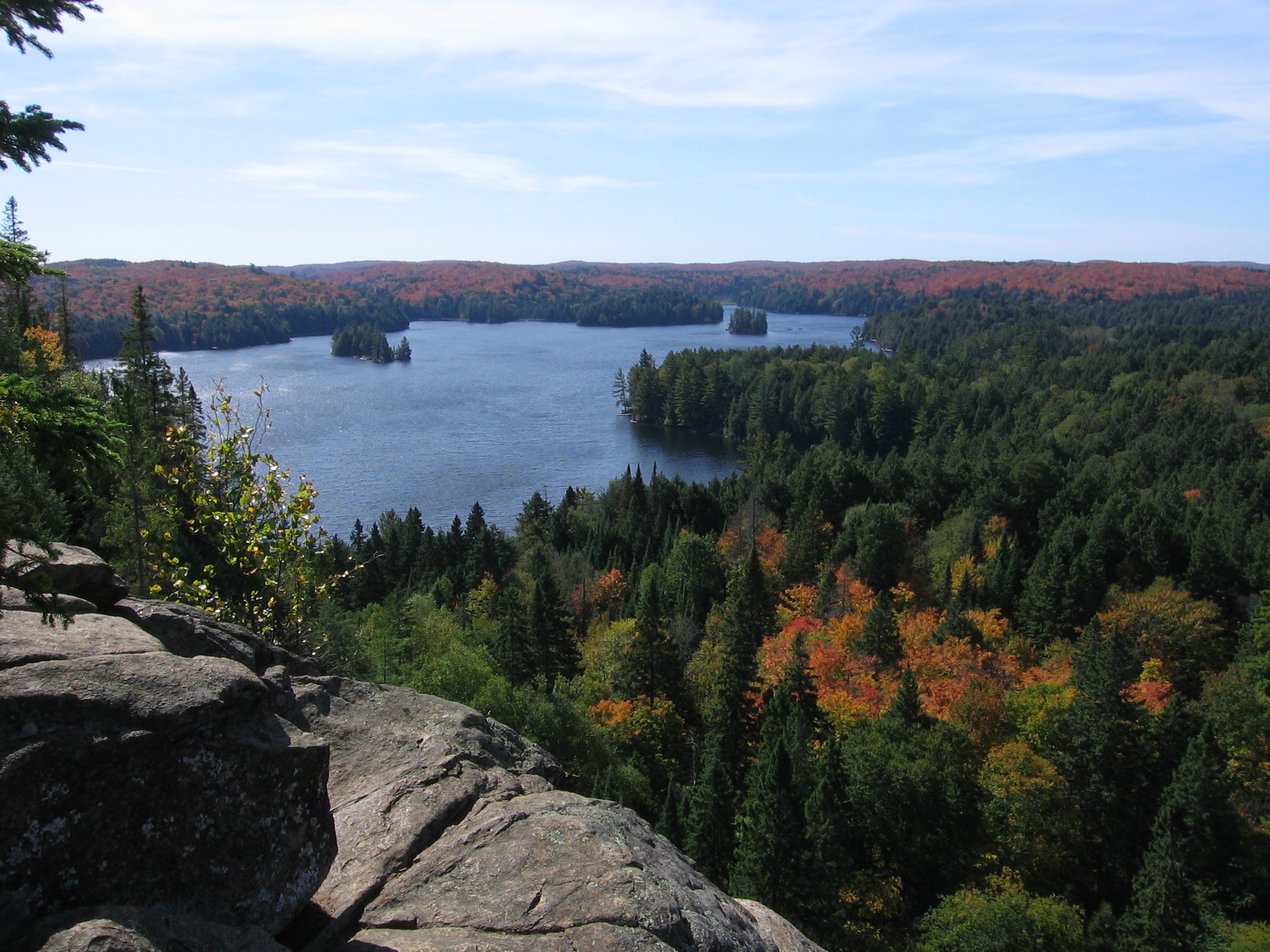
Ontario, CA
You might spot Canada Jay, American Beaver, and Black-Capped Chickadee.
View guide →

Pennsylvania, US
You might spot Large Yellow Underwing and Eastern Black Carpenter Ant.
View guide →

Connecticut, US
You might spot Green Frog and Mountain Laurel.
View guide →

New York, US
You might spot Common Eastern Bumble Bee and Ground-Ivy.
View guide →

Massachusetts, US
You might spot Mountain Laurel, Azure Bluet, and Partridgeberry.
View guide →

US
You might spot Pink Lady's Slipper and Canada Mayflower.
View guide →
Take the discovery with you
Snap it with Snappit to identify it, learn what makes it special, and add the discovery to your collection.







.jpg&width=800)


_001.jpg&width=800)


