





Wilson's Phalarope
Phalaropus tricolor
Wilson's Phalarope is a beautiful bird known for its graceful swimming. It has long legs and a slender body, making it perfect for catching tiny food in the water.
Habitat: Wetlands
The Wilson's Phalarope has a slender body with needle-like bill and noticeably long legs. Breeding females display a striking black eye stripe and chestnut neck stripe, contrasting with a grey back and white underparts. Males are similar but duller, and winter birds are plain grey and white.
Category
BirdsRarity
Common
Danger
1/5 · Very low
Snaps
3
After laying eggs, the female Phalarope flies off to find another mate!
Sometimes, hundreds of thousands of Wilson's Phalaropes gather at super-salty lakes.
These amazing birds migrate thousands of miles from North America to South America each year!
They have special padded feet that help them float high on the water's surface.
Wilson's Phalarope can spin rapidly in circles, creating whirlpools that bring tiny prey items closer to the surface for easy feeding.
Wilson's Phalarope females are brighter and leave the males to incubate all the eggs and care for the newly hatched chicks.
Wilson's Phalarope has special kidneys that help it drink and thrive in extremely salty, alkaline water.
They mostly eat tiny insects and crustaceans found in water.
Artemia salina
A key food source in saline lakes.
Ephydra hians
The adults and larvae are a primary food.
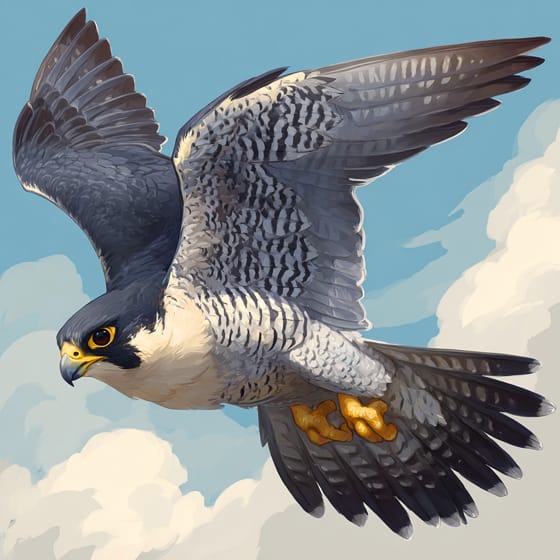
Falco peregrinus
Fast raptor preys on migrating phalaropes.
Feathered describes animals, primarily birds, possessing a covering of feathers.
Characterized by having toes connected by a membrane, typically aiding in swimming.
Social animals live in organized groups, cooperating for survival benefits such as foraging, defense, and raising offspring.
Colorful describes organisms or objects displaying a wide range of bright and distinct colors.

Filter feeders obtain nutrients by straining suspended food particles and small organisms from water.

This trait identifies organisms whose diet primarily consists of insects and other small invertebrates.

This habitat trait identifies species found in wetlands, which are areas of land saturated with water, either permanently or seasonally, including marshes, swamps, and bogs.

Aquatic habitats encompass environments where organisms live predominantly in water, including oceans, rivers, lakes, and wetlands.

Migratory animals undertake seasonal movements from one region to another, typically in response to changes in climate or food availability.

Threatened status denotes a species likely to become endangered in the foreseeable future without effective conservation interventions.
No aliases listed yet.
Danger
1/5 · Very low
Always watch birds from a distance and be quiet so you don't scare them away.
The easiest way to identify Wilson's Phalarope is to use the Snappit nature identifier app.
20-24 cm
35-40 cm
0.03-0.07 kg
5-10 years
50 km/h
They mostly eat tiny insects and crustaceans found in water.
Wetlands
Zoom in to split clusters and explore where this object has been snapped.

Oregon, US
You might spot Belding's Ground Squirrel and Yellow-Headed Blackbird.
View guide →

South Dakota, US
You might spot Bald Eagle, Canada Goose, and American Coot.
View guide →

Washington, US
You might spot Ring-Billed Gull, Cackling Goose, and Black-Bellied Plover.
View guide →

New Mexico, US
You might spot Creosote Bush, Devilshead, and Lace-Spine Nipple Cactus.
View guide →
Take the discovery with you
Snap it with Snappit to identify it, learn what makes it special, and add the discovery to your collection.




.jpg&width=800)








