





Woodhouse's Toad
Anaxyrus woodhousii
Woodhouse's Toad is a friendly little creature that loves to hop around in wet places. They have smooth skin and can change color to blend in with their surroundings!
Habitat: Wetlands
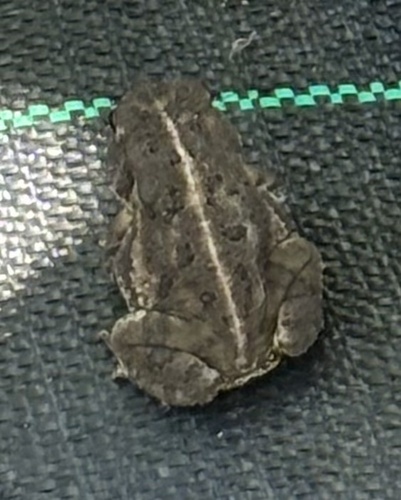
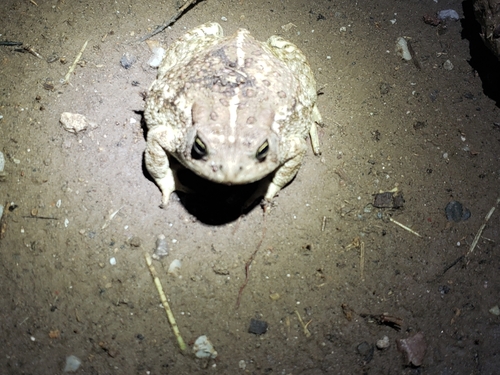
The Woodhouse's Toad has warty, bumpy skin, usually gray, brown, or olive, often with a light stripe down its back. Its parotoid glands behind the eyes are oval-shaped and typically separated from the cranial crests, making its head look somewhat flatter than other toads.
Category
AmphibiansRarity
Common
Danger
1/5 · Very low
Snaps
28
Female toads can lay thousands of eggs in long, jelly-like strings.
Their scientific name honors Samuel W. Woodhouse, an American naturalist.
They drink by absorbing water through their skin, not by sipping!
When threatened, they can inflate their bodies to look bigger and scarier.
Woodhouse's Toad has special glands behind its eyes that release toxins, which helps protect them from predators.
Woodhouse's Toad can use tough bumps on its hind feet to dig burrows, helping them hide from danger and extreme weather.
Woodhouse's Toad has a long, sticky tongue that helps them quickly snatch up unsuspecting insects for a meal.
Woodhouse's Toad has bumpy, camouflaged skin that helps them blend perfectly with their surroundings to avoid being seen by predators.
A tiny bug vacuum, gobbling up insects, spiders, and other small critters it can find!
Age differences: Tadpoles are herbivorous, feeding on algae and detritus; adults are carnivorous.
Thamnophis sirtalis
A known predator, especially of younger toads.

Procyon lotor
An opportunistic predator of adult toads.
Formica fusca
A common insect prey item for adult toads.
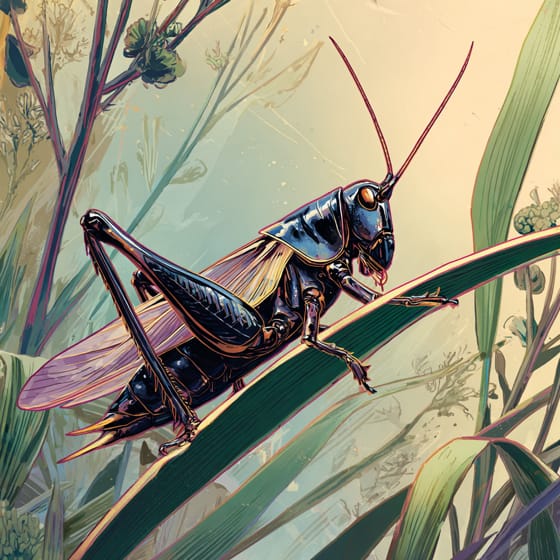
Gryllus assimilis
A frequent part of the toad's diet.
Social animals live in organized groups, cooperating for survival benefits such as foraging, defense, and raising offspring.
Solitary animals live alone for most of their lives, only interacting with others for mating or parental care.
Camouflaged describes organisms that possess coloring or patterns that allow them to blend into their environment.
This trait identifies organisms whose diet primarily consists of insects and other small invertebrates.

This trait characterizes organisms with an exceptionally long lifespan compared to others of their kind.

This habitat trait identifies species found in wetlands, which are areas of land saturated with water, either permanently or seasonally, including marshes, swamps, and bogs.

Diurnal animals are primarily active during daylight hours, typically resting or sleeping at night.
Danger
1/5 · Very low
Don't touch toads unless you are with an adult, as some can have slippery skin.
The easiest way to identify Woodhouse's Toad is to use the Snappit nature identifier app.
5-13 cm
0.03-0.15 kg
5-12 years
2 km/h
A tiny bug vacuum, gobbling up insects, spiders, and other small critters it can find!
Wetlands
Ambush
Zoom in to split clusters and explore where this object has been snapped.
Jun 1, 2026
BricktownPhoto attribution
(c) Greghig Jirheg, some rights reserved (CC BY)
License: CC BY 4.0 ↗
Image may be shown cropped inside the card frame.
Jun 1, 2026
Las Vegas High School Neighborhood Historic DistrictPhoto attribution
(c) Katrina Smith, some rights reserved (CC BY)
License: CC BY 4.0 ↗
Image may be shown cropped inside the card frame.
May 26, 2026
Mesilla Park Historic DistrictPhoto attribution
no rights reserved
License: CC0 1.0 ↗
Image may be shown cropped inside the card frame.

New Mexico, US
You might spot Pronghorn, Great-Tailed Grackle, and Redstem Stork's-Bill.
View guide →

New Mexico, US
You might spot White-Winged Dove and Silverleaf Nightshade.
View guide →

Oklahoma, US
You might spot Monarch, American Bumble Bee, and Gulf Fritillary.
View guide →

New Mexico, US
You might spot Wood Duck, Duck, and Canada Goose.
View guide →

Montana, US
You might spot Bighorn Sheep and Curlleaf Mountain Mahogany.
View guide →

New Mexico, US
You might spot Common Side-Blotched Lizard and Kingcup Cactus.
View guide →
Take the discovery with you
Snap it with Snappit to identify it, learn what makes it special, and add the discovery to your collection.








.JPG&width=800)



.jpg&width=800)
