





Miner'S Lettuce
claytonia perfoliata
Miner's Lettuce is a tasty green plant that grows in the wild! Kids love to munch on its crunchy leaves during outdoor adventures.
Habitat: It lives in shady forests, meadows, and along stream banks.
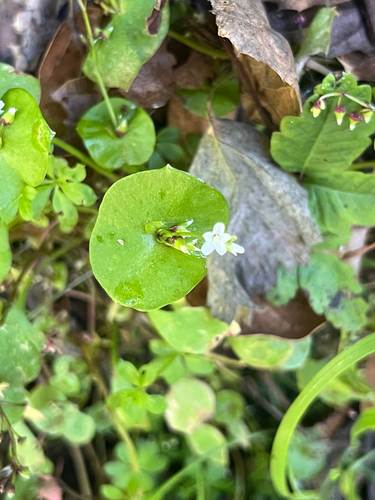
The Miner'S Lettuce has bright green, fleshy leaves that are its most distinctive feature, forming a circular, cup-like disk around the stem. Tiny white or sometimes pinkish flowers with five petals emerge from the center of this unique leafy cup.
Category
PlantsRarity
Common
Danger
0/5 · No known danger
Snaps
7
Every part of the Miner's Lettuce plant, from root to flower, is safe to eat!
Indigenous peoples have harvested Miner's Lettuce for centuries as food and medicine!
Its round, cup-like leaves completely encircle the stem, making it look like the stem pierces the leaf!
It’s one of the first fresh greens to appear in spring, a welcome sight after winter!
Miner'S Lettuce can rapidly grow in disturbed areas, like recent burns or clearings, helping to re-establish plant life.
It has slightly succulent leaves that store water, helping it survive short dry periods in its moist habitats.
Its unique fused leaves create a cup around the stem, which can help protect its delicate flowers from harsh conditions.
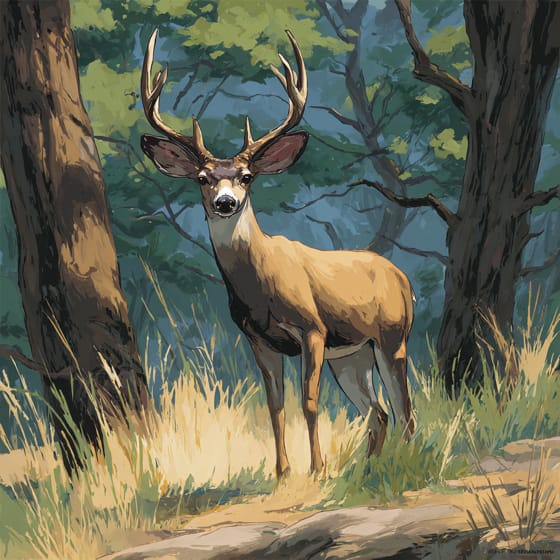
Odocoileus hemionus
deer browse on its tender leaves
Bombus melanopygus
bees visit its small white flowers

Sylvilagus bachmani
rabbits munch on its fresh greens
Colorful describes organisms or objects displaying a wide range of bright and distinct colors.
This trait characterizes organisms whose diet consists entirely or primarily of plant material.
Describes organisms that break down dead organic material, recycling nutrients back into the ecosystem.
Forest habitats are terrestrial environments dominated by dense tree cover, supporting a high diversity of plant and animal life.

Diurnal animals are primarily active during daylight hours, typically resting or sleeping at night.
Danger
0/5 · No known danger
No special safety notes yet.
The easiest way to identify Miner'S Lettuce is to use the Snappit nature identifier app.
5-30 cm
5-15 cm
0.2-0.6 cm
Spring to early summer
Yes
None
Annual
Zoom in to split clusters and explore where this object has been snapped.
May 10, 2026
Huckleberry Botanic Regional PreservePhoto attribution
no rights reserved
License: CC0 1.0 ↗
Image may be shown cropped inside the card frame.

California, US
You might spot Sequoia, California Incense-Cedar, and White Fir.
View guide →

California, US
You might spot California Scrub-Jay and Acorn Woodpecker.
View guide →

California, US
You might spot Brown Pelican, Snowy Plover, and Sanderling.
View guide →

California, US
You might spot Evergreen Huckleberry and Golden Chinquapin.
View guide →

California, US
You might spot Canada Goose, Duck, and California Towhee.
View guide →
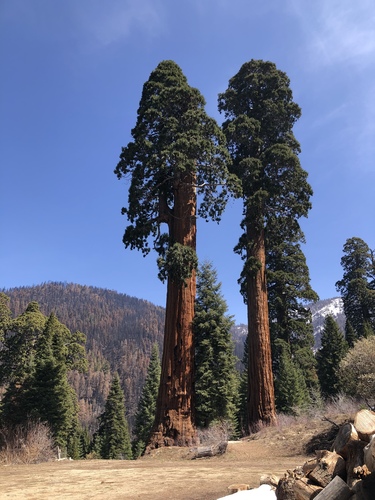
California, US
You might spot Sequoia, Mountain Misery, and Mule Deer.
View guide →
Take the discovery with you
Snap it with Snappit to identify it, learn what makes it special, and add the discovery to your collection.








.jpg&width=800)



_001.jpg&width=800)




