.jpg&width=800)





orange bush monkeyflower
Diplacus aurantiacus
The orange bush monkeyflower is a bright and cheerful flower that loves to grow in sunny places. Its vibrant orange color attracts many butterflies and bees, making gardens lively and colorful.
Habitat: Coastal areas
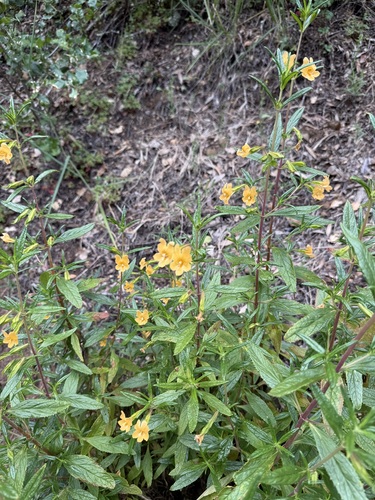
The orange bush monkeyflower has vibrant orange, trumpet-shaped flowers, sometimes marked with red or yellow dots, that bloom in clusters. Its deep green leaves are sticky to the touch and grow opposite each other along woody stems, giving it a dense, bushy appearance.
Category
PlantsRarity
Common
Danger
1/5 · Very low
Snaps
63
Indigenous peoples traditionally used its leaves and flowers for food and medicine.
Its common name comes from the flower's resemblance to a grinning monkey's face!
The sticky residue on its leaves feels like sap but actually helps protect the plant!
This tough plant can even grow on rocky cliffs and steep, dry hillsides!
Orange bush monkeyflower has sticky leaves that help deter small insects from eating it and reduce water loss.
Orange bush monkeyflower can survive long periods without water, thanks to adaptations for arid environments.
Orange bush monkeyflower rapidly re-sprouts or germinates after wildfires, quickly recolonizing burnt areas.
Its bright, tubular flowers attract specific pollinators like hummingbirds and long-tongued bees for reproduction.
Apis mellifera
Gathers nectar and pollen
Bombus vosnesenskii
Visits flowers for nectar

Calypte anna
Feeds on flower nectar
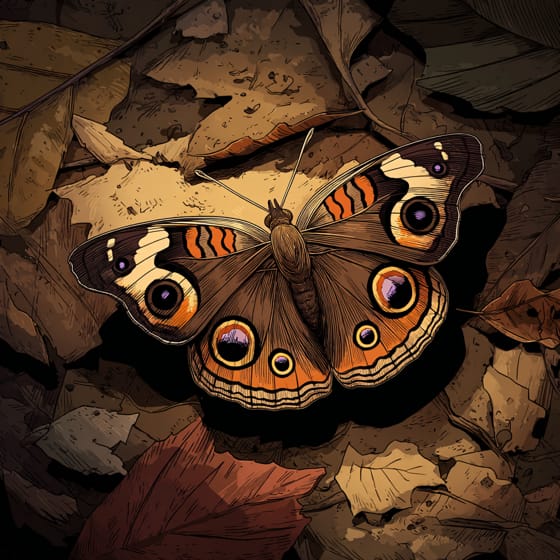
Junonia coenia
Caterpillars feed on leaves
Flowering plants are any plants that produce flowers as part of their reproductive cycle.
A shrub is a woody plant smaller than a tree, typically with multiple stems branching from or near the ground.
Spring blooming plants produce their flowers during the spring season, often signifying the end of winter and the start of new growth.
Summer blooming plants produce their flowers during the summer season, often providing vibrant color when many other plants have finished.

Everblooming plants produce flowers continuously or in repeated flushes over a long period.

Colorful describes organisms or objects displaying a wide range of bright and distinct colors.

Describes plants that are particularly attractive and beneficial to a wide range of pollinating organisms.

Coastal habitats are dynamic environments located along the interface between land and sea, influenced by tides, waves, and saltwater.
No aliases listed yet.
Danger
1/5 · Very low
Always look but don't touch flowers without asking an adult first.
The easiest way to identify orange bush monkeyflower is to use the Snappit nature identifier app.
30-150 cm
30-100 cm
2-5 cm
Spring to fall
Yes
None
Perennial
Zoom in to split clusters and explore where this object has been snapped.
May 3, 2026
El Sereno Open SpacePhoto attribution
(c) lazarus, some rights reserved (CC BY)
License: CC BY 4.0 ↗
Image may be shown cropped inside the card frame.

California, US
You might spot Redwood Sorrel, Redwood, and Button's Banana Slug.
View guide →

California, US
You might spot Monarch, Canada Goose, and Western Gull.
View guide →

California, US
You might spot Redwood, Pacific Trillium, and Evergreen Huckleberry.
View guide →

California, US
You might spot Warrior's Plume and Purple Owl's-Clover.
View guide →

California, US
You might spot Great Blue Heron, Western Gull, and Coyote.
View guide →

California, US
You might spot Western Fence Lizard and Pacific Poison Oak.
View guide →
Take the discovery with you
Snap it with Snappit to identify it, learn what makes it special, and add the discovery to your collection.








.jpg&width=800)



_001.jpg&width=800)




