

Bumblebee
Upload a photo to tell a bee from a wasp or a sneaky hoverfly by its hair, waist, wings and antennae. Then meet it in Snappit's field guide.
Identify and collect animals with your phone.


Drag a photo here, or choose one below.
JPG, PNG or WebP · Up to 10 MB

Photograph a resting insect from a few feet away with its wings and head in view. Never go near a nest or block its entrance.



Compare the suggested name with what you see in your photo. Then open its field-guide entry for fun facts and look-alikes to rule out.

Browse the field guide here, or save your finds as collectible cards in the Snappit app. Build collections and learn something new together.
Real bee and wasp cards from the Snappit field guide. Tap one to see who's buzzing.
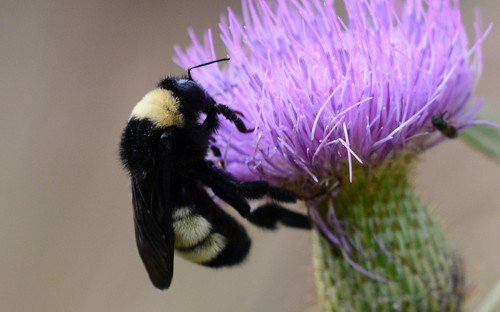
Yellow and black stripes are shared by bees, wasps and lots of harmless mimics. Look at the body hair, waist, antennae and visible wings together. A side view of a flower visitor shows its body proportions much better than a tight crop of its back.

Start with the overall build. Many bees look plump and hairy, especially across the chest, while many wasps look smooth and shiny. Hairiness overlaps, though, so treat it as a clue, not a rule. A close photo may also show pollen dusting the body or packed onto the legs of a bee.

A narrow waist is one of the quickest signs of a wasp. Wasps often have a sharp pinch between the chest and abdomen, while many bees look more evenly joined. Angle matters, though: from straight above, a narrow waist can be partly hidden.

Bees and wasps have longer, more obvious antennae than hoverflies, which also have very large eyes. Hoverflies are true flies with just one pair of wings. Bees and wasps have two pairs that hook together, so counting wings in a resting photo is often hard.

Don't just ask whether it's yellow and black; look at where the color sits. Is the chest mostly furry and plain, with bands mainly on the abdomen? Are the markings sharp, smooth and high-contrast across the whole body? Where the stripes sit can separate look-alikes when shape alone doesn't settle it.
Compare real field-guide examples: Bumblebee · Western Honeybee · Carpenter Bee

A bee usually looks stockier, hairier and less pinched at the waist. A wasp usually looks slimmer, smoother and clearly narrow between chest and abdomen. Wasp patterns are often bolder, but not always. In a clear photo, build tells you more than color.

Hoverflies often mimic bees or wasps, so stripes can mislead you. Look for very large eyes, short antennae and a fly-like face. Many hoverflies are also less hairy than bees of the same size, and they often hang in the air in one spot. Wing count is a real difference, but eyes and antennae are easier to see in a photo.

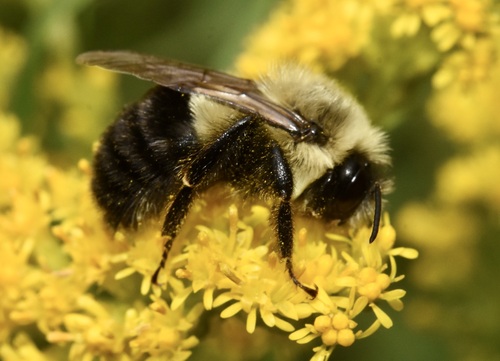
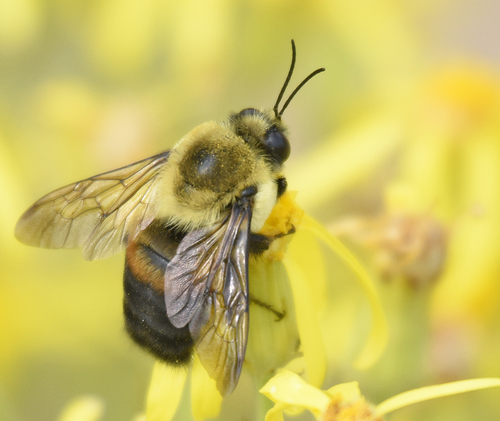
A bumblebee usually looks round, deep-bodied and densely furry. A honey bee is slimmer, with a tapered abdomen and a less plush look overall. This is about general build, not a guarantee, because plenty of other bees can resemble either outline in a quick photo.

When the insect is on a flower, ignore the blossom and look at the insect's outline first. Is the body compact and furry, or sleek with a narrow middle? Then check the head. Big eyes that take up most of the face point strongly to a hoverfly, while longer, more obvious antennae fit bees and wasps. Visible pollen loads on the back legs or belly strongly suggest a bee, though plenty of bees won't show pollen in every shot.
Next, see where the markings are strongest. A hairy chest with clearer bands on the abdomen fits many bees. A smoother body with crisp, warning-style bands can mean a wasp or a hoverfly mimic. Don't judge size by the flower. A small bloom can make a small insect look impressive, while a bulky bee on a big flower can look smaller than it really is.

A nest photo can sometimes narrow the group, especially if it's clearly made of wax, mud or papery layers, but it usually won't identify who lives there. Different bees and wasps nest in cavities, soil, plant stems or roof spaces, and the builder is often out of frame. A useful nest photo, taken from a safe distance, shows the opening and any insect at the entrance, with enough surroundings to show scale and materials.
People often call any big flying insect a wasp, but apparent size is one of the least reliable clues in a photo. Distance, zoom and a lack of scale change everything. Go back to shape: bulky and furry or sleek and narrow-waisted, plus antennae, eyes and where the stripes sit. If you took several shots, upload the single clearest one that shows the whole insect without heavy motion blur.
Try to get the head, chest, abdomen and wings in one frame. A tight crop of just the stripes cuts out the shape clues that matter most.

A slight side angle shows the waist, antenna length and body depth better than a straight overhead shot on a flower. Use zoom rather than moving in close.

If you took several shots, upload the sharpest one. Motion blur can hide the hair, antennae and wing details that separate a bee from a hoverfly.
Look at its build, not the flower, since bees, wasps and hoverflies all visit blooms. A fuller, hairier insect with a less pinched waist leans bee. A smoother, slimmer insect with a clear narrow waist leans wasp. Huge eyes and short antennae point to a hoverfly instead.
Check body hair, waist shape and the face together. Many bees look furry and sturdy, many wasps look smooth and narrow-waisted, and hoverflies have oversized eyes and short antennae. Stripes won't settle it, because all three can wear similar patterns.
Yes, many hoverflies are excellent wasp mimics. Look for a fly-like head with big eyes and short antennae, then check the wings. Hoverflies have one pair of wings, while bees and wasps have two that hook together in flight, so they can look like one pair in a photo.
No. Distance and zoom can make insects look bigger or smaller than they are, and some bees, like bumblebees and carpenter bees, are big. Shape beats size: check for a narrow waist, body hair, antenna length, and whether the insect looks chunky or sleek.
Sometimes it can narrow it down, but it usually can't confirm who lives there. Papery layers suggest wasps, mud tubes suggest mud-dauber wasps, and exposed wax comb suggests bees. A photo taken from a safe distance that shows insects at the entrance tells you much more than the nest alone.
No. Sting marks don't have features that identify the insect, and a photo can't tell you how risky a sting is. A stinger left in the skin often points to a honey bee. To identify the insect, you need a clear photo of the insect itself.
Bumblebees look round, deep-bodied and densely fuzzy, while honey bees are slimmer, with a tapered, less furry abdomen and clear bands. These are general shapes, not guarantees, because many other bees can look like either one. Use build together with hair, waist and face.
Yes, Snappit – Identify Anything for iPhone and Android identifies bees, wasps, other insects, flowers and much more from a photo. Every find becomes a collectible card with a rarity tier and short facts kids can follow, saved in a private family collection with no ads or chat. It's free to download with free daily IDs, and an optional subscription unlocks unlimited snaps.
The Snappit appAges 4+ · No ads
Take what you learn here into Snappit and turn your next walk or day out into a shared adventure.
Save your discoveries as collectible cards in the app, with rarity tiers and themed collections to explore.
Short, friendly facts give young readers something to notice, ask about, and remember. The app is made for ages 4 and up, without ads.
Discover new collection themes, try the daily discovery, and earn badges as you keep exploring together.


Open a place guide to see its species checklist and plan what to look for on your next visit.
Texas, US
You might spot American Bumble Bee, Bee, and Eastern Carpenter Bee.
View guide →
Connecticut, US
You might spot Common Eastern Bumble Bee, Ligated Furrow Bee, and Bee.
View guide →
Missouri, US
You might spot Brown-Belted Bumble Bee, Bee, and Eastern Carpenter Bee.
View guide →