





American burnweed
Erechtites hieraciifolius
American burnweed is a tall plant with soft, green leaves and fluffy white flowers. It often grows in sunny places and is loved by butterflies and bees!
Habitat: Grasslands
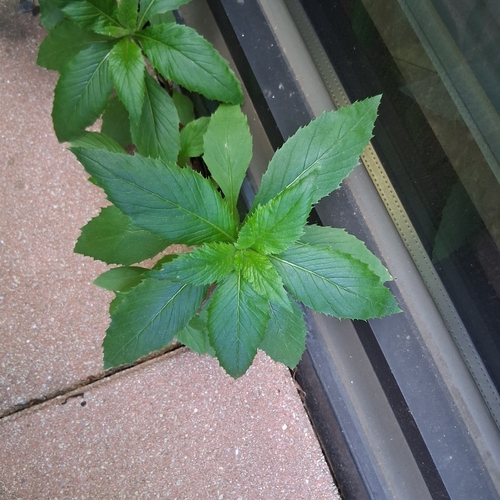
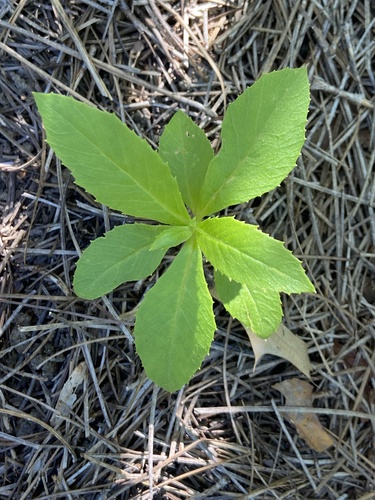
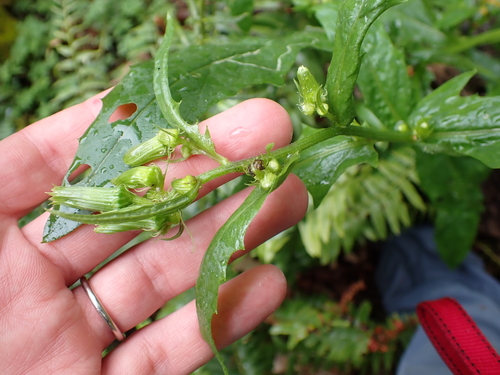
The American burnweed is a tall, slender plant with hollow, often reddish-tinged stems and deeply toothed leaves. Its small, greenish-white to yellowish flowers lack showy petals and are clustered at the stem's top, later forming fluffy white seed heads.
Category
PlantsRarity
Common
Danger
1/5 · Very low
Snaps
18
Despite its common name, American burnweed doesn't sting or burn you if you touch it!
It's sometimes called 'pilewort' because it loves to grow in piles of disturbed earth or brush!
Its scientific name roughly translates to 'fire plant', reflecting its habit of growing after burns!
This plant’s hollow stems make it lighter, helping it grow tall quickly without using too much energy!
American burnweed can quickly sprout and thrive after fires, helping it colonize open, sun-drenched areas fast.
American burnweed has fluffy 'parachutes' on its seeds that help them catch the wind and travel far.
American burnweed can grow in poor, disturbed soils, helping it survive where other plants struggle.
Apis mellifera
Honey bees visit its tiny flowers for nectar and pollen.

Vanessa cardui
Caterpillars of the Painted Lady butterfly munch on its leaves.

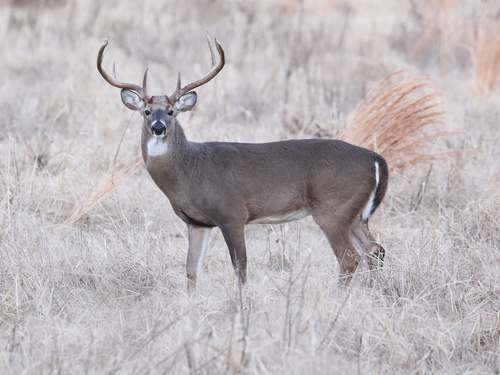
Odocoileus virginianus
White-tailed deer may browse on young burnweed plants.
Deciduous plants periodically shed all their leaves, typically during autumn or dry seasons.
Flowering plants are any plants that produce flowers as part of their reproductive cycle.
Medicinal plants possess chemical compounds that can be used for therapeutic purposes to treat illnesses or maintain health.
Edible plants are those parts of a plant that are considered safe for human consumption.

Grassland habitats are terrestrial biomes dominated by grasses and herbaceous plants, supporting a variety of grazing animals.

Describes plants that are particularly attractive and beneficial to a wide range of pollinating organisms.

Rapid growing plants exhibit accelerated growth rates, quickly increasing in size and biomass within a short period.
No aliases listed yet.
Danger
1/5 · Very low
Always look but don't touch wild plants unless an adult says it's okay.
The easiest way to identify American burnweed is to use the Snappit nature identifier app.
30-250 cm
15-60 cm
0.5-1.5 cm
Late summer to fall
No
Mild
Annual
Zoom in to split clusters and explore where this object has been snapped.
Jun 16, 2026
Glastonbury Historic DistrictPhoto attribution
(c) Mark Apgar, some rights reserved (CC BY)
License: CC BY 4.0 ↗
Image may be shown cropped inside the card frame.
Aug 29, 2025
Lower Village DistrictPhoto attribution
(c) Steven Lamonde, some rights reserved (CC BY)
License: CC BY 4.0 ↗
Image may be shown cropped inside the card frame.

Ohio, US
You might spot Blue-Fronted Dancer, American Rubyspot, and Fowler's Toad.
View guide →

Florida, US
You might spot American Beautyberry and Brown Anole.
View guide →

Connecticut, US
You might spot Garlic Mustard and Common Eastern Bumble Bee.
View guide →

New Jersey, US
You might spot Duck, Canada Goose, and Red-Winged Blackbird.
View guide →
Pennsylvania, US
You might spot White-Tailed Deer, Eastern Bluebird, and Northern Cardinal.
View guide →

Iowa, US
You might spot House Sparrow and Common Eastern Bumble Bee.
View guide →
Take the discovery with you
Snap it with Snappit to identify it, learn what makes it special, and add the discovery to your collection.







.jpg&width=800)



_001.jpg&width=800)



