





American cancer-root
Conopholis americana
American cancer-root is a special plant that grows in the woods. It doesn't have leaves like most plants and gets its food from tree roots instead of the sun.
Habitat: Forests
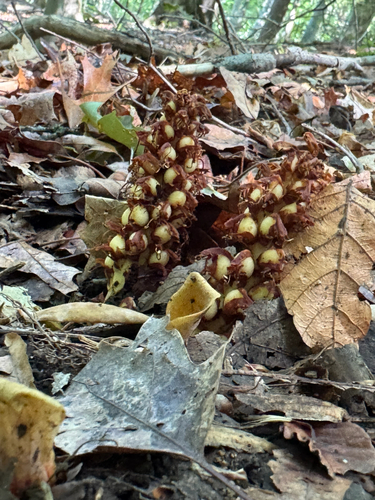
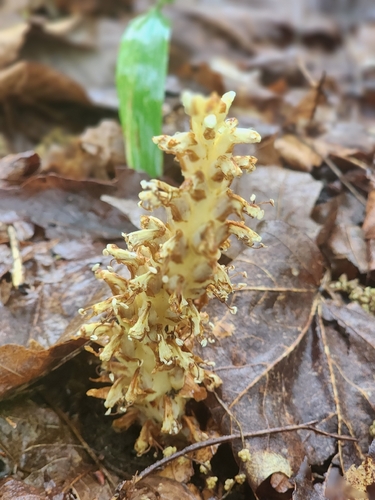
The American cancer-root is a striking, leafless plant, appearing as a cluster of yellowish-brown to tan, scaly stalks. Its unique, cone-like form stands out from the forest floor, topped with small, tube-shaped flowers of a similar hue. It completely lacks green coloration, making it look very different from typical plants.
Category
PlantsRarity
Common
Danger
2/5 · Low
Snaps
56
It gets its name from an old belief it could help cure cancer.
It's like a plant vampire, secretly sipping nutrients from its tree host.
This root parasite can only grow where specific oak trees are found!
Tiny ants become unwitting gardeners, moving its seeds to perfect new spots!
American cancer-root has no chlorophyll, meaning it doesn't need sunlight to create energy, relying entirely on its host.
American cancer-root has seeds with a fatty cap that attracts ants, which then carry and disperse the seeds to new locations.
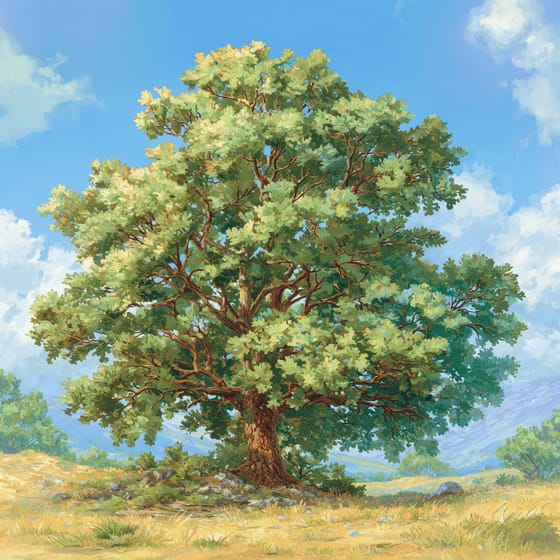
Quercus alba
obtains nutrients directly from its roots
Bombus impatiens
attracted to its small, tubular flowers
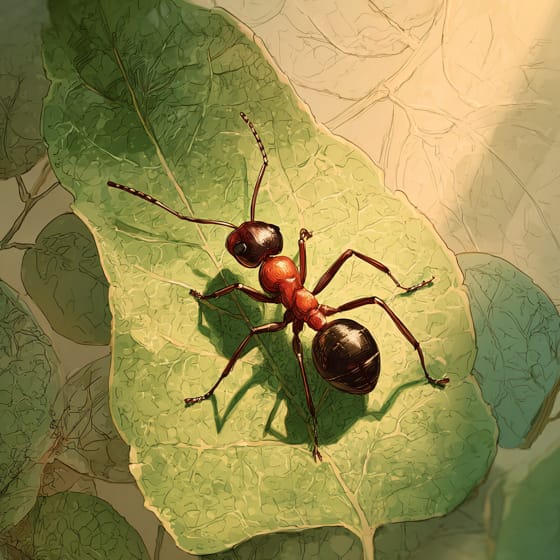
Aphaenogaster picea
carries seeds for dispersal due to elaiosomes
Shade tolerant plants are adapted to grow and thrive in areas with low light levels, requiring less direct sunlight.
Medicinal plants possess chemical compounds that can be used for therapeutic purposes to treat illnesses or maintain health.
Camouflaged describes organisms that possess coloring or patterns that allow them to blend into their environment.
Describes a relationship between two different species where they live in close association, often benefiting one or both.

Forest habitats are terrestrial environments dominated by dense tree cover, supporting a high diversity of plant and animal life.

Describes a species whose presence and role have a disproportionately large effect on its environment.

Pertaining to species that are significantly smaller than typical or average for their kind.
This trait describes organisms that live on or in a host organism, obtaining nutrients at the host's expense.
No aliases listed yet.
Danger
2/5 · Low
Do not touch or eat unknown plants. Always ask an adult before exploring.
The easiest way to identify American cancer-root is to use the Snappit nature identifier app.
5-20 cm
1-2 cm
Spring-early summer
No
None
Perennial
Insect
Zoom in to split clusters and explore where this object has been snapped.
Jun 7, 2026
Reeves-Reed ArboretumPhoto attribution
(c) syvwlch, some rights reserved (CC BY)
License: CC BY 4.0 ↗
Image may be shown cropped inside the card frame.
May 20, 2026
Camp Misty Mount Historic DistrictPhoto attribution
(c) Erin Collins, some rights reserved (CC BY)
License: CC BY 4.0 ↗
Image may be shown cropped inside the card frame.

Pennsylvania, US
You might spot Large Yellow Underwing and Eastern Black Carpenter Ant.
View guide →

Maryland, US
You might spot American Cancer-Root and Rue Anemone.
View guide →

Connecticut, US
You might spot Green Frog and Mountain Laurel.
View guide →

Michigan, US
You might spot Bladder Campion, Bearberry, and Common Milkweed.
View guide →

Connecticut, US
You might spot Osprey, Diamondback Terrapin, and Monarch.
View guide →

Pennsylvania, US
You might spot Tree-Of-Heaven, Spotted Lanternfly, and American Tuliptree.
View guide →
Take the discovery with you
Snap it with Snappit to identify it, learn what makes it special, and add the discovery to your collection.








.jpg&width=800)



_001.jpg&width=800)



