.jpg&width=800)





American Coot
Fulica americana
The American Coot is a fun bird that loves to swim and dive in the water! With its round body and funny feet, it can be seen in lakes and ponds, making it a great friend for nature explorers.
Habitat: Wetlands
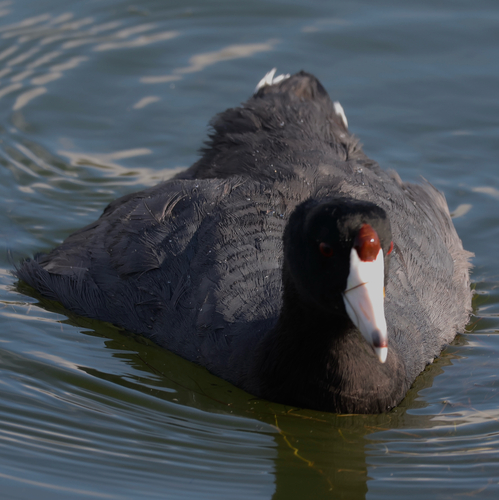
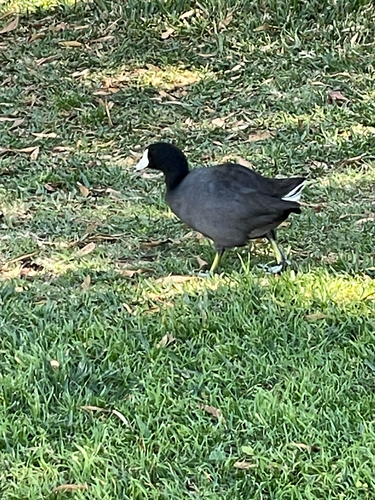
The American Coot has a plump, slate-gray body with a distinctive white bill and a small, dark red frontal shield on its forehead. Its feet are greenish-yellow with large, lobed toes, making it look unique compared to ducks.
Category
BirdsRarity
Common
Danger
1/5 · Very low
Snaps
36
A group of coots is sometimes called a 'cover' or 'raft' when on water.
Baby coots have bright orange and red feathers on their heads that disappear as they grow up!
Despite looking like a duck, the American Coot is actually part of the rail family.
When taking flight, coots 'run' across the water's surface to gain enough speed.
American Coots have unique lobed toes, not fully webbed, that help them paddle powerfully in water and walk easily on land.
American Coots can dive underwater for up to 30 seconds to forage for plants and small aquatic animals.
American Coots build clever floating nests anchored to plants, which helps protect their eggs from rising water.
The American Coot is an omnivore, eating a mix of plants and small creatures found in the water.
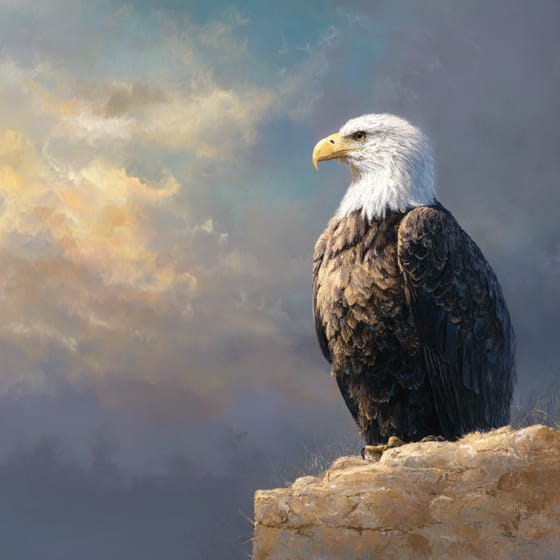
Haliaeetus leucocephalus
Adults and chicks can be prey for large birds of prey.

Procyon lotor
Nests and chicks are vulnerable to opportunistic predators.
Typha latifolia
Feeds on seeds and roots of aquatic vegetation.
Feathered describes animals, primarily birds, possessing a covering of feathers.
Characterized by having toes connected by a membrane, typically aiding in swimming.
Social animals live in organized groups, cooperating for survival benefits such as foraging, defense, and raising offspring.
This trait identifies organisms whose diet includes both plant and animal matter.

This habitat trait identifies species found in wetlands, which are areas of land saturated with water, either permanently or seasonally, including marshes, swamps, and bogs.

Diurnal animals are primarily active during daylight hours, typically resting or sleeping at night.

Freshwater habitats include non-saline aquatic environments such as rivers, lakes, ponds, and wetlands, vital for numerous species.
No aliases listed yet.
Danger
1/5 · Very low
Always watch birds from a distance and don't try to touch them.
The easiest way to identify American Coot is to use the Snappit nature identifier app.
34-43 cm
58-71 cm
0.45-0.8 kg
3-9 years
50 km/h
The American Coot is an omnivore, eating a mix of plants and small creatures found in the water.
Wetlands
Zoom in to split clusters and explore where this object has been snapped.
Jun 19, 2026
Palo Alto Baylands Nature PreservePhoto attribution
no rights reserved
License: CC0 1.0 ↗
Image may be shown cropped inside the card frame.
Feb 13, 2026
Hollywood Forever CemeteryPhoto attribution
(c) Max, some rights reserved (CC BY)
License: CC BY 4.0 ↗
Image may be shown cropped inside the card frame.

Missouri, US
You might spot Common Eastern Bumble Bee and Brown-Belted Bumble Bee.
View guide →

California, US
You might spot Snowy Egret, Great Blue Heron, and Willet.
View guide →

Arizona, US
You might spot Northern Cardinal, Engelmann's Hedgehog Cactus, and Queen.
View guide →

Arizona, US
You might spot Christmas Cholla and California Barrel Cactus.
View guide →

Texas, US
You might spot Eastern Fox Squirrel and Great-Tailed Grackle.
View guide →

Illinois, US
You might spot Eastern Fox Squirrel, Amur Honeysuckle, and Poison Hemlock.
View guide →
Take the discovery with you
Snap it with Snappit to identify it, learn what makes it special, and add the discovery to your collection.




.jpg&width=800)









