





Antelopehorn Milkweed
Asclepias asperula
Antelopehorn Milkweed is a special plant that grows tall and has unique horn-shaped flowers. It is important for butterflies and other insects because they love to visit it!
Habitat: Grasslands
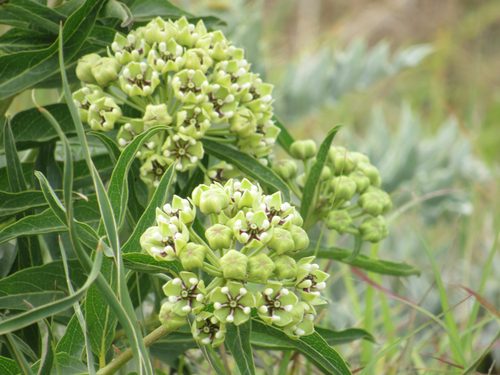
The Antelopehorn Milkweed is a stout plant with upright, unbranched stems and narrow, waxy leaves. It has unusual greenish-yellow to purplish-brown flowers arranged in dense, spherical clusters, often resembling tiny antelope horns before fully opening, making it visually distinct.
Category
PlantsRarity
Common
Danger
2/5 · Low
Snaps
18
After flowering, it grows fascinating seed pods shaped like small, green horns.
Its unique flowers have tiny 'pockets' that trap insect legs to attach pollen!
The 'milk' in milkweed is a sticky sap that can clog up predators' mouths!
This tough plant grows well in dry, sunny places where other plants struggle.
Antelopehorn Milkweed produces specific chemicals that attract monarch butterflies to lay eggs, ensuring its role as a vital host plant.
Antelopehorn Milkweed has a sticky, milky sap that can deter herbivores and gum up insect mouths, helping it defend against being eaten.
Antelopehorn Milkweed can store water in its thick roots and has waxy leaves to reduce water loss, helping it thrive in dry environments.
Flowering plants are any plants that produce flowers as part of their reproductive cycle.
Medicinal plants possess chemical compounds that can be used for therapeutic purposes to treat illnesses or maintain health.
Drought-tolerant plants can survive and flourish in conditions with limited water availability.
Grassland habitats are terrestrial biomes dominated by grasses and herbaceous plants, supporting a variety of grazing animals.

This trait characterizes organisms whose diet consists entirely or primarily of plant material.

Describes plants that are particularly attractive and beneficial to a wide range of pollinating organisms.

Describes a species whose presence and role have a disproportionately large effect on its environment.
No aliases listed yet.
Danger
2/5 · Low
Do not eat any part of the plant without asking an adult first.
The easiest way to identify Antelopehorn Milkweed is to use the Snappit nature identifier app.
30-90 cm
30-60 cm
1-2 cm
Spring to summer
No
Moderate
Perennial
Zoom in to split clusters and explore where this object has been snapped.
May 10, 2026
Fort SupplyPhoto attribution
no rights reserved
License: CC0 1.0 ↗
Image may be shown cropped inside the card frame.

Texas, US
You might spot Texas Hedgehog Cactus, Ornate Tree Lizard, and Cactus Wren.
View guide →

Texas, US
You might spot Question Mark, Buttonbush, and Pomegranate.
View guide →

Texas, US
You might spot Christmas Cholla, Dakota Mock Vervain, and Honey Mesquite.
View guide →

Utah, US
You might spot Duck, Gambel Oak, and Box Elder.
View guide →

Texas, US
You might spot Antelopehorn Milkweed and Lindheimer's Senna.
View guide →
Texas, US
You might spot Barn Swallow, House Sparrow, and Indian Peafowl.
View guide →
Take the discovery with you
Snap it with Snappit to identify it, learn what makes it special, and add the discovery to your collection.






.jpg&width=800)




.jpg&width=800)



_001.jpg&width=800)




