.jpg&width=800)





Large Milkweed Bug
Oncopeltus fasciatus
The Large Milkweed Bug is a colorful insect that loves to munch on milkweed plants. With its bright orange and black colors, it’s easy to spot in gardens and fields!
Habitat: Grasslands
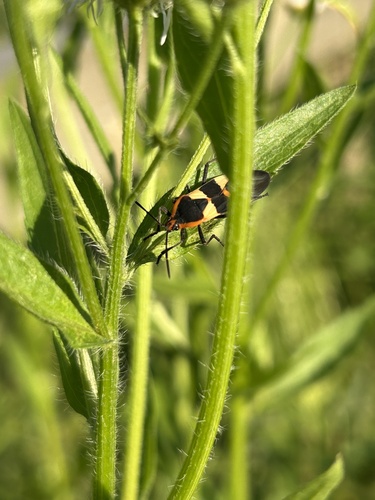
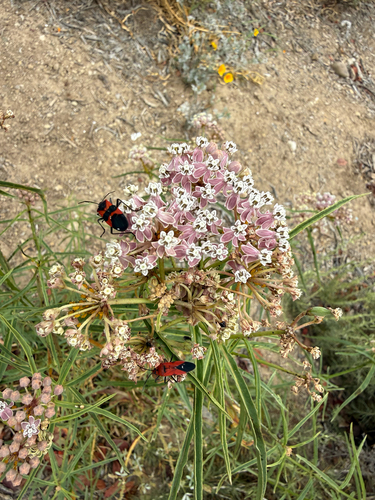
The Large Milkweed Bug is a striking insect, featuring a reddish-orange body boldly marked with distinct black bands and spots. Its head and antennae are black, contrasting sharply with its vibrant coloration, making it easily noticeable on milkweed plants.
Category
InsectsRarity
Common
Danger
1/5 · Very low
Snaps
32
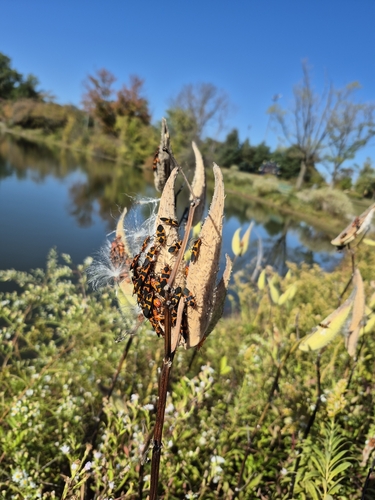
Baby milkweed bugs, called nymphs, look like tiny adults but without wings!
Some scientists study them to learn how insects adapt to plant toxins!
They are immune to the toxic sap of milkweed, which deters most other insects!
They use special enzymes to break down milkweed's sticky, poisonous chemicals!
Large Milkweed Bugs have bright orange and black colors that warn predators they taste bad, because of toxins from their diet.
Large Milkweed Bugs can safely eat toxic milkweed plants, storing the plant's poisons to make themselves unappetizing to birds.
Large Milkweed Bugs have a strong, straw-like mouthpart called a proboscis that helps them suck out nutrients from milkweed seeds.
These bugs mainly feed on milkweed plants, especially their seeds and sap.

Asclepias syriaca
Provides food (seeds/sap) and shelter for all life stages.
Geocoris pallens
This predatory insect is known to feed on milkweed bug nymphs.
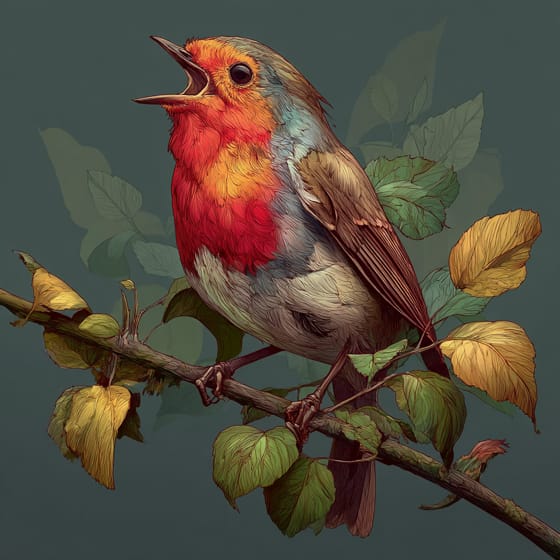
Turdus migratorius
Birds might occasionally eat them, despite their warning colors.
Marked with parallel bands or lines of color.
Solitary animals live alone for most of their lives, only interacting with others for mating or parental care.
Colorful describes organisms or objects displaying a wide range of bright and distinct colors.
Grassland habitats are terrestrial biomes dominated by grasses and herbaceous plants, supporting a variety of grazing animals.

This trait characterizes organisms whose diet consists entirely or primarily of plant material.

Diurnal animals are primarily active during daylight hours, typically resting or sleeping at night.

Describes a species whose presence and role have a disproportionately large effect on its environment.

Describes organisms that transfer pollen, enabling the fertilization and reproduction of plants.
No aliases listed yet.
Danger
1/5 · Very low
It's safe to observe these bugs, but don't touch them too much.
The easiest way to identify Large Milkweed Bug is to use the Snappit nature identifier app.
15-20 mm
10-18 mm
20-40 days
These bugs mainly feed on milkweed plants, especially their seeds and sap.
Grasslands
Foraging
6
Zoom in to split clusters and explore where this object has been snapped.
Jun 5, 2026
Bamboo Brook Outdoor Education CenterPhoto attribution
(c) Bonnie Semmling, some rights reserved (CC BY)
License: CC BY 4.0 ↗
Image may be shown cropped inside the card frame.
Jun 4, 2026
Naval Training Center San DiegoPhoto attribution
(c) Rachel Lee Harper, some rights reserved (CC BY)
License: CC BY 4.0 ↗
Image may be shown cropped inside the card frame.
Oct 12, 2025
Forest Hill ParkPhoto attribution
(c) greatlakes25, some rights reserved (CC BY)
License: CC BY 4.0 ↗
Image may be shown cropped inside the card frame.

Texas, US
You might spot Anole, Monarch, and Pinkladies.
View guide →

Arkansas, US
You might spot Widow's-Cross, Yucca Giant-Skipper, and Outis Skipper.
View guide →
.jpg)
District of Columbia, US
You might spot Eastern Gray Squirrel, Duck, and House Sparrow.
View guide →

New Jersey, US
You might spot White-Tailed Deer and Eastern Gray Squirrel.
View guide →

District of Columbia, US
You might spot Duck, Eastern Gray Squirrel, and House Sparrow.
View guide →

Ohio, US
You might spot Duck, Canada Goose, and Muscovy Duck.
View guide →
Take the discovery with you
Snap it with Snappit to identify it, learn what makes it special, and add the discovery to your collection.






.jpg&width=800)


