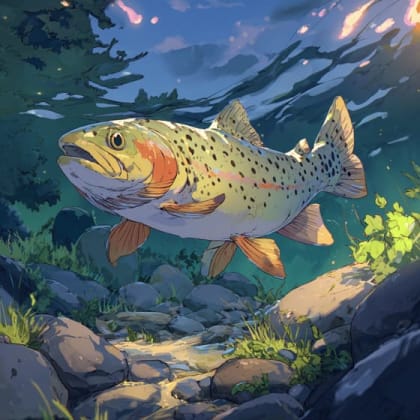
Bigmouth buffalo
Ictiobus cyprinellus
The Bigmouth buffalo is a large fish with a big mouth! It swims in rivers and lakes, eating plants and tiny creatures. They are fun to watch as they glide through the water.
Habitat: Freshwater lakes and rivers
The Bigmouth buffalo is a large, deep-bodied freshwater fish, typically silvery-gray with a darker back and pale belly. Its most distinctive feature is a huge, downward-pointing mouth that sets it apart from other similar fish species.
Category
FishRarity
Common
Danger
1/5 · Very low
Snaps
3
Bigmouth buffalo are native North American fish, often mistaken for invasive carp species!
Bigmouth buffalo can live for over 100 years, making them freshwater giants!
Their huge, downward-pointing mouth acts like a natural vacuum cleaner for the riverbed.
These fish can hear well, sensing vibrations to find tiny food in murky water.
Bigmouth buffalo can filter-feed by swimming with their mouth open, catching tiny plants and animals from the water column.
Bigmouth buffalo has an incredibly long lifespan, allowing them to survive for decades and become very large.
Bigmouth buffalo can tolerate low oxygen levels, which helps them survive in warm, stagnant waters.
These gentle giants filter tiny plants and animals from the water using their special mouths.
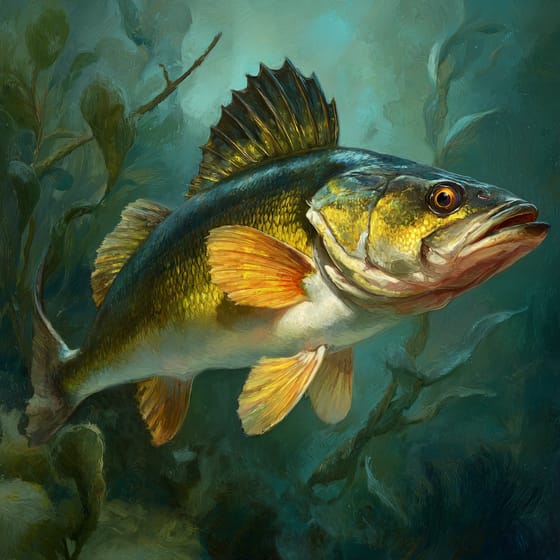
Sander vitreus
Young Bigmouth buffalo are prey.
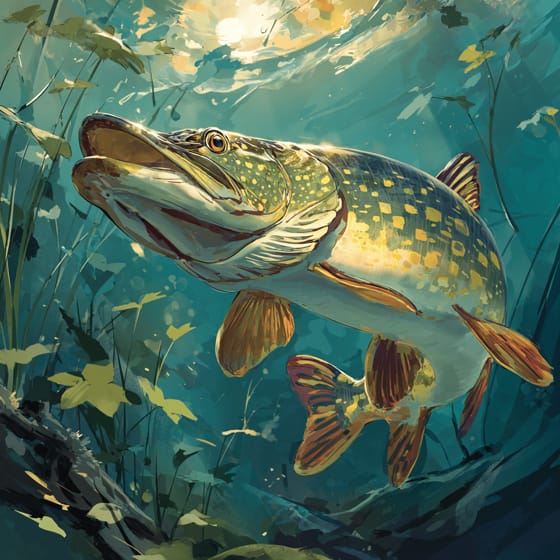
Esox lucius
Predatory fish hunt younger or smaller individuals.

Haliaeetus leucocephalus
Eagles can prey on fish near surface.
Daphnia pulex
A primary food source of zooplankton.
Microcystis aeruginosa
Feeds on this common phytoplankton.
Social animals live in organized groups, cooperating for survival benefits such as foraging, defense, and raising offspring.
Filter feeders obtain nutrients by straining suspended food particles and small organisms from water.
This trait characterizes organisms whose diet consists entirely or primarily of plant material.
This trait characterizes organisms with an exceptionally long lifespan compared to others of their kind.

Diurnal animals are primarily active during daylight hours, typically resting or sleeping at night.

Freshwater habitats include non-saline aquatic environments such as rivers, lakes, ponds, and wetlands, vital for numerous species.

Aquatic habitats encompass environments where organisms live predominantly in water, including oceans, rivers, lakes, and wetlands.

Giant describes organisms or objects of significantly larger size than average for their species or type.
No aliases listed yet.
Danger
1/5 · Very low
Always stay close to an adult when near water.
The easiest way to identify Bigmouth buffalo is to use the Snappit nature identifier app.
50-120 cm
5-30 kg
20-100 years
These gentle giants filter tiny plants and animals from the water using their special mouths.
Freshwater lakes and rivers
Filter Feeding
20 m
Zoom in to split clusters and explore where this object has been snapped.
Take the discovery with you
Snap it with Snappit to identify it, learn what makes it special, and add the discovery to your collection.