





black cottonwood
Populus trichocarpa
The black cottonwood is a tall tree with fluffy, white seeds that float in the air like little clouds. It loves to grow near rivers and wetlands, providing shade and homes for many animals.
Habitat: Wetlands
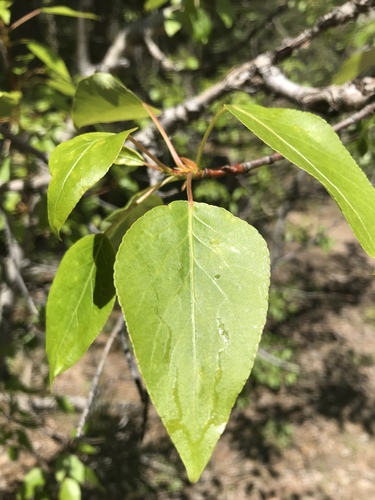
The black cottonwood is a very tall tree with a straight trunk, often covered in dark, deeply furrowed bark. Its large, glossy green leaves are heart-shaped with silvery undersides, and in spring, it produces fluffy "cotton" seeds.
Category
PlantsRarity
Common
Danger
1/5 · Very low
Snaps
Be the first to snap!
Its dark, furrowed bark is a tell-tale sign of an old, wise tree!
Native American tribes used its inner bark and buds for food and medicine!
Some people call it a "pioneer tree" because it grows fast in new places!
Wow, its sticky buds smell like a spicy, sweet balsam!
Black cottonwood can grow incredibly fast, helping it reach sunlight and outcompete other plants for space.
Black cottonwood has sticky, resinous buds that protect its tender new leaves from hungry insects and disease.
Black cottonwood produces tiny, cotton-covered seeds that catch the wind, helping them spread far and wide.
Castor canadensis
Beavers cut down its trees for food and dam construction.
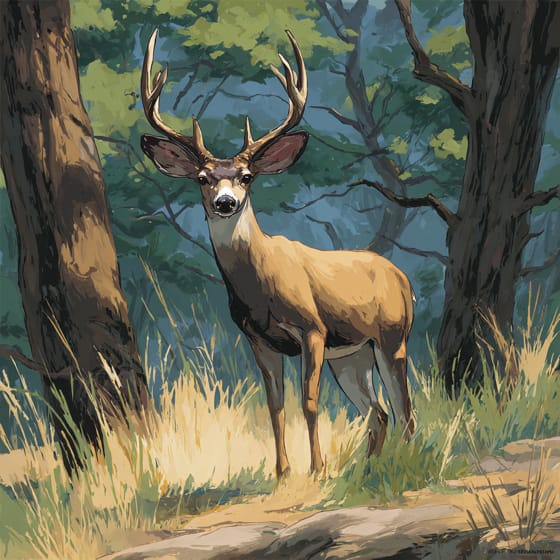
Odocoileus hemionus
Mule deer browse on its young twigs and tender foliage.

Pemphigus populitransversus
Aphids create galls on leaf stems, feeding on the tree's sap.

Bubo virginianus
Great Horned Owls often build nests in its tall, sturdy branches.
Deciduous plants periodically shed all their leaves, typically during autumn or dry seasons.
Flowering plants are any plants that produce flowers as part of their reproductive cycle.
Shade tolerant plants are adapted to grow and thrive in areas with low light levels, requiring less direct sunlight.
Broadleaf trees are angiosperms characterized by flat, wide leaves that are typically shed annually in temperate climates.

Describes plants that are particularly attractive and beneficial to a wide range of pollinating organisms.

Rapid growing plants exhibit accelerated growth rates, quickly increasing in size and biomass within a short period.

Timber refers to wood that has been prepared for use in building and carpentry.

This habitat trait identifies species found in wetlands, which are areas of land saturated with water, either permanently or seasonally, including marshes, swamps, and bogs.

Describes a species whose presence and role have a disproportionately large effect on its environment.
No aliases listed yet.
Danger
1/5 · Very low
Stay away from the tree's branches and watch out for falling seeds when they are blowing in the wind.
The easiest way to identify black cottonwood is to use the Snappit nature identifier app.
3000-6000 cm
1000-2000 cm
5-20 cm
Spring
Yes
None
Perennial
Zoom in to split clusters and explore where this object has been snapped.
Recent snaps will appear here as new observations are added.

Oregon, US
You might spot Oregon Oak, Pacific Poison Oak, and American Bullfrog.
View guide →

Washington, US
You might spot Bigleaf Maple, Mule Deer, and Oregon Grape.
View guide →

Montana, US
You might spot Western Ponderosa Pine and Great Horned Owl.
View guide →

British Columbia, CA
You might spot Yellow-Bellied Marmot and Rubber Rabbitbrush.
View guide →
British Columbia, CA
You might spot Black Cottonwood, Oregon Grape, and Showy Milkweed.
View guide →

British Columbia, CA
You might spot Oregon Grape, Common Snowberry, and Black Locust.
View guide →
Take the discovery with you
Snap it with Snappit to identify it, learn what makes it special, and add the discovery to your collection.







.jpg&width=800)


_001.jpg&width=800)



