




Black Vulture
Coragyps atratus
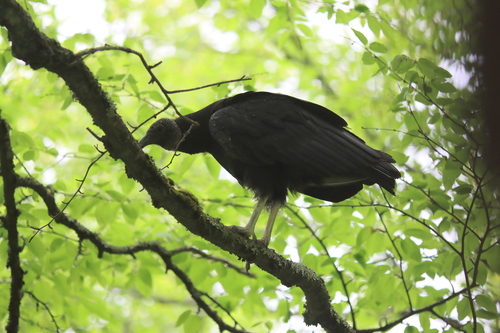
The Black Vulture is a large bird with black feathers and a bald, wrinkled head. They help keep the environment clean by eating carrion, which is dead animals. You might see them soaring high in the sky!
Habitat: Grasslands
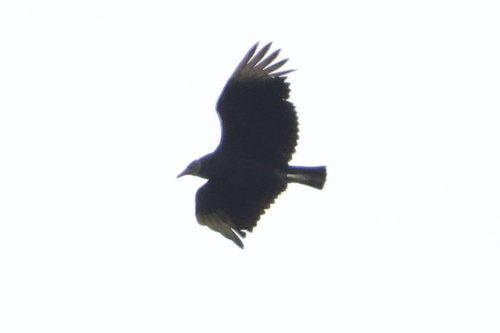
The Black Vulture is entirely covered in glossy black feathers with a short, greyish-black featherless head. Its broad wings have distinctive silvery-white patches on the underside of the primary flight feathers, making it look different from other vultures in flight.
Category
BirdsRarity
Common
Danger
2/5 · Low
Snaps
95
These birds are amazing natural recyclers, helping keep ecosystems clean and healthy.
They often spread their wings to 'sunbathe,' warming up and killing bacteria on their feathers.
Unlike their cousins, Black Vultures have a poor sense of smell and mostly find food by sight.
When threatened, Black Vultures can vomit a smelly meal to lighten their load and deter predators!
Black Vultures have incredibly strong stomach acid that kills dangerous bacteria from decaying food, keeping them healthy.
Black Vultures can spot small carcasses from high in the sky, helping them find meals efficiently.
Black Vultures often soar in groups, which helps them cover more ground and discover food quicker.
These sharp-eyed birds are nature's clean-up crew, feasting mainly on dead animals!
Cathartes aura
Follows for food, as Turkey Vultures smell better.

Bos taurus
Scavenges on dead livestock, especially calves.
Didelphis virginiana
Often scavenges roadkill and other carcasses.
Wildlife encompasses all undomesticated animal and plant life existing in their natural habitats.
Feathered describes animals, primarily birds, possessing a covering of feathers.
Social animals live in organized groups, cooperating for survival benefits such as foraging, defense, and raising offspring.
Scavengers consume dead organic matter, helping to decompose carcasses and other waste in the ecosystem.
Gliding animals move through the air by launching themselves and maintaining flight with specialized body structures, without flapping wings.

Grassland habitats are terrestrial biomes dominated by grasses and herbaceous plants, supporting a variety of grazing animals.

This trait identifies organisms whose diet consists entirely or primarily of animal tissue.
Danger
2/5 · Low
Enjoy watching Black Vultures from a safe distance and never try to touch or feed them.
The easiest way to identify Black Vulture is to use the Snappit nature identifier app.
58-74 cm
133-160 cm
1.6-2.2 kg
10-25 years
90 km/h
These sharp-eyed birds are nature's clean-up crew, feasting mainly on dead animals!
Grasslands
Zoom in to split clusters and explore where this object has been snapped.
May 23, 2026
Brattleboro Downtown Historic DistrictPhoto attribution
(c) Steven Lamonde, some rights reserved (CC BY)
License: CC BY 4.0 ↗
Image may be shown cropped inside the card frame.
Apr 26, 2026
Scottsville Historic DistrictPhoto attribution
(c) Andre Knocklein, some rights reserved (CC BY)
License: CC BY 4.0 ↗
Image may be shown cropped inside the card frame.

New York, US
You might spot Sundial Lupine, Spotted Horsemint, and New Jersey Tea.
View guide →

Tennessee, US
You might spot House Sparrow, Northern Mockingbird, and Gulf Fritillary.
View guide →

Arkansas, US
You might spot Eastern Gray Squirrel and Asian Lady Beetle.
View guide →

Connecticut, US
You might spot Bold Jumping Spider and American Tuliptree.
View guide →

Vermont, US
You might spot Asian Bittersweet, Alder Buckthorn, and Eastern Newt.
View guide →

Alabama, US
You might spot Eastern Box Turtle, Carolina Wren, and Field Sparrow.
View guide →
Take the discovery with you
Snap it with Snappit to identify it, learn what makes it special, and add the discovery to your collection.





.jpg&width=800)









