





blackjack oak
Quercus marilandica
The blackjack oak is a sturdy tree that grows in dry, sandy areas. Its leaves are unique and can turn beautiful colors in the fall, making it a lovely sight in nature!
Habitat: Forests
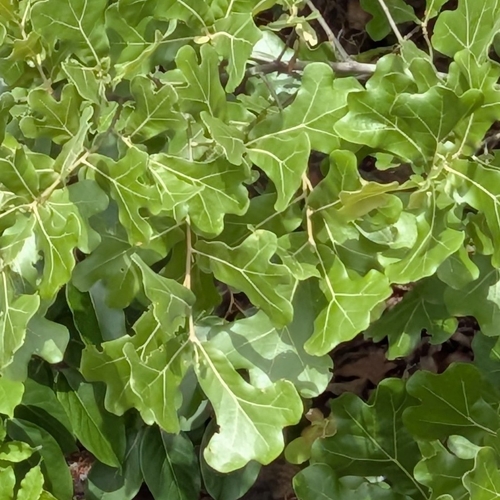
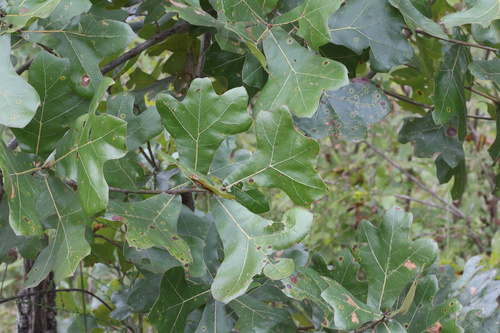
The blackjack oak has distinctive dark, blocky bark and stiff, leathery leaves that are often wider towards the tip with three shallow lobes, giving them a duck-foot shape. Its overall form is often irregular and scraggly, sometimes with reddish-brown fall foliage.
Category
PlantsRarity
Common
Danger
1/5 · Very low
Snaps
14
Did you know its strong wood was once used to make fence posts and charcoal?
Some people call its uniquely shaped leaves 'duck-foot' leaves because of their wide, three-lobed tip!
The acorns of the blackjack oak have a fuzzy cap that covers more than half of the nut!
This hardy tree can often be found growing in poor, dry soils where other trees struggle to survive.
Blackjack oak has a deep taproot that helps it reach groundwater, allowing it to survive long dry spells and poor soils.
Its incredibly thick, dark bark protects the blackjack oak from damage during ground fires that sweep through its habitat.
Blackjack oak has tough, leathery leaves that are designed to reduce water loss, helping it thrive in intense sun.
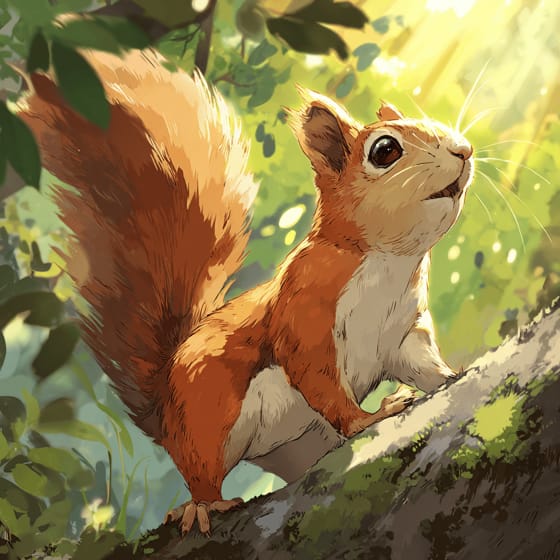
Sciurus carolinensis
eats blackjack oak acorns
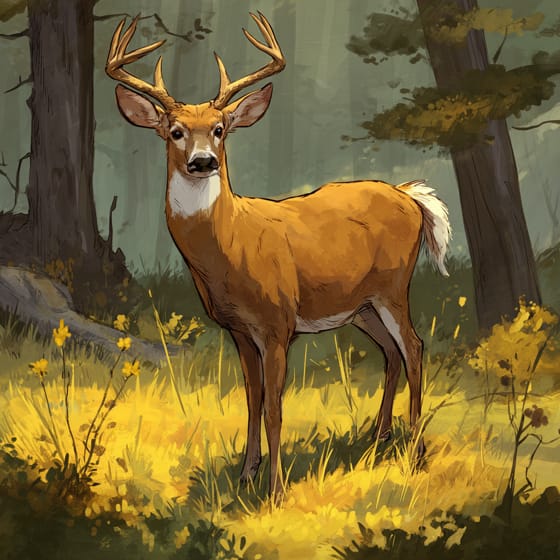
Odocoileus virginianus
browses leaves and eats acorns
Satyrium calanus
larvae feed on oak leaves
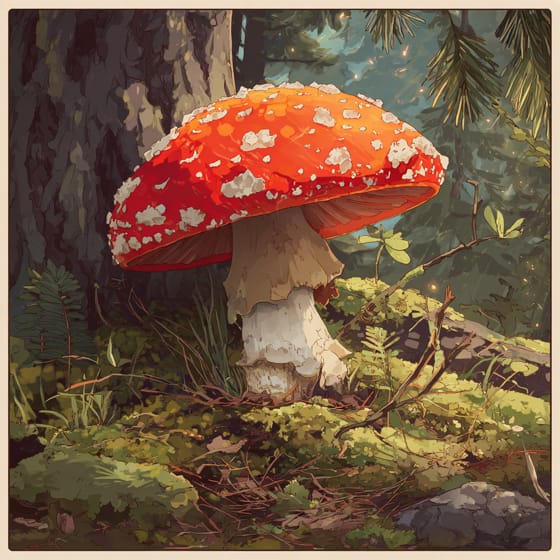
Amanita muscaria
mycorrhizal fungi partner
Deciduous plants periodically shed all their leaves, typically during autumn or dry seasons.
Broadleaf trees are angiosperms characterized by flat, wide leaves that are typically shed annually in temperate climates.
Nut bearing plants produce hard-shelled fruits, commonly known as nuts, which contain a single seed and are a valuable food source.
Drought-tolerant plants can survive and flourish in conditions with limited water availability.

Fall color refers to the seasonal change in foliage pigmentation, primarily in deciduous plants, displaying vibrant hues.
Timber refers to wood that has been prepared for use in building and carpentry.

Forest habitats are terrestrial environments dominated by dense tree cover, supporting a high diversity of plant and animal life.

This trait characterizes organisms with an exceptionally long lifespan compared to others of their kind.
No aliases listed yet.
Danger
1/5 · Very low
Stay away from the tree's sharp acorns, but enjoy looking at its beautiful leaves!
The easiest way to identify blackjack oak is to use the Snappit nature identifier app.
500-1500 cm
400-1000 cm
Spring
No
Mild
Perennial
Wind
Zoom in to split clusters and explore where this object has been snapped.
May 31, 2026
Arrowmont School of Arts and CraftsPhoto attribution
(c) Nick Kleinschmidt, some rights reserved (CC BY)
License: CC BY 4.0 ↗
Image may be shown cropped inside the card frame.
Sep 5, 2024
Harrell Prairie Botanical AreaPhoto attribution
(c) Samuel A Schmid, PhD, PWS, some rights reserved (CC BY)
License: CC BY 4.0 ↗
Image may be shown cropped inside the card frame.

Tennessee, US
You might spot Black Bear, Yellow Wakerobin, and Pipevine Swallowtail.
View guide →

Arkansas, US
You might spot Widow's-Cross, Yucca Giant-Skipper, and Outis Skipper.
View guide →

Oklahoma, US
You might spot Hoary Vervain, Buffalo Gourd, and Pond Slider.
View guide →

Missouri, US
You might spot Blackjack Oak, Bird's Foot Violet, and Starry Campion.
View guide →

Texas, US
You might spot Yaupon Holly, American Beautyberry, and Loblolly Pine.
View guide →

New Jersey, US
You might spot Sweet Pepperbush, Sheep Laurel, and Pickerelweed.
View guide →
Take the discovery with you
Snap it with Snappit to identify it, learn what makes it special, and add the discovery to your collection.







.jpg&width=800)


_001.jpg&width=800)



