





Blue Grosbeak
Passerina caerulea
The Blue Grosbeak is a beautiful bird with bright blue feathers and a strong beak. They love to sing and can often be found in fields and bushes, making their home in warm places.
Habitat: Grasslands
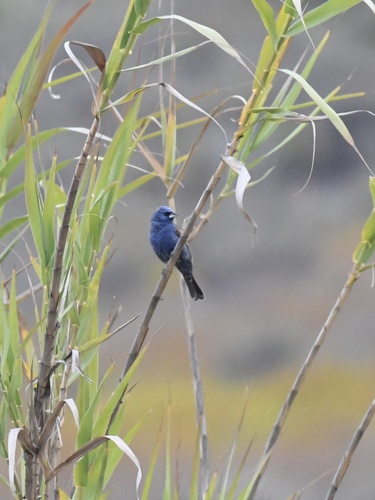
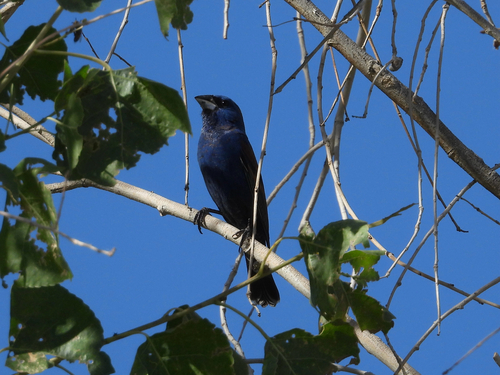
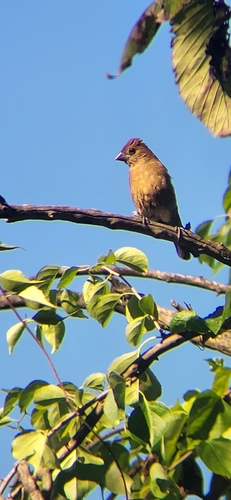
The Blue Grosbeak has a stout, silvery-blue conical bill. Males are striking indigo blue with a small black mask and two rusty wing bars. Females are rich brown with buffy wing bars, appearing much plainer than the males.
Category
BirdsRarity
Common
Danger
1/5 · Very low
Snaps
21
Despite their bright color, males are not fully blue until they are about a year old.
Male Blue Grosbeaks get their brilliant blue color from feather structures, not blue pigment!
Some Blue Grosbeaks line their nests with shed snakeskins, possibly to scare away predators.
These birds often migrate at night, covering long distances under the cover of darkness.
Blue Grosbeak has a powerful, conical bill that helps them crack open tough seeds for food.
Blue Grosbeak can migrate thousands of kilometers because they use internal navigation to find their breeding and wintering grounds.
Blue Grosbeak can weave sturdy, cup-shaped nests hidden deep in shrubs to protect their eggs and young.
These birds mostly eat insects and seeds, cracking tough seeds with their strong beaks.
.jpg&width=800)
Molothrus ater
Lays its eggs in the grosbeak's nest.
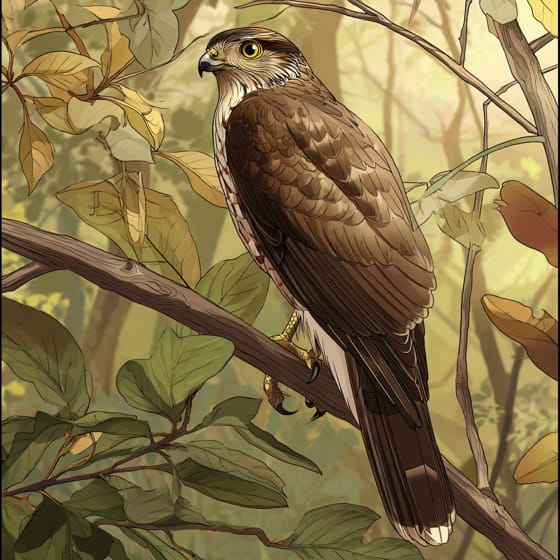
Accipiter cooperii
A common aerial predator of small birds.
Schistocerca americana
An important source of protein for the grosbeak.

Ambrosia artemisiifolia
Consumes its seeds, especially in winter.
Feathered describes animals, primarily birds, possessing a covering of feathers.
Social animals live in organized groups, cooperating for survival benefits such as foraging, defense, and raising offspring.
Singing animals produce complex vocalizations, often for purposes of attracting mates, defending territory, or communicating within their species.
Colorful describes organisms or objects displaying a wide range of bright and distinct colors.

Grassland habitats are terrestrial biomes dominated by grasses and herbaceous plants, supporting a variety of grazing animals.

This trait identifies organisms whose diet primarily consists of insects and other small invertebrates.

Diurnal animals are primarily active during daylight hours, typically resting or sleeping at night.
No aliases listed yet.
Danger
1/5 · Very low
Enjoy watching birds from a distance and don't disturb their nests.
The easiest way to identify Blue Grosbeak is to use the Snappit nature identifier app.
14-17 cm
26-29 cm
0.026-0.031 kg
2-7 years
40 km/h
These birds mostly eat insects and seeds, cracking tough seeds with their strong beaks.
Grasslands
Zoom in to split clusters and explore where this object has been snapped.
Jun 6, 2026
Mount EcclesiaPhoto attribution
(c) zr217, some rights reserved (CC BY)
License: CC BY 4.0 ↗
Image may be shown cropped inside the card frame.
Jun 1, 2026
Ethel M Botanical Cactus GardenPhoto attribution
(c) Katrina Smith, some rights reserved (CC BY)
License: CC BY 4.0 ↗
Image may be shown cropped inside the card frame.
Oct 3, 2025
Ohio CavernsPhoto attribution
(c) Ben Meredyk, some rights reserved (CC BY)
License: CC BY 4.0 ↗
Image may be shown cropped inside the card frame.

Florida, US
You might spot Anole, Eastern Box Turtle, and Golden Silk Spider.
View guide →

Arkansas, US
You might spot Widow's-Cross, Yucca Giant-Skipper, and Outis Skipper.
View guide →

Maryland, US
You might spot Osprey, Duck, and Spotted Lanternfly.
View guide →

New Mexico, US
You might spot White-Winged Dove and Silverleaf Nightshade.
View guide →

Illinois, US
You might spot Osage-Orange, Cutleaf Teasel, and Red Clover.
View guide →

New Mexico, US
You might spot Duck, Greater Roadrunner, and American Robin.
View guide →
Take the discovery with you
Snap it with Snappit to identify it, learn what makes it special, and add the discovery to your collection.




.jpg&width=800)








