





Bonfire Moss
funaria hygrometrica
Bonfire Moss is a bright green plant that loves to grow in warm, sunny places. It's often found popping up after a fire, making the ground look soft and fluffy!
Habitat: Bonfire Moss typically grows in disturbed areas, like near old campfires or in gardens.
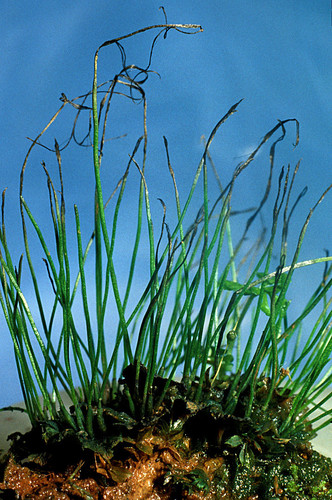
The Bonfire Moss is a small, bright green moss that grows in dense, cushion-like mats. Its most striking feature is its spore capsules, which emerge on tall stalks that can turn vibrant orange or fiery red, resembling tiny flames.
Category
PlantsRarity
Common
Danger
0/5 · No known danger
Snaps
1
Bonfire Moss loves places rich in ash and charcoal, perfect after a forest fire.
Its spore capsules look like tiny lanterns or upside-down pears, turning reddish-orange!
Its spore stalks often turn fiery red or orange, looking like tiny flames!
The scientific name, *Funaria hygrometrica*, means 'rope-like' and 'water-measuring'.
Bonfire Moss has a special stalk that twists when dry, helping to launch its spores further for dispersal.
Bonfire Moss has specialized cells that can soak up a lot of water, helping it survive through dry spells.

Arion ater
Grazes on soft plant matter, including mosses.
Limax maximus
Known to consume various moss species and fungi.
Folsomia candida
Finds damp shelter and microhabitat within moss cushions.
Colorful describes organisms or objects displaying a wide range of bright and distinct colors.
This trait characterizes organisms whose diet consists entirely or primarily of plant material.
Describes organisms that break down dead organic material, recycling nutrients back into the ecosystem.
Forest habitats are terrestrial environments dominated by dense tree cover, supporting a high diversity of plant and animal life.

Diurnal animals are primarily active during daylight hours, typically resting or sleeping at night.
Danger
0/5 · No known danger
No special safety notes yet.
The easiest way to identify Bonfire Moss is to use the Snappit nature identifier app.
1-3 cm
2-5 cm
No
None
Perennial
Bonfire Moss typically grows in disturbed areas, like near old campfires or in gardens.
Zoom in to split clusters and explore where this object has been snapped.

Connecticut, US
You might spot Common Eastern Bumble Bee, Painted Turtle, and Red Fox.
View guide →

Connecticut, US
You might spot Common Mugwort, Red-Tailed Hawk, and Eastern Gray Squirrel.
View guide →
British Columbia, CA
You might spot Hornwort, Silverleaf Phacelia, and Big Rough Fescue.
View guide →
Take the discovery with you
Snap it with Snappit to identify it, learn what makes it special, and add the discovery to your collection.








.jpg&width=800)



_001.jpg&width=800)




