





California Towhee
Melozone crissalis
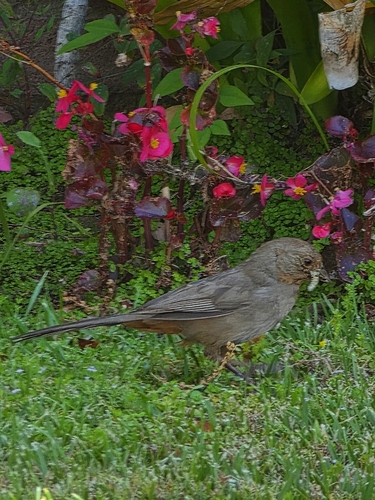
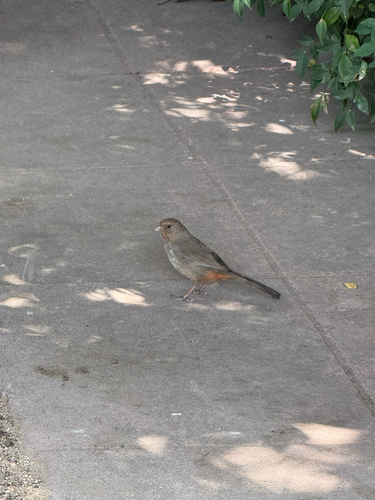
The California Towhee is a friendly bird that loves to hop around on the ground. It has a brown body and a cheerful song that makes it easy to spot in gardens and parks.
Habitat: Urban areas
The California Towhee is a medium-sized bird, mostly plain brown with a warm, rusty-red patch under its tail. It has a thick, conical beak perfect for cracking seeds, and its overall unassuming look helps it blend into its natural environment.
Category
BirdsRarity
Common
Danger
1/5 · Very low
Snaps
53
Baby California Towhees grow incredibly fast, leaving the nest after just 10 days!
These birds rarely fly long distances, preferring to stay hidden in dense bushes and on the ground.
They are famous for a sharp 'chink' call, which sounds like two pebbles tapping together!
When foraging, they often hop forward and then jump backward quickly to uncover tasty treats.
The California Towhee can kick backward with both feet at once to uncover seeds, helping them find hidden meals.
The California Towhee has adapted to human presence, which helps them find food and shelter in suburban gardens.
The California Towhee has strong legs for hopping and prefers staying low, which helps them maneuver through dense shrubs.
These omnivores enjoy a varied menu of seeds, insects, and berries, like tiny feathered foragers!
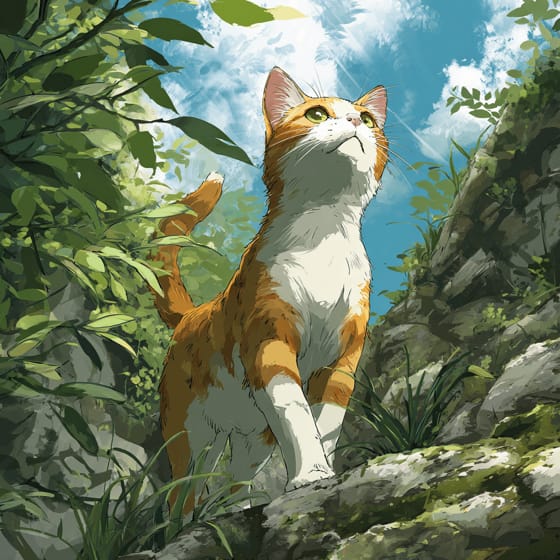
Felis catus
Feral and pet cats are common predators of these ground-dwelling birds.
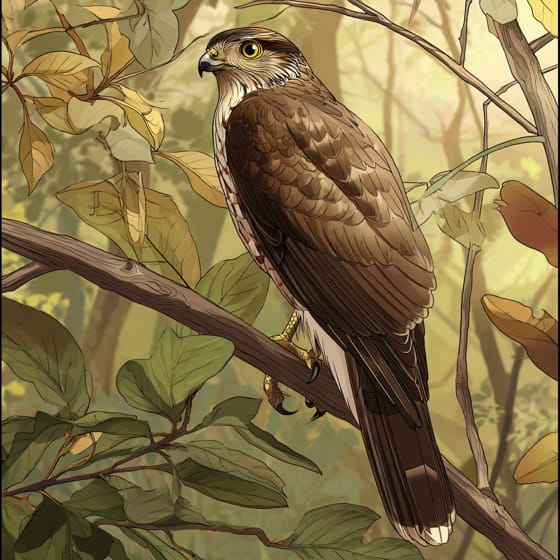
Accipiter cooperii
This agile hawk preys on small to medium-sized birds, including towhees.
Avena fatua
Towhees frequently feed on seeds from various wild grasses, including this one.

Adenostoma fasciculatum
Dense chaparral shrubs like chamise provide important cover and nesting sites.
Feathered describes animals, primarily birds, possessing a covering of feathers.
Social animals live in organized groups, cooperating for survival benefits such as foraging, defense, and raising offspring.
Singing animals produce complex vocalizations, often for purposes of attracting mates, defending territory, or communicating within their species.
Camouflaged describes organisms that possess coloring or patterns that allow them to blend into their environment.

This trait identifies organisms whose diet primarily consists of insects and other small invertebrates.

Diurnal animals are primarily active during daylight hours, typically resting or sleeping at night.

This habitat trait indicates species that can coexist with humans in urban and suburban environments, utilizing man-made structures and green spaces.
No aliases listed yet.
Danger
1/5 · Very low
Enjoy watching birds from a distance and don't try to touch or catch them.
The easiest way to identify California Towhee is to use the Snappit nature identifier app.
22-25 cm
28-32 cm
0.046-0.07 kg
2-7 years
35 km/h
These omnivores enjoy a varied menu of seeds, insects, and berries, like tiny feathered foragers!
Urban areas
Zoom in to split clusters and explore where this object has been snapped.
Jun 6, 2026
Huntington Desert GardenPhoto attribution
(c) Cristhian Mace, some rights reserved (CC BY)
License: CC BY 4.0 ↗
Image may be shown cropped inside the card frame.
Jun 3, 2026
Crossroads of the WorldPhoto attribution
(c) Malena Lacque, some rights reserved (CC BY)
License: CC BY 4.0 ↗
Image may be shown cropped inside the card frame.

California, US
You might spot Acorn Woodpecker and Western Fence Lizard.
View guide →

California, US
You might spot Monarch, Canada Goose, and Western Gull.
View guide →

California, US
You might spot Peridot Sweat Bee and Western Fence Lizard.
View guide →

California, US
You might spot Western Fence Lizard and Eastern Fox Squirrel.
View guide →

California, US
You might spot Western Fence Lizard and Pacific Poison Oak.
View guide →

California, US
You might spot Northern Harrier and Black-Tailed Jackrabbit.
View guide →
Take the discovery with you
Snap it with Snappit to identify it, learn what makes it special, and add the discovery to your collection.




.jpg&width=800)









