





California Wild Rose
Rosa californica
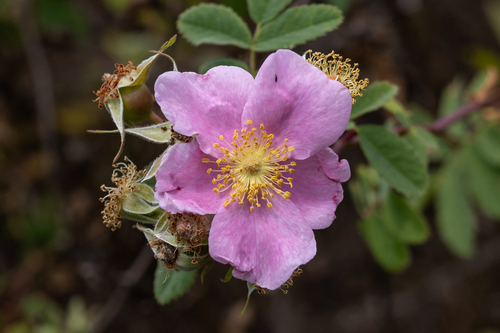
The California Wild Rose is a beautiful flower with soft pink petals. It grows in sunny places and attracts butterflies and bees, making gardens colorful and lively!
Habitat: Coastal areas
The California Wild Rose has simple, cheerful flowers with five vibrant pink petals and a bright yellow center. Its stems are armed with sharp thorns, and after blooming, it develops small, round, red-orange fruits called rose hips.
Category
PlantsRarity
Common
Danger
2/5 · Low
Snaps
4
Each fragrant petal is delicate but works with others to attract busy bees for pollination!
Indigenous peoples traditionally used parts of this rose for food and even medicine!
Rose hips are tiny superfoods, full of more Vitamin C than an orange!
Some wild roses can live for hundreds of years, making them ancient plant survivors!
California Wild Rose has sharp thorns on its stems that help it defend against hungry animals.
California Wild Rose grows bright red hips that are packed with vitamins, providing food for wildlife.
California Wild Rose can grow new plants from its roots, helping it spread and colonize new ground.
Apis mellifera
Gathers nectar and pollen from its flowers.
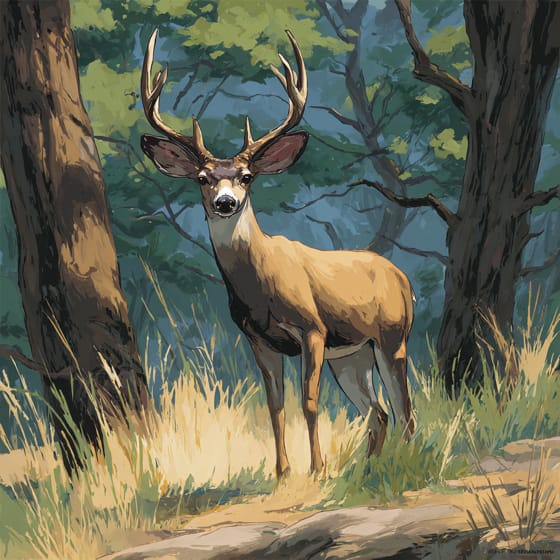
Odocoileus hemionus
Browses on its leaves and tender shoots.
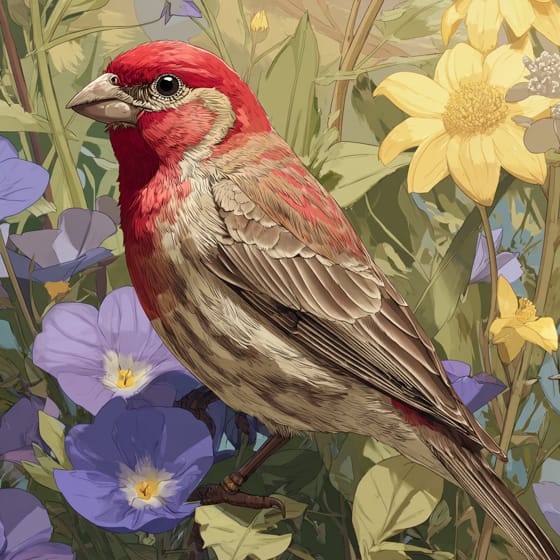
Carpodacus mexicanus
Eats the vitamin-rich rose hips, helping disperse seeds.
Troglodytes aedon
Builds nests within its dense, thorny thickets for protection.
Deciduous plants periodically shed all their leaves, typically during autumn or dry seasons.
Flowering plants are any plants that produce flowers as part of their reproductive cycle.
A shrub is a woody plant smaller than a tree, typically with multiple stems branching from or near the ground.
Spring blooming plants produce their flowers during the spring season, often signifying the end of winter and the start of new growth.

Summer blooming plants produce their flowers during the summer season, often providing vibrant color when many other plants have finished.

Fragrant flowers emit a pleasant aroma, often to attract pollinators or for defense.

Edible plants are those parts of a plant that are considered safe for human consumption.

Describes plants that are particularly attractive and beneficial to a wide range of pollinating organisms.

Coastal habitats are dynamic environments located along the interface between land and sea, influenced by tides, waves, and saltwater.
Danger
2/5 · Low
Be careful not to touch the thorns on the stems, as they can be sharp.
The easiest way to identify California Wild Rose is to use the Snappit nature identifier app.
50-300 cm
100-500 cm
2-5 cm
Spring to late summer
Yes
None
Perennial
Zoom in to split clusters and explore where this object has been snapped.
Jun 6, 2026
Venice Canal Historic DistrictPhoto attribution
(c) Roberto Daniel Avila, some rights reserved (CC BY)
License: CC BY 4.0 ↗
Image may be shown cropped inside the card frame.

Washington, US
You might spot Pacific Banana Slug and Oregon Forestsnail.
View guide →

California, US
You might spot Western Fence Lizard, Bee, and House Finch.
View guide →

California, US
You might spot Duck, Snowy Egret, and Black-Necked Stilt.
View guide →

California, US
You might spot Hollyleaf Cherry, Toyon, and Lemonade Berry.
View guide →

California, US
You might spot Western Gull, Snowy Egret, and Willet.
View guide →

Washington, US
You might spot Tiger, Ring-Tailed Lemur, and Caribou.
View guide →
Take the discovery with you
Snap it with Snappit to identify it, learn what makes it special, and add the discovery to your collection.







.jpg&width=800)


_001.jpg&width=800)



