_(8592459332).jpg&width=800)





Celandine Poppy
Chelidonium diphyllum
Celandine Poppy is a bright yellow flower that blooms in the spring. It grows in shady places and has beautiful, delicate petals that look like little cups.
Habitat: Forests
The Celandine Poppy is a striking woodland wildflower, flaunting vibrant yellow, cup-shaped flowers with four delicate petals. Its deeply lobed, blue-green leaves form a lush clump, creating a bright contrast against the dim forest floor.
Category
PlantsRarity
Common
Danger
2/5 · Low
Snaps
15
Amazingly, tiny ants act as its personal gardeners, burying seeds that sprout into new plants!
If you gently break a stem, you'll see a surprising bright orange sap, like a secret plant juice!
Its dazzling yellow blooms make gloomy forest floors look like they're covered in sunshine!
This vibrant wildflower can live for many years, returning each spring to brighten the same forest patch!
Celandine Poppy can grow and bloom very early, capturing crucial sunlight before trees leaf out fully.
Celandine Poppy can launch its mature seeds using a spring-like capsule, helping them spread effectively.
Celandine Poppy's seeds wear a delicious fatty snack, luring ants to carry them to new spots for planting.
Bombus impatiens
Collects nectar and pollen.
Apis mellifera
Visits flowers for pollen.
Formica subsericea
Disperses seeds for reward.
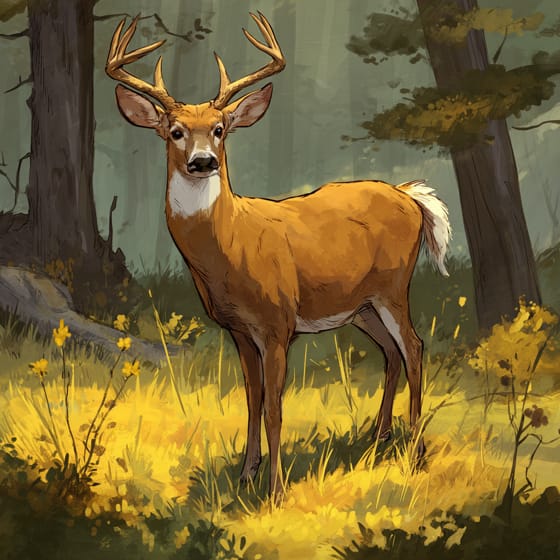
Odocoileus virginianus
Browses its foliage.
Deciduous plants periodically shed all their leaves, typically during autumn or dry seasons.
Flowering plants are any plants that produce flowers as part of their reproductive cycle.
Shade tolerant plants are adapted to grow and thrive in areas with low light levels, requiring less direct sunlight.
Spring blooming plants produce their flowers during the spring season, often signifying the end of winter and the start of new growth.

Fragrant flowers emit a pleasant aroma, often to attract pollinators or for defense.

Medicinal plants possess chemical compounds that can be used for therapeutic purposes to treat illnesses or maintain health.

Edible plants are those parts of a plant that are considered safe for human consumption.

Describes plants that are particularly attractive and beneficial to a wide range of pollinating organisms.

Forest habitats are terrestrial environments dominated by dense tree cover, supporting a high diversity of plant and animal life.
Danger
2/5 · Low
Always look but don't touch wild plants, as some can be harmful.
The easiest way to identify Celandine Poppy is to use the Snappit nature identifier app.
30-45 cm
30-45 cm
3-5 cm
Spring-early summer
No
Mild
Perennial
Zoom in to split clusters and explore where this object has been snapped.

New York, US
You might spot Rock Pigeon, American Robin, and Spotted Lanternfly.
View guide →

New York, US
You might spot Rock Pigeon, House Sparrow, and Eastern Gray Squirrel.
View guide →

Tennessee, US
You might spot American Robin and Eastern Gray Squirrel.
View guide →

Ohio, US
You might spot Wild Bergamot, Rattlesnake Master, and Eastern Pondhawk.
View guide →

Minnesota, US
You might spot Common Eastern Bumble Bee and Turkey.
View guide →

New York, US
You might spot American Robin and Red-Tailed Hawk.
View guide →
Take the discovery with you
Snap it with Snappit to identify it, learn what makes it special, and add the discovery to your collection.






.jpg&width=800)


_001.jpg&width=800)


