




Clover
Trifolium pratense
Clover is a small plant with three round leaves. It often grows in fields and gardens. Some people believe finding a four-leaf clover brings good luck!
Habitat: Grasslands
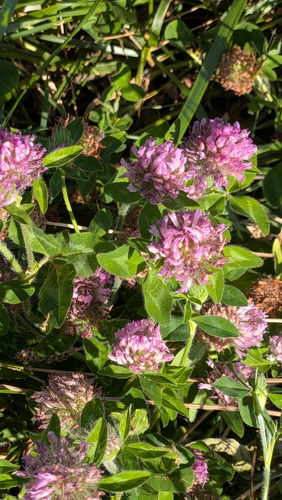
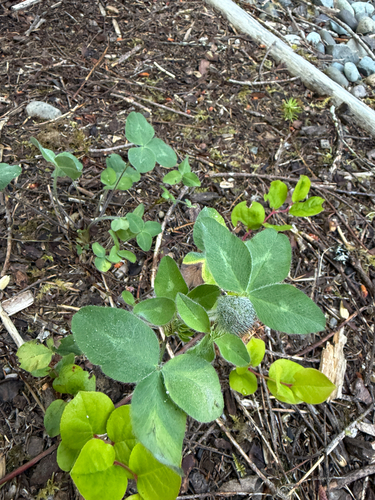
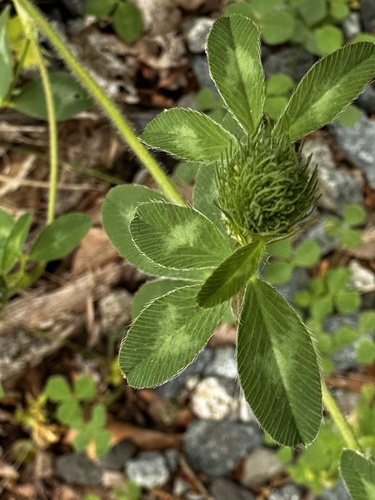
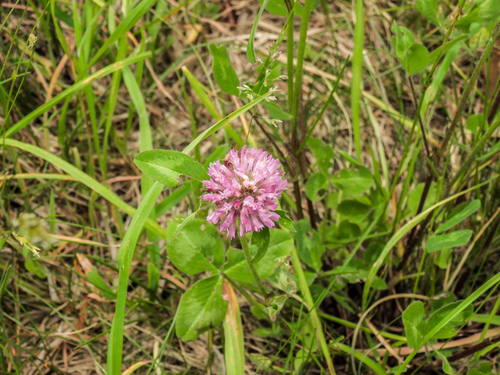
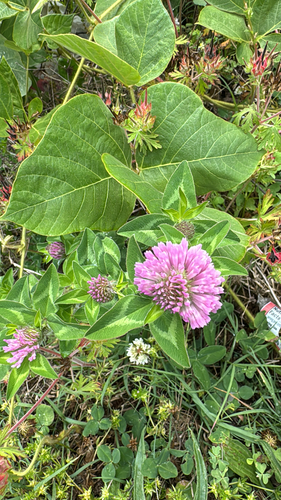
The Clover has distinctive three-lobed green leaves, often marked with a pale chevron. Its small, tightly packed white to pinkish-white flowers form globe-shaped clusters. It grows low to the ground, spreading widely like a carpet.
Category
PlantsRarity
Common
Danger
1/5 · Very low
Snaps
113
Ancient Celts believed clovers could ward off evil spirits and bring good luck!
Clover plants can act like little weather forecasters, folding their leaves before a storm!
Did you know a four-leaf clover is just a rare mutation of the regular three-leaf kind?
There are hundreds of different clover types all around the world!
Clover can partner with tiny bacteria in its roots to pull nitrogen from the air, making the soil super healthy for itself and other plants.
Clover has special stems that creep along the ground, rooting as they go, allowing it to spread quickly and cover bare soil like a living carpet.
Clover leaves and flowers are edible, providing a nutritious snack for many animals and even humans, making it a widespread food source.
Apis mellifera
Bees gather nectar and pollen from clover flowers.

Bos taurus
Cattle and other livestock graze on clover as nutritious forage.
Rhizobium leguminosarum
Bacteria live in clover roots, converting air nitrogen into plant food.
Lolium perenne
Often grows alongside ryegrass in pastures, improving soil for both.
Aromatic plants produce and emit fragrant volatile organic compounds, often for defense or to attract pollinators.
Describes organisms capable of converting atmospheric nitrogen into compounds usable by plants.
Cluster flowers are inflorescences where individual flowers are arranged closely together on a common stem.
Spring blooming plants produce their flowers during the spring season, often signifying the end of winter and the start of new growth.

Broadleaf trees are angiosperms characterized by flat, wide leaves that are typically shed annually in temperate climates.

Edible plants are those parts of a plant that are considered safe for human consumption.

Grassland habitats are terrestrial biomes dominated by grasses and herbaceous plants, supporting a variety of grazing animals.
Danger
1/5 · Very low
Clover is safe to touch and explore, but be careful not to eat plants from the wild without an adult.
The easiest way to identify Clover is to use the Snappit nature identifier app.
10-30 cm
1-2 cm
Spring to fall
Yes
None
Perennial
Insect
Zoom in to split clusters and explore where this object has been snapped.
Jun 19, 2026
East Potomac ParkPhoto attribution
(c) Martin Kalfatovic, some rights reserved (CC BY)
License: CC BY 4.0 ↗
Image may be shown cropped inside the card frame.
Jun 11, 2026
Lower Cushman DamPhoto attribution
no rights reserved
License: CC0 1.0 ↗
Image may be shown cropped inside the card frame.
Jun 7, 2026
SkylandsPhoto attribution
(c) gwt2102, some rights reserved (CC BY)
License: CC BY 4.0 ↗
Image may be shown cropped inside the card frame.
May 29, 2026
Jackson Terrace Historic DistrictPhoto attribution
no rights reserved
License: CC0 1.0 ↗
Image may be shown cropped inside the card frame.
Apr 28, 2026
Calhoun Downtown Historic DistrictPhoto attribution
(c) Richard Lyon, some rights reserved (CC BY)
License: CC BY 4.0 ↗
Image may be shown cropped inside the card frame.

Massachusetts, US
You might spot Eastern White Pine and Common Eastern Bumble Bee.
View guide →

Illinois, US
You might spot Common Eastern Bumble Bee and Brown-Belted Bumble Bee.
View guide →

Michigan, US
You might spot Eastern Gray Squirrel, Tree-Of-Heaven, and House Sparrow.
View guide →

Connecticut, US
You might spot Bold Jumping Spider and American Tuliptree.
View guide →

Ohio, US
You might spot Large White Trillium, Fire Pink, and Christmas Fern.
View guide →

Connecticut, US
You might spot Green Frog and Mountain Laurel.
View guide →
Take the discovery with you
Snap it with Snappit to identify it, learn what makes it special, and add the discovery to your collection.








.jpg&width=800)


_001.jpg&width=800)



