





common woolly sunflower
Eriophyllum lanatum
The common woolly sunflower is a bright yellow flower that grows in sunny places. Its soft, fuzzy leaves help it stay cool and collect water from the air, making it special in its dry home.
Habitat: Grasslands
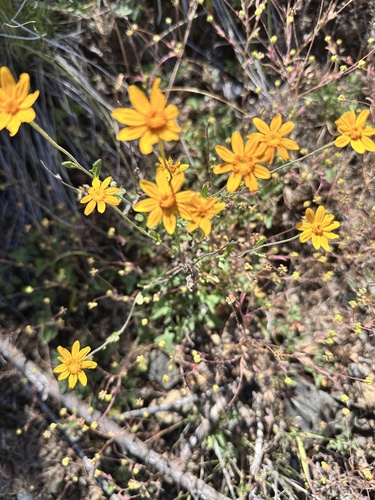
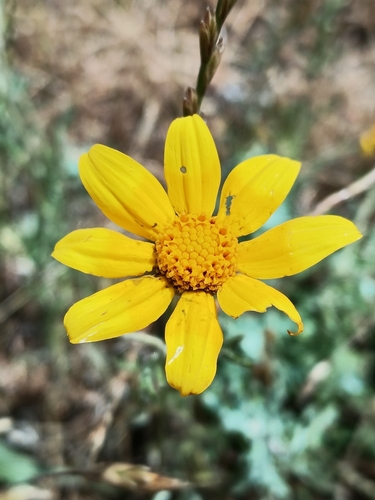
The common woolly sunflower has numerous bright yellow, daisy-like flowers. Its most striking feature is the covering of soft, white, woolly hairs on its stems and leaves, giving it a distinctive fuzzy, silvery-green appearance that sets it apart from typical smooth-stemmed sunflowers.
Category
PlantsRarity
Common
Danger
1/5 · Very low
Snaps
10
Even its scientific name, lanatum, means "woolly" in Latin!
It can grow happily on rocky slopes where few other plants dare!
Its "woolly" coat isn't just for looks, it's a natural protector!
These bright yellow flowers look like mini suns on fuzzy stems.
The common woolly sunflower has dense, fuzzy hairs that reflect harsh sunlight and protect its leaves from drying out.
Its woolly coat traps moisture close to the plant, helping it conserve water and thrive in dry, sunny environments.
The fuzzy texture also helps reduce wind damage and prevent excessive water loss from strong gusts.
Apis mellifera
gathers nectar and pollen from flowers.
Bombus vosnesenskii
a key visitor collecting nectar.

Vanessa cardui
larval food source and adult nectar.

Marmota flaviventris
occasionally browses its leaves.
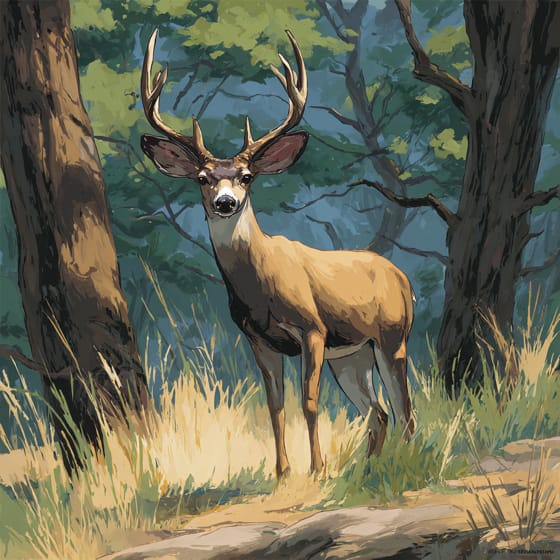
Odocoileus hemionus
deer may graze its foliage.
Furry describes animals possessing a dense covering of soft hair or fur.
Flowering plants are any plants that produce flowers as part of their reproductive cycle.
Summer blooming plants produce their flowers during the summer season, often providing vibrant color when many other plants have finished.
Fragrant flowers emit a pleasant aroma, often to attract pollinators or for defense.

Drought-tolerant plants can survive and flourish in conditions with limited water availability.

Grassland habitats are terrestrial biomes dominated by grasses and herbaceous plants, supporting a variety of grazing animals.

Describes plants that are particularly attractive and beneficial to a wide range of pollinating organisms.
No aliases listed yet.
Danger
1/5 · Very low
Always look but don't pick flowers, so they can keep growing for everyone to enjoy.
The easiest way to identify common woolly sunflower is to use the Snappit nature identifier app.
30-60 cm
30-60 cm
3-5 cm
Late spring to summer
Yes
None
Perennial
Zoom in to split clusters and explore where this object has been snapped.
Jun 3, 2026
Armstrong Redwoods State Natural ReservePhoto attribution
no rights reserved
License: CC0 1.0 ↗
Image may be shown cropped inside the card frame.
Jun 19, 2025
FairhavenPhoto attribution
(c) Seb H, some rights reserved (CC BY)
License: CC BY 4.0 ↗
Image may be shown cropped inside the card frame.

California, US
You might spot Redwood Sorrel, Redwood, and Button's Banana Slug.
View guide →

Washington, US
You might spot Bigleaf Maple, Mule Deer, and Oregon Grape.
View guide →

California, US
You might spot Toyon, Mule Deer, and White Globe Lily.
View guide →

Oregon, US
You might spot Blue Mountain Prairie Clover and Munro's Globemallow.
View guide →
Oregon, US
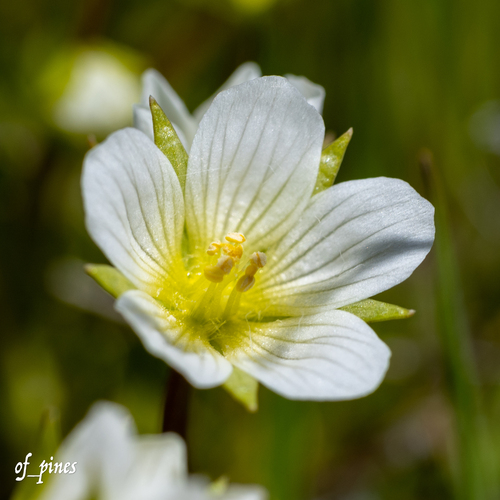
You might spot Woolly Meadowfoam and California Goldfields.
View guide →

California, US
You might spot Sequoia, California Incense-Cedar, and White Fir.
View guide →
Take the discovery with you
Snap it with Snappit to identify it, learn what makes it special, and add the discovery to your collection.








.jpg&width=800)


_001.jpg&width=800)




