





cotton-top tamarin
Saguinus oedipus
Cotton-top tamarins are tiny monkeys with fluffy white hair on their heads. They live in groups and love to swing through the trees in their forest homes.
Habitat: Forests
The cotton-top tamarin has a distinctive long white crest of hair from its forehead to its shoulders, resembling a cotton ball. Its back is reddish-brown, while its underside, arms, and legs are white or yellowish. It also has a long, non-prehensile tail that is black.
Category
MammalsRarity
Rare
Danger
1/5 · Very low
Snaps
Be the first to snap!
Instead of nails, cotton-tops have sharp claws for gripping branches like a squirrel!
Most cotton-top tamarin moms usually give birth to twins, a unique trait for monkeys!
These tiny monkeys help grow new forests by spreading fruit seeds everywhere they go!
They use over 38 different sounds to 'talk' to each other, like a secret monkey language!
cotton-top tamarin can leave scent markers on branches, because special glands help them communicate territory boundaries to other groups.
cotton-top tamarin can rapidly leap and climb through trees, because their small size and sharp claws help them escape quickly.
cotton-top tamarin can quickly snatch insects from leaves, because their agile fingers and sharp eyesight help them catch speedy prey.
Cotton-top tamarins are omnivores, munching on fruits, insects, and tree sap from the rainforest!
Age differences: Young tamarins start with mothers' milk and gradually learn to forage for solid foods.
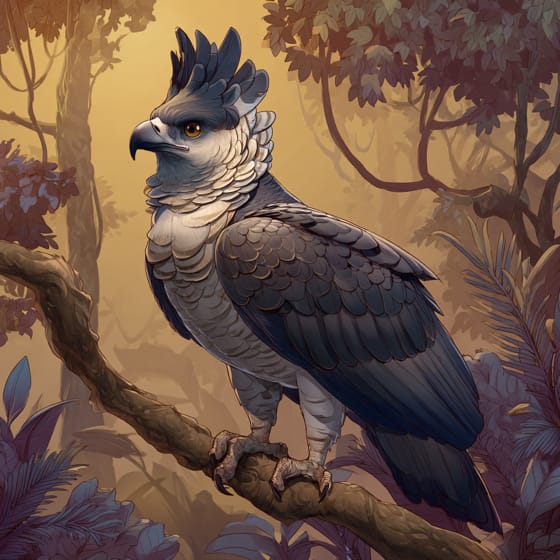
Harpia harpyja
Powerful raptor that hunts tamarins from above the canopy.
Boa constrictor
Constricting snake preying on tamarins on the forest floor.
Ceiba pentandra
Provides fruits, insects, and shelter high in the canopy.
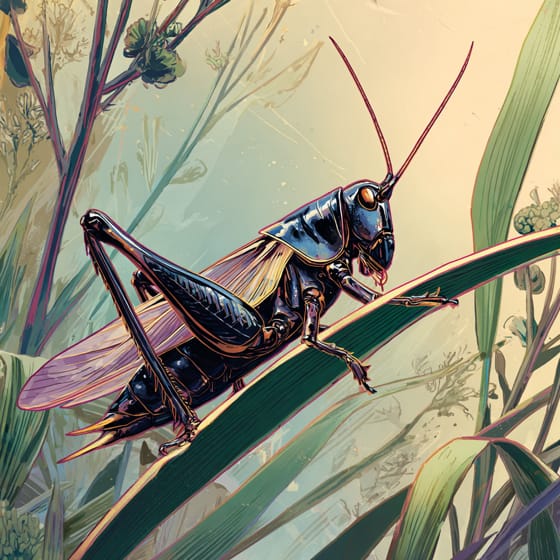
Gryllus assimilis
Consumes these common insects as a protein source.
Furry describes animals possessing a dense covering of soft hair or fur.
Social animals live in organized groups, cooperating for survival benefits such as foraging, defense, and raising offspring.
This trait identifies organisms whose diet includes both plant and animal matter.
Forest habitats are terrestrial environments dominated by dense tree cover, supporting a high diversity of plant and animal life.

Diurnal animals are primarily active during daylight hours, typically resting or sleeping at night.

Endangered status indicates a species is at a very high risk of extinction in the wild in the near future.
Danger
1/5 · Very low
Always watch from a distance and never try to touch wild animals.
The easiest way to identify cotton-top tamarin is to use the Snappit nature identifier app.
17-28 cm
0.4-0.5 kg
13-24 years
25 km/h
Cotton-top tamarins are omnivores, munching on fruits, insects, and tree sap from the rainforest!
Forests
Foraging
Zoom in to split clusters and explore where this object has been snapped.
Recent snaps will appear here as new observations are added.
North Dakota, US
You might spot Tiger, Grizzly Bear, and African Penguin.
View guide →
Kansas, US
You might spot Cotton-Top Tamarin, American Bison, and Cougar.
View guide →

Kansas, US
You might spot Panthera Pardus Orientalis, Snow Leopard, and African Lion.
View guide →
.jpeg&width=800)
Tennessee, US
You might spot Mainland Clouded Leopard, Spectacled Bear, and Tiger.
View guide →
New York, US
You might spot Snow Leopard, Red Panda, and Sea Lion.
View guide →
Minnesota, US
You might spot African Lion, Tiger, and Snow Leopard.
View guide →
Take the discovery with you
Snap it with Snappit to identify it, learn what makes it special, and add the discovery to your collection.




.jpg&width=800)


.JPG&width=800)



.jpg&width=800)
