





Couch's Spadefoot
Scaphiopus couchii
Couch's Spadefoot is a small, funny-looking frog that loves to dig! They have special spade-like feet that help them burrow into the ground. These frogs are often found in warm, sandy areas.
Habitat: Desert
The Couch's Spadefoot is a plump, medium-sized frog with smooth skin, typically olive green, brown, or grey, often speckled with darker blotches. It has prominent, golden-eyed vertical pupils and a distinctive, hardened "spade" on each hind foot for digging.
Category
AmphibiansRarity
Common
Danger
1/5 · Very low
Snaps
5
Couch's Spadefoot makes a loud, bleating call, sounding like a sheep, to attract mates!
Its eyes have vertical pupils, like a cat's, which is very unusual for a frog!
Tadpoles of the Couch's Spadefoot can sometimes eat each other if food is scarce!
This amazing frog can live buried underground for over a year waiting for rain!
Couch's Spadefoot can rapidly dig backward into sandy soil using special hardened "spades" on its hind feet, helping it escape danger and the desert sun.
Couch's Spadefoot has an amazing ability to sense rainfall and emerge quickly from underground to breed and feed in temporary desert pools.
Couch's Spadefoot can lay eggs that hatch and grow into froglets in as little as nine days, a super-fast transformation to survive in short-lived puddles.
This frog mostly munches on insects and spiders, but its babies eat tiny plants and algae.
Age differences: Tadpoles are omnivorous filter-feeders, eating algae and detritus. Adults are carnivorous insectivores.
Thamnophis proximus
Snakes are common predators, especially near water.
Hypsiglena torquata
Nocturnal snakes hunt spadefoots at night.

Bubo virginianus
Owls are effective nocturnal predators.
Formica fusca
Spadefoots emerge to feast on ants and other insects.
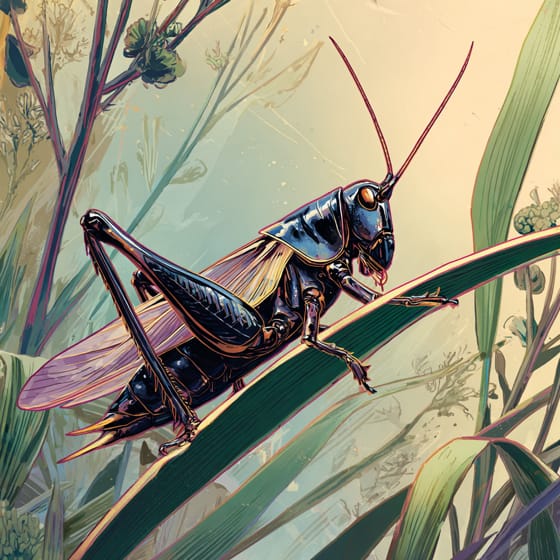
Gryllus assimilis
Crickets are a common and abundant food source.
Characterized by having toes connected by a membrane, typically aiding in swimming.
Solitary animals live alone for most of their lives, only interacting with others for mating or parental care.
Singing animals produce complex vocalizations, often for purposes of attracting mates, defending territory, or communicating within their species.
Burrowing animals dig tunnels and chambers in the ground, using these subterranean structures for shelter, hunting, or breeding.

This trait identifies organisms whose diet primarily consists of insects and other small invertebrates.

Desert habitats are arid regions characterized by extremely low precipitation and often extreme temperatures, supporting specialized flora and fauna.

Nocturnal animals are primarily active during the nighttime hours, typically resting or sleeping during the day.

Endangered status indicates a species is at a very high risk of extinction in the wild in the near future.
No aliases listed yet.
Danger
1/5 · Very low
Always watch frogs from a distance and don't touch them, as they can be delicate.
The easiest way to identify Couch's Spadefoot is to use the Snappit nature identifier app.
5-9 cm
0.02-0.06 kg
6-10 years
1 km/h
This frog mostly munches on insects and spiders, but its babies eat tiny plants and algae.
Desert
Ambush
Zoom in to split clusters and explore where this object has been snapped.

Texas, US
You might spot Texas Hedgehog Cactus, Ornate Tree Lizard, and Cactus Wren.
View guide →

Arizona, US
You might spot Saguaro and Graham's Nipple Cactus.
View guide →

Arizona, US
You might spot Saguaro, Fishhook Barrel Cactus, and Desert Spiny Lizard.
View guide →

New Mexico, US
You might spot White-Winged Dove and Creosote Bush.
View guide →

New Mexico, US
You might spot Creosote Bush, Devilshead, and Lace-Spine Nipple Cactus.
View guide →
Take the discovery with you
Snap it with Snappit to identify it, learn what makes it special, and add the discovery to your collection.









.JPG&width=800)


.jpg&width=800)

