_Dianthus_armeria_-_Plant_habit.jpg&width=800)





Deptford pink
Dianthus armeria
The Deptford pink is a pretty flower with bright pink petals. It grows in fields and along roadsides, bringing color to nature. These flowers are loved by butterflies and bees!
Habitat: Grasslands
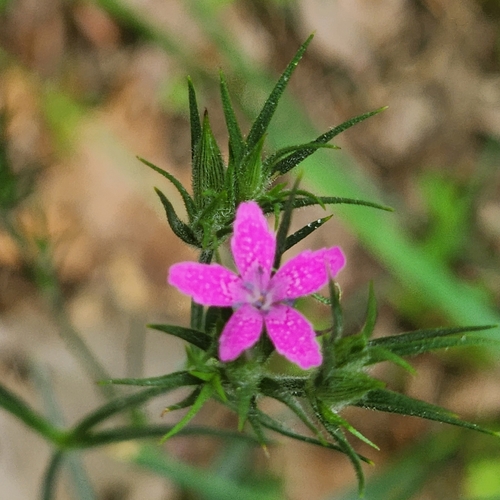
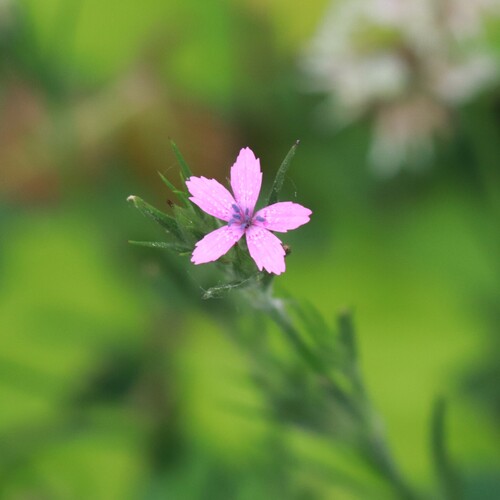
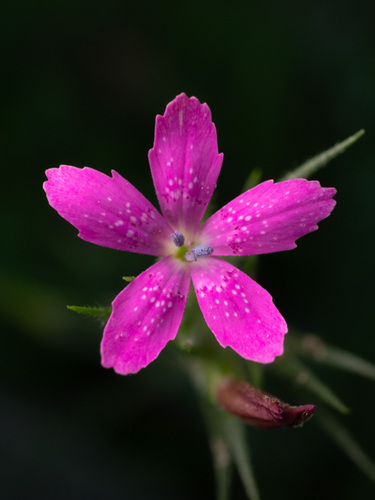
The Deptford pink has small, vibrant pink flowers, each with five petals that feature jagged, 'frilly' edges. These blooms are often speckled with tiny darker dots and grow on slender, hairy stems, making it distinct from many other wildflowers.
Category
PlantsRarity
Common
Danger
1/5 · Very low
Snaps
27
Its Latin name 'armeria' means 'clump of pinks', describing how flowers grow together.
Its spotted petals look like tiny sprinkles, making them appear like a sweet treat!
Often confused with wild carnations, it's smaller and has unique spotted petals!
One plant can produce hundreds of tiny seeds, ensuring its Deptford pink's survival!
Its rough, hairy stems deter some grazing animals and help protect against small insect pests.
It produces many tiny seeds, easily dispersed by wind or sticking to animals, helping it spread quickly.
Apis mellifera
collects nectar and pollen
Bombus terrestris
visits flowers for nectar
Pieris rapae
sips nectar from its blooms
Sitobion avenae
feeds on plant sap from stems
Meligethes aeneus
consumes pollen and petals
Aromatic plants produce and emit fragrant volatile organic compounds, often for defense or to attract pollinators.
Flowering plants are any plants that produce flowers as part of their reproductive cycle.
Ornamental plants are cultivated primarily for their aesthetic appeal, enhancing landscapes and gardens with their attractive foliage, flowers, or form.
Cluster flowers are inflorescences where individual flowers are arranged closely together on a common stem.

Summer blooming plants produce their flowers during the summer season, often providing vibrant color when many other plants have finished.

Fragrant flowers emit a pleasant aroma, often to attract pollinators or for defense.

Grassland habitats are terrestrial biomes dominated by grasses and herbaceous plants, supporting a variety of grazing animals.

Describes plants that are particularly attractive and beneficial to a wide range of pollinating organisms.
No aliases listed yet.
Danger
1/5 · Very low
Do not pick flowers without asking an adult first, so they can keep growing for everyone to enjoy.
The easiest way to identify Deptford pink is to use the Snappit nature identifier app.
15-60 cm
15-30 cm
1-1.5 cm
Summer
Yes
None
Biennial
Zoom in to split clusters and explore where this object has been snapped.
Jun 10, 2026
Haym Salomon Memorial ParkPhoto attribution
(c) i_da_naturalist, some rights reserved (CC BY)
License: CC BY 4.0 ↗
Image may be shown cropped inside the card frame.
Jun 7, 2026
East Windsor Hill Historic DistrictPhoto attribution
(c) Mark Apgar, some rights reserved (CC BY)
License: CC BY 4.0 ↗
Image may be shown cropped inside the card frame.
May 30, 2026
Harpers Ferry Historic DistrictPhoto attribution
(c) Alex Abair, some rights reserved (CC BY)
License: CC BY 4.0 ↗
Image may be shown cropped inside the card frame.

Ohio, US
You might spot Spotted Lanternfly and White-Tailed Deer.
View guide →

Maryland, US
You might spot American Cancer-Root and Rue Anemone.
View guide →

New Jersey, US
You might spot Common Mugwort and White-Tailed Deer.
View guide →

New Jersey, US
You might spot Monarch, Great Blue Heron, and American Robin.
View guide →

Connecticut, US
You might spot Eastern Gray Squirrel, Dark-Eyed Junco, and House Sparrow.
View guide →

Kansas, US
You might spot American Robin, Monarch, and Italian Wall Lizard.
View guide →
Take the discovery with you
Snap it with Snappit to identify it, learn what makes it special, and add the discovery to your collection.







.jpg&width=800)


_001.jpg&width=800)




