





Devil's Club
Oplopanax horridus
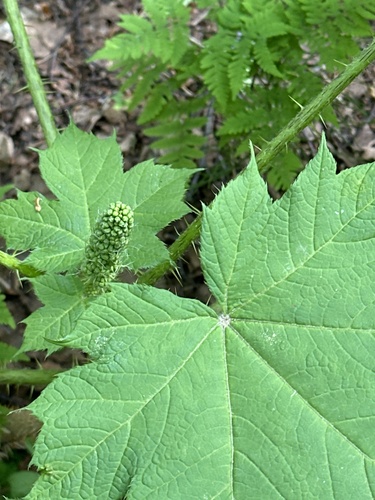
Devil's Club is a tall plant with big, spiky leaves and bright green stems. It grows in shady forests and is known for its unique look and sharp thorns!
Habitat: Forests
The Devil's Club has huge, palmate leaves, often over a foot wide, covered in sharp, woody spines. Its stems are also densely armed with yellow-green thorns, and it produces bright red berry clusters in late summer, making it look quite formidable.
Category
PlantsRarity
Common
Danger
3/5 · Moderate
Snaps
20
Despite its scary name, it provides important shelter for small forest creatures!
Indigenous peoples have used its bark for generations in traditional medicines and ceremonies.
Its bright red berries look tasty, but they are generally not eaten by animals!
This plant often grows in damp, cool forests, creating an eerie, primordial feel.
Devil's Club can grow incredibly sharp, woody spines all over its stems and leaves that protect it from hungry herbivores.
Devil's Club has the ability to sprout roots and new shoots from fallen stems, helping it spread and conquer new areas.
Devil's Club has huge leaves to capture sunlight even in deep, shady forests, helping it thrive where others struggle.
Ursus americanus
Bears sometimes eat Devil's Club berries in late summer.
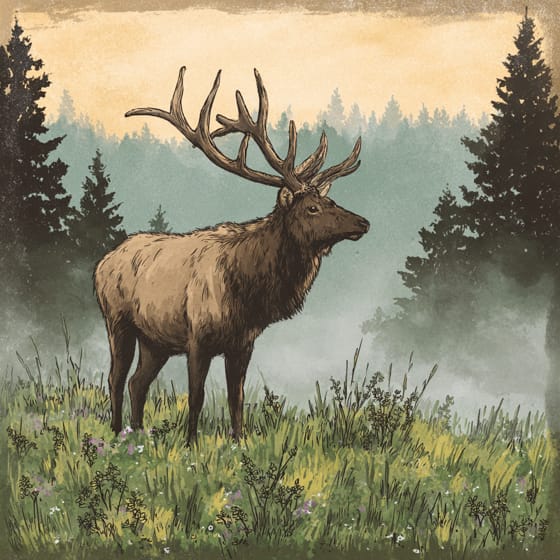
Cervus canadensis
Elk may browse on young shoots, despite the plant's sharp thorns.
Bombus occidentalis
Bumblebees visit its small flowers, helping spread pollen.
Tamiasciurus douglasii
Dense, spiny thickets provide safe hiding spots for small animals.
Deciduous plants periodically shed all their leaves, typically during autumn or dry seasons.
Flowering plants are any plants that produce flowers as part of their reproductive cycle.
Shade tolerant plants are adapted to grow and thrive in areas with low light levels, requiring less direct sunlight.
A shrub is a woody plant smaller than a tree, typically with multiple stems branching from or near the ground.

Medicinal plants possess chemical compounds that can be used for therapeutic purposes to treat illnesses or maintain health.

Forest habitats are terrestrial environments dominated by dense tree cover, supporting a high diversity of plant and animal life.

Possessing sharp, pointed projections or spines on the body or surface.

Describes organisms that transfer pollen, enabling the fertilization and reproduction of plants.

Endangered status indicates a species is at a very high risk of extinction in the wild in the near future.
No aliases listed yet.
Danger
3/5 · Moderate
Stay away from the sharp thorns on the stems and leaves.
The easiest way to identify Devil's Club is to use the Snappit nature identifier app.
100-400 cm
100-300 cm
0.2-0.5 cm
June-August
No
Mild
Perennial
Zoom in to split clusters and explore where this object has been snapped.
Jun 15, 2026
Kincaid ParkPhoto attribution
(c) tlaloc27, some rights reserved (CC BY)
License: CC BY 4.0 ↗
Image may be shown cropped inside the card frame.

US
You might spot Bald Eagle, Common Raven, and Salmonberry.
View guide →

Alaska, US
You might spot Moose, Devil's Club, and Red-Berried Elder.
View guide →

Oregon, US
You might spot Rough-Skinned Newt and Isabella Tiger Moth.
View guide →

US
You might spot Variable Carpet Moth, Bald Eagle, and Red Huckleberry.
View guide →

Alaska, US
You might spot Moose, Fly Agaric, and Bald Eagle.
View guide →

Washington, US
You might spot Wood Duck, Rough-Skinned Newt, and Pacific Trillium.
View guide →
Take the discovery with you
Snap it with Snappit to identify it, learn what makes it special, and add the discovery to your collection.






.jpg&width=800)



_001.jpg&width=800)



